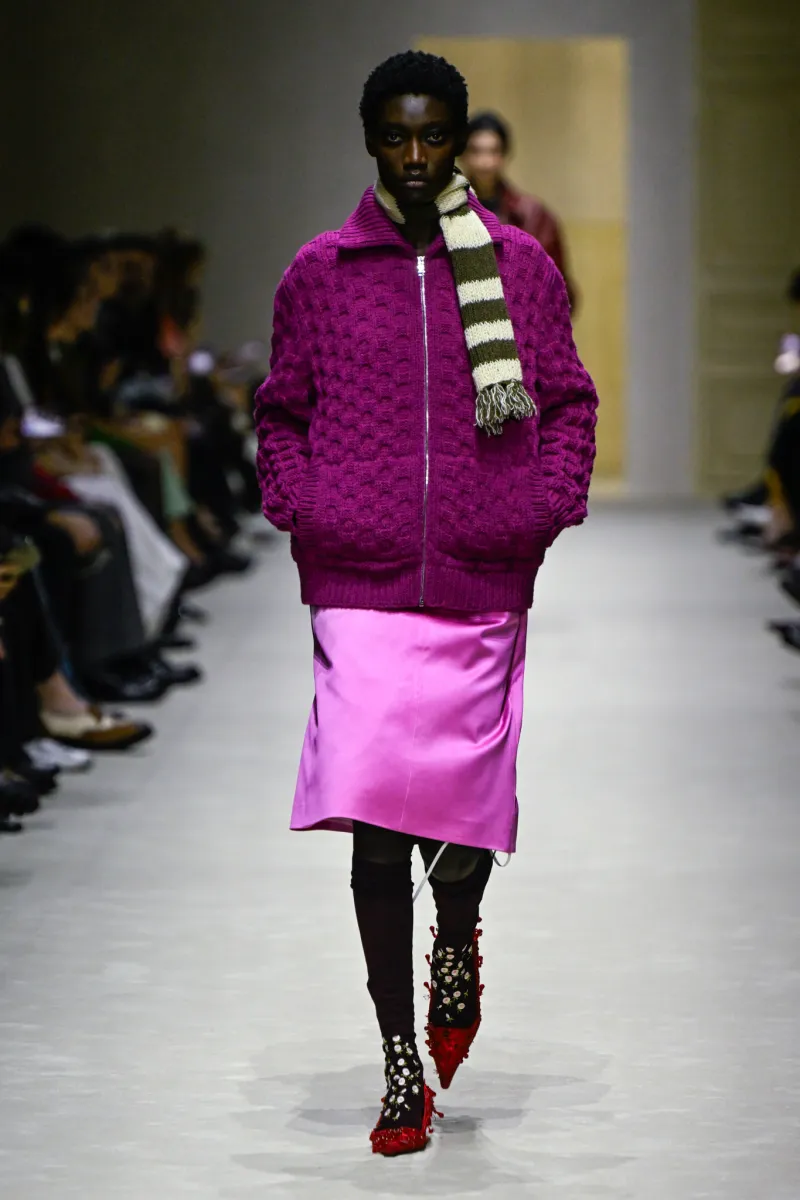
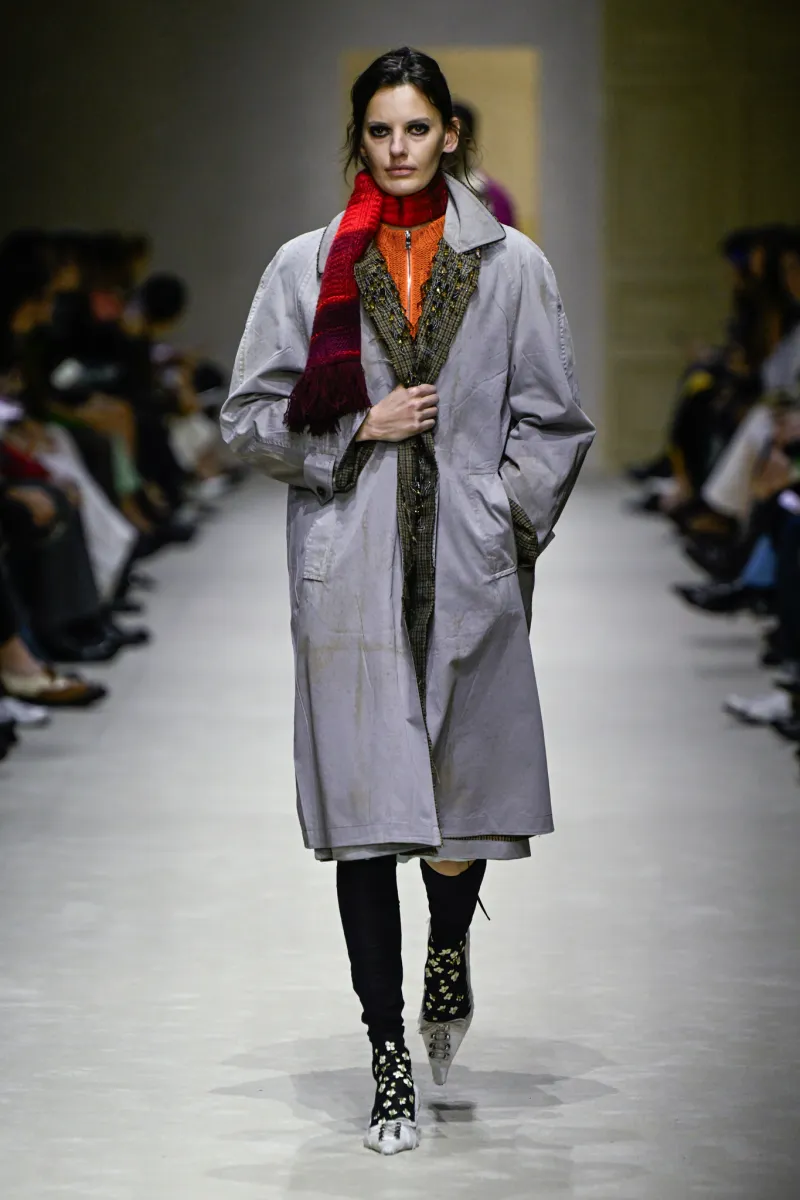
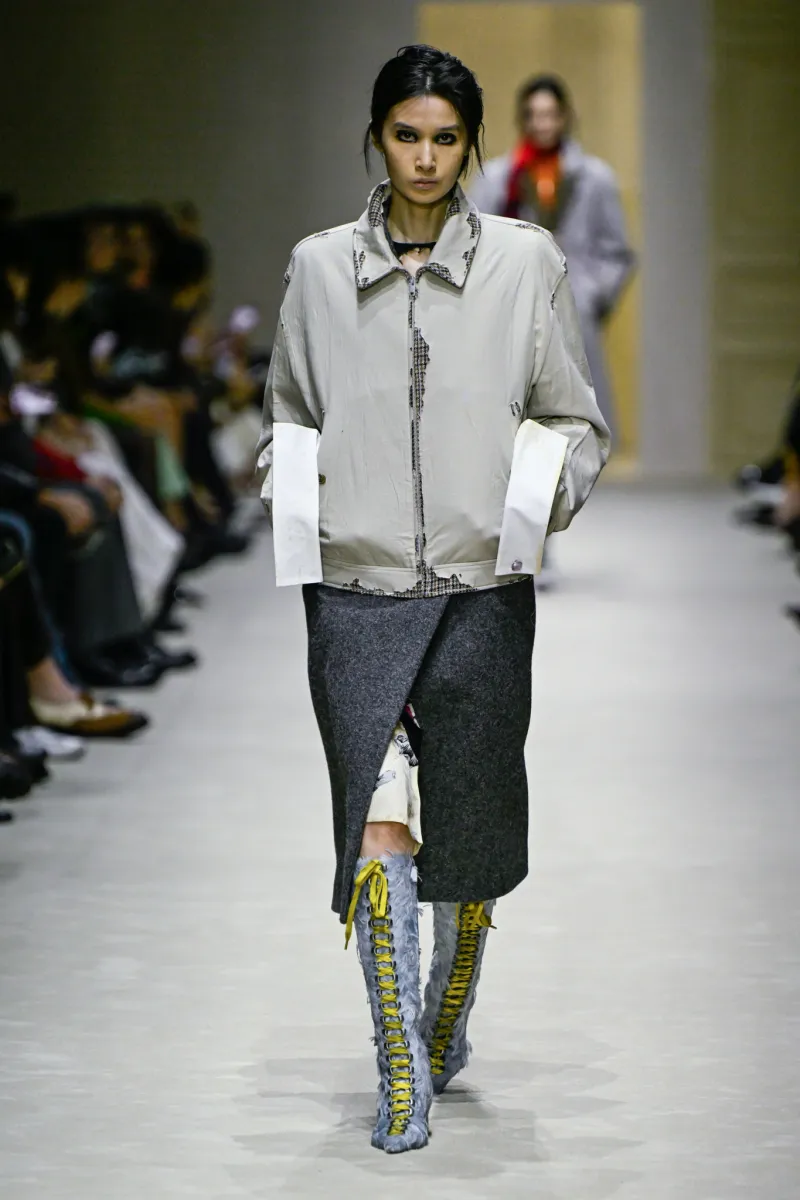
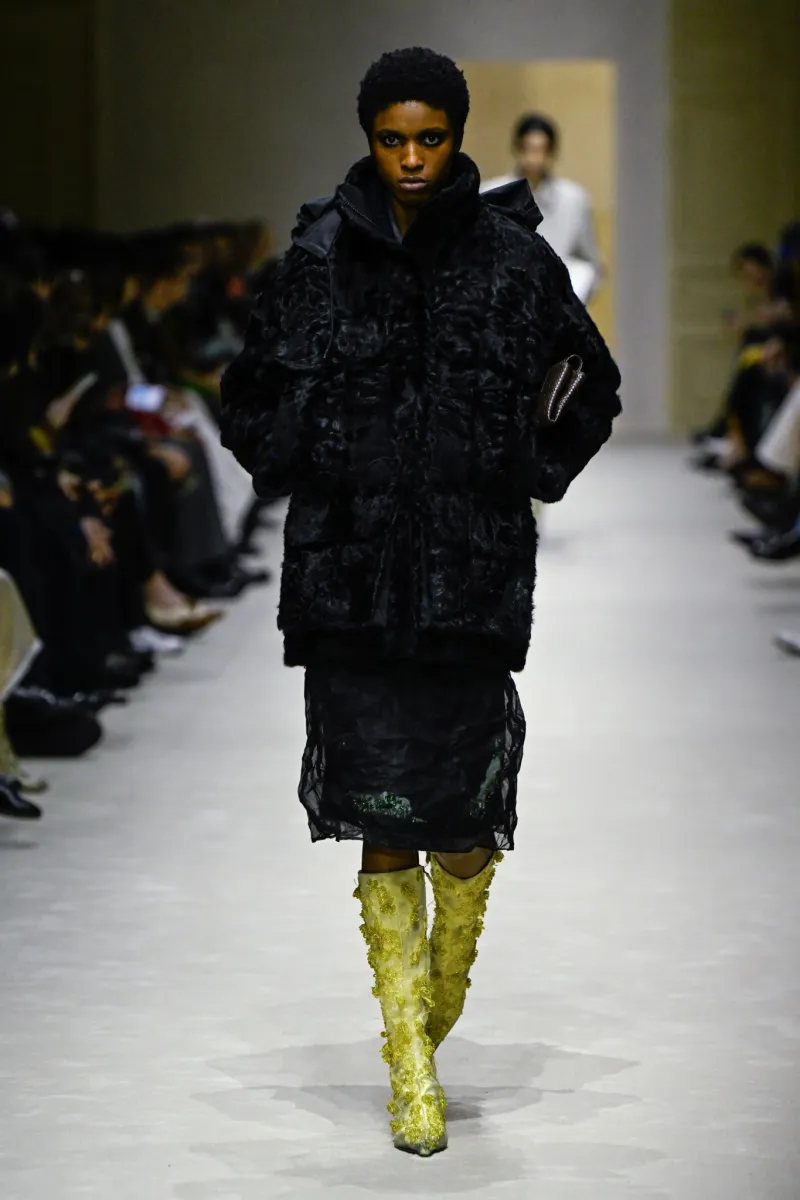
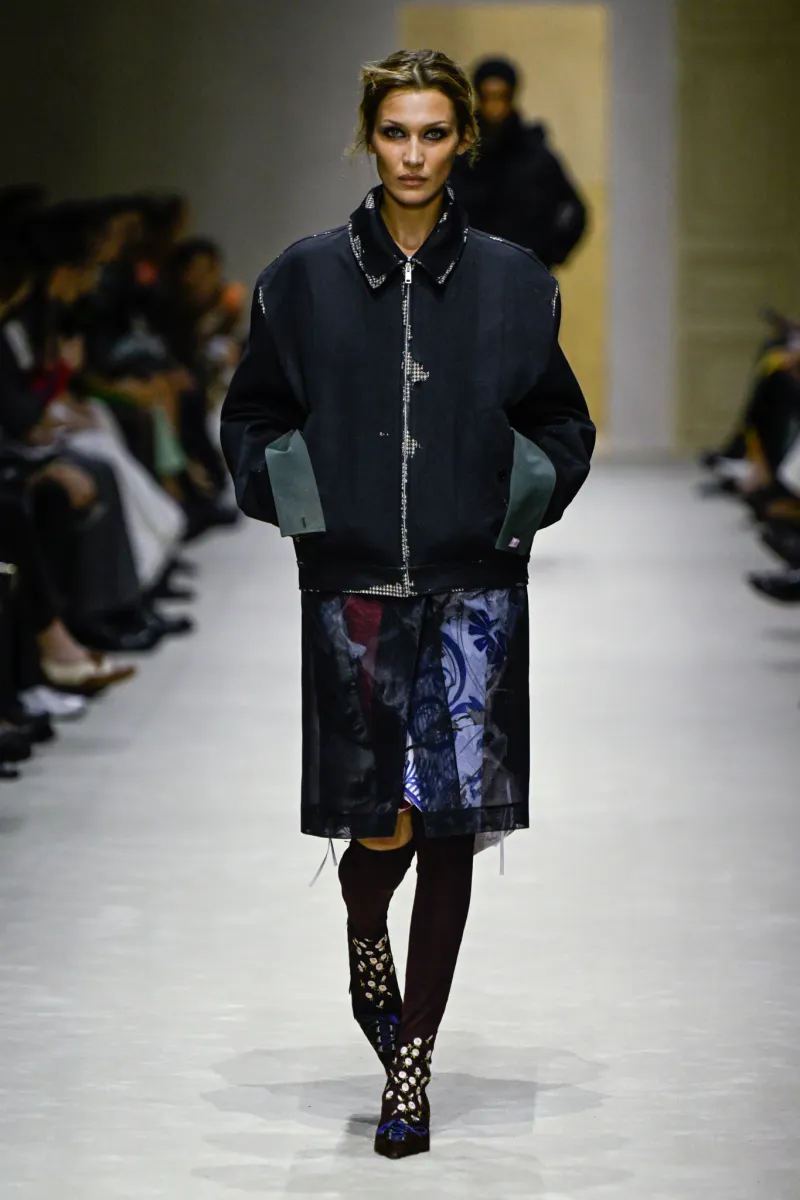
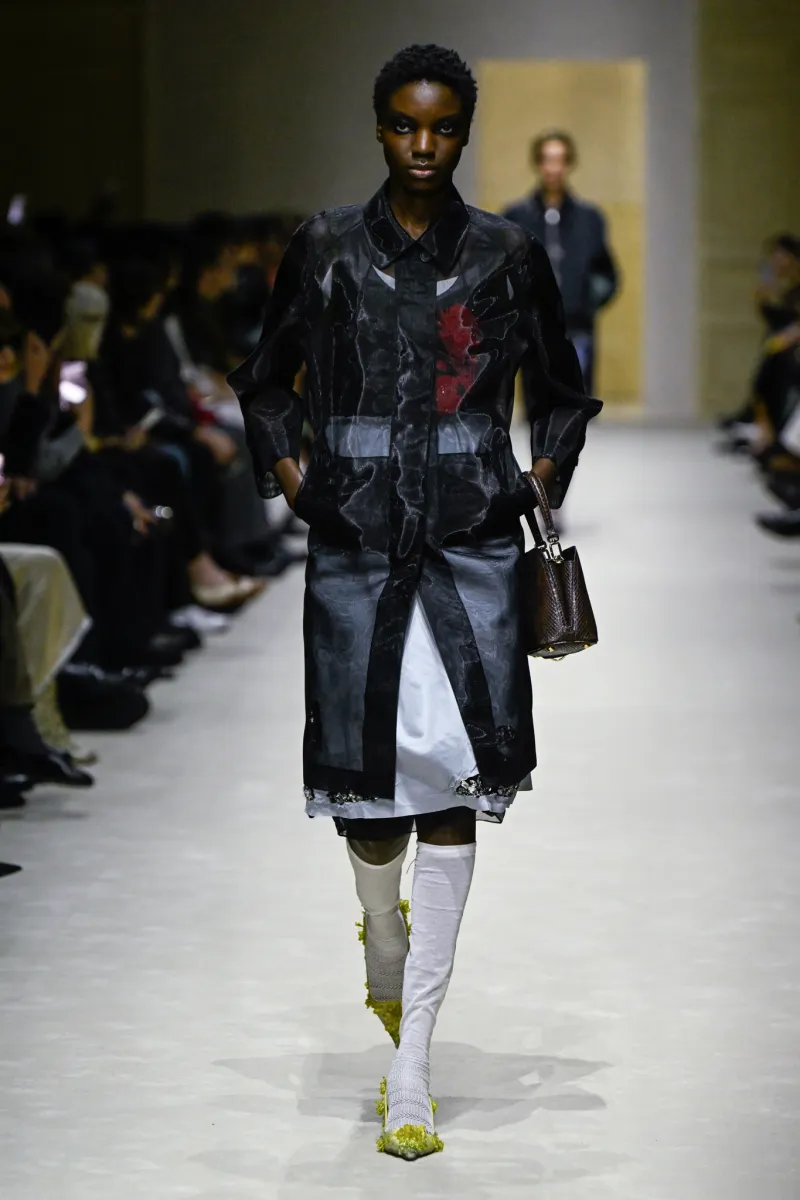
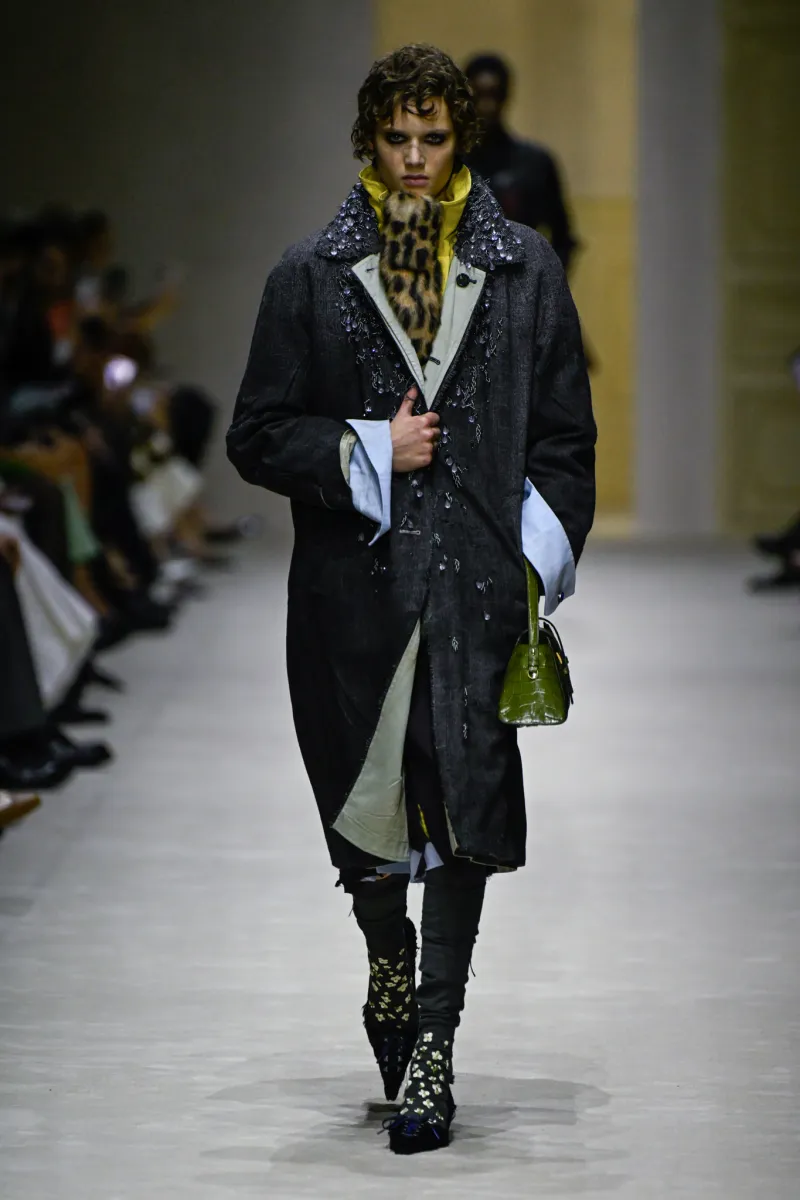
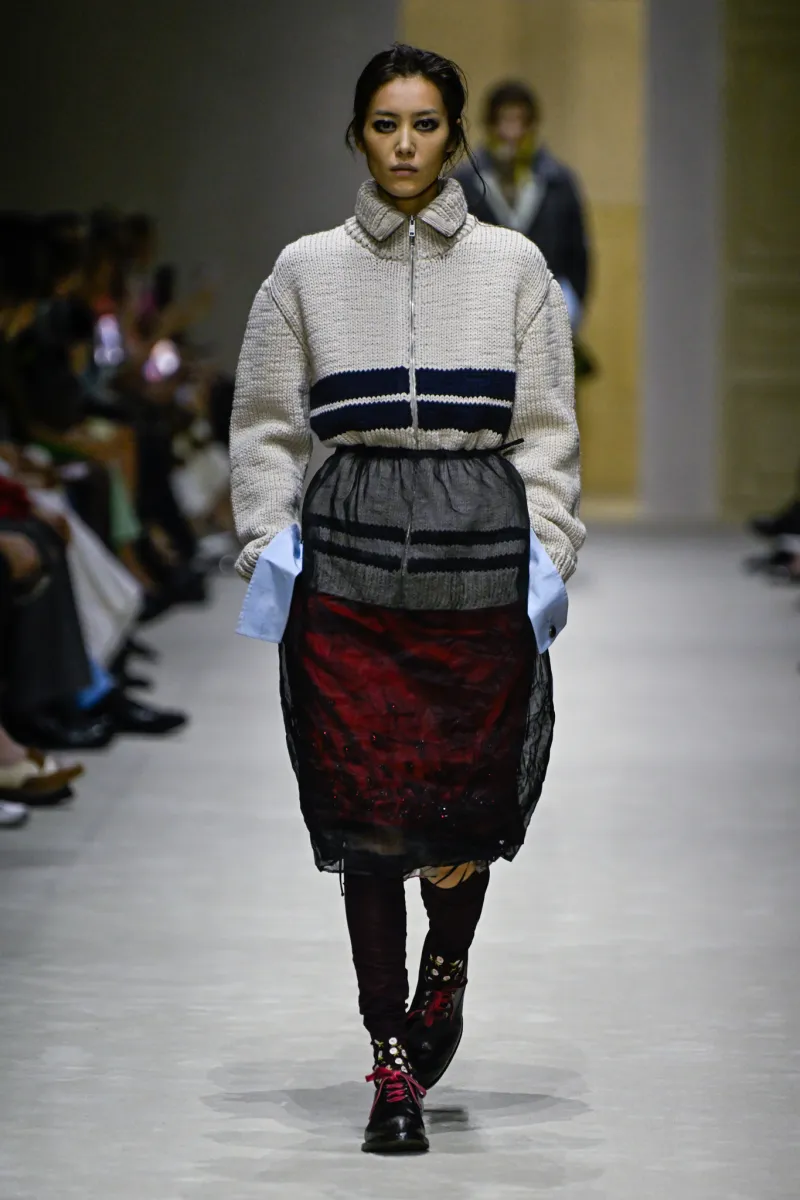
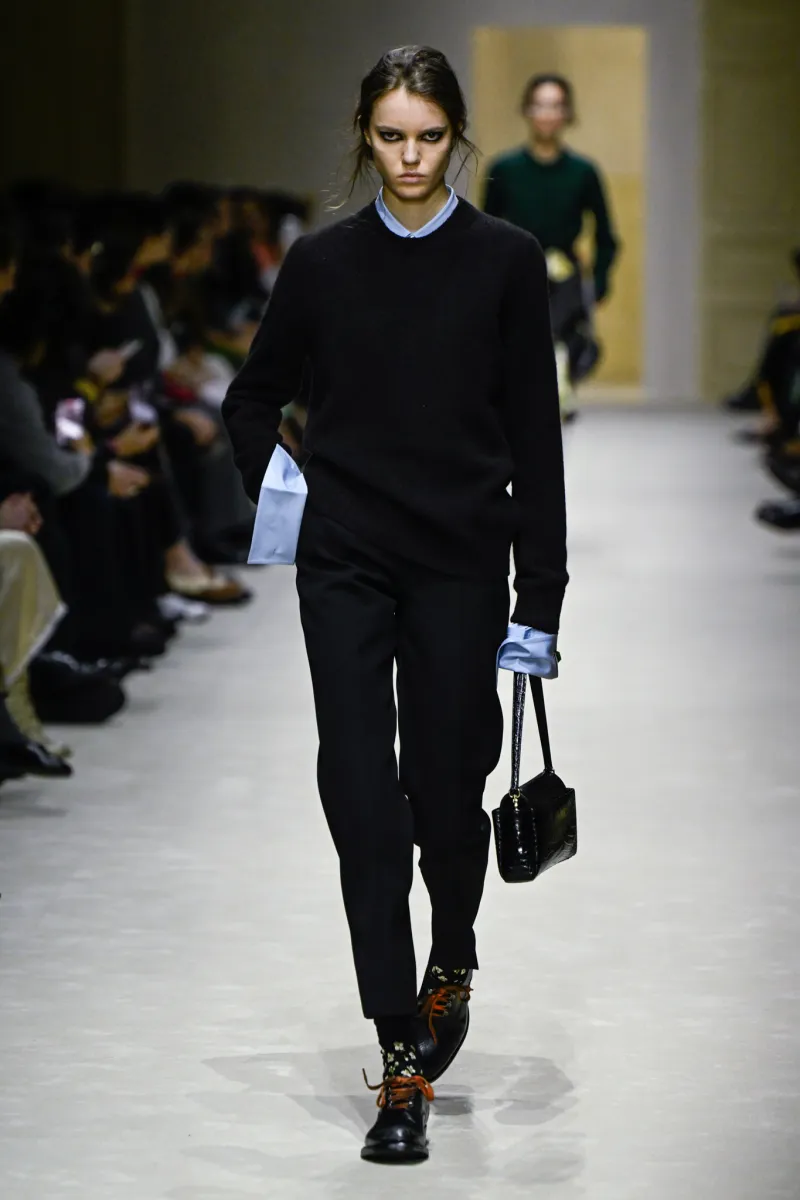
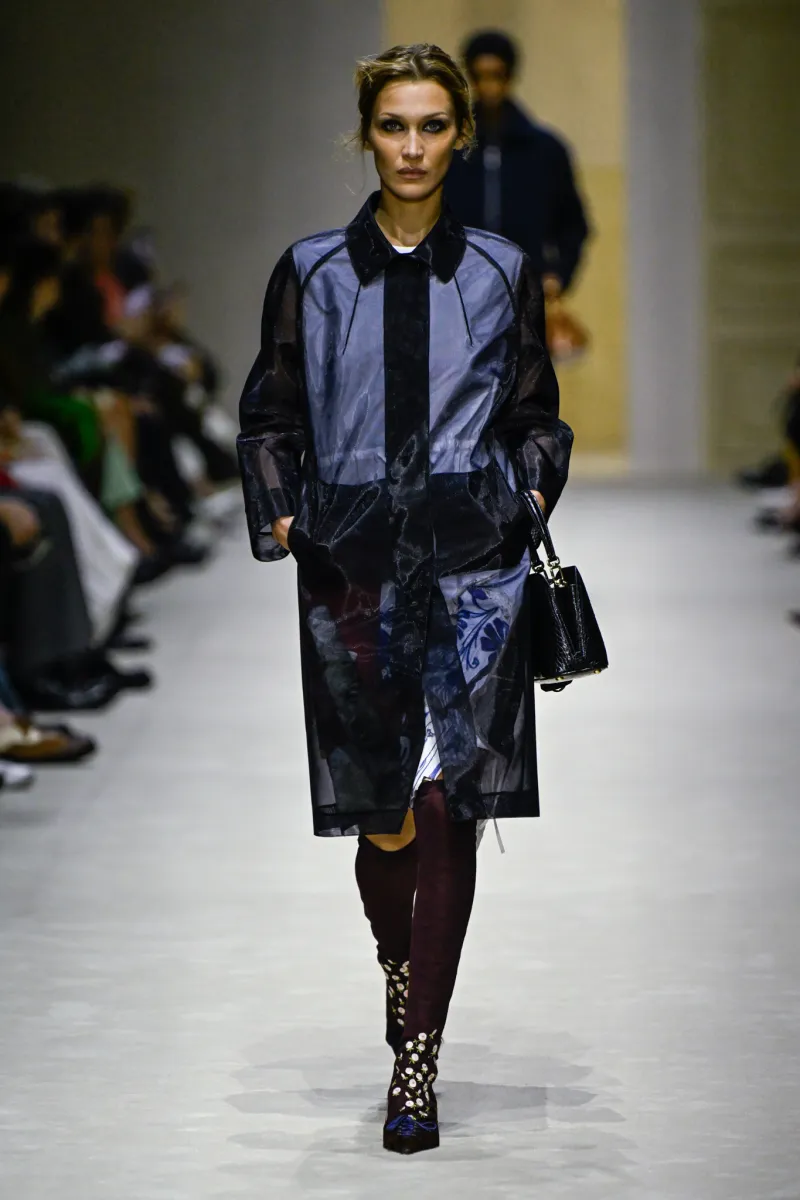
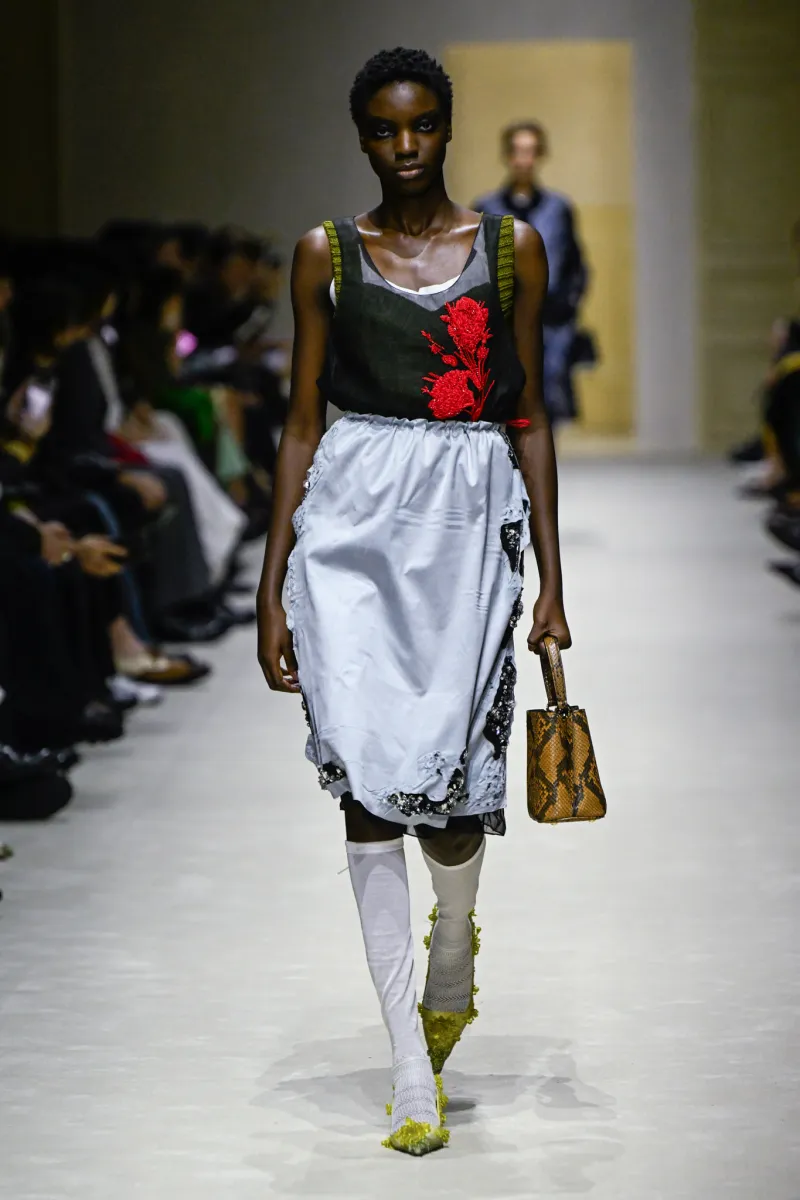
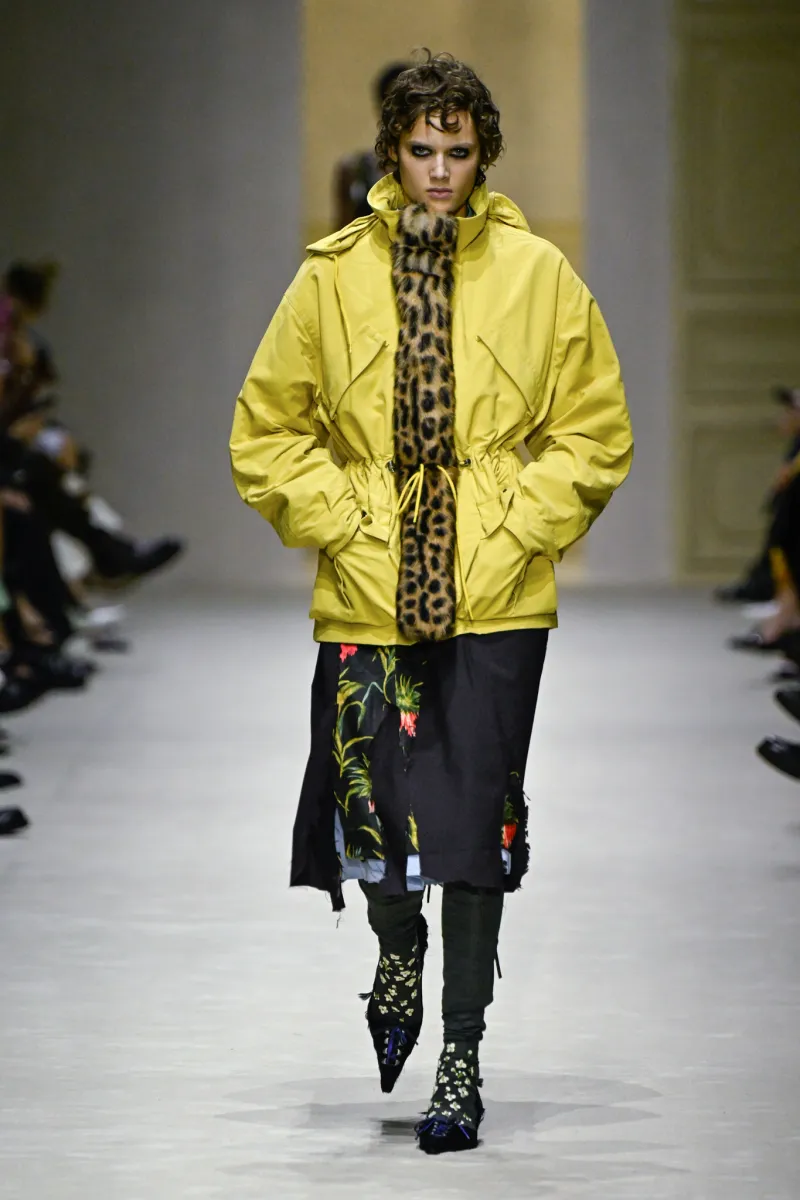
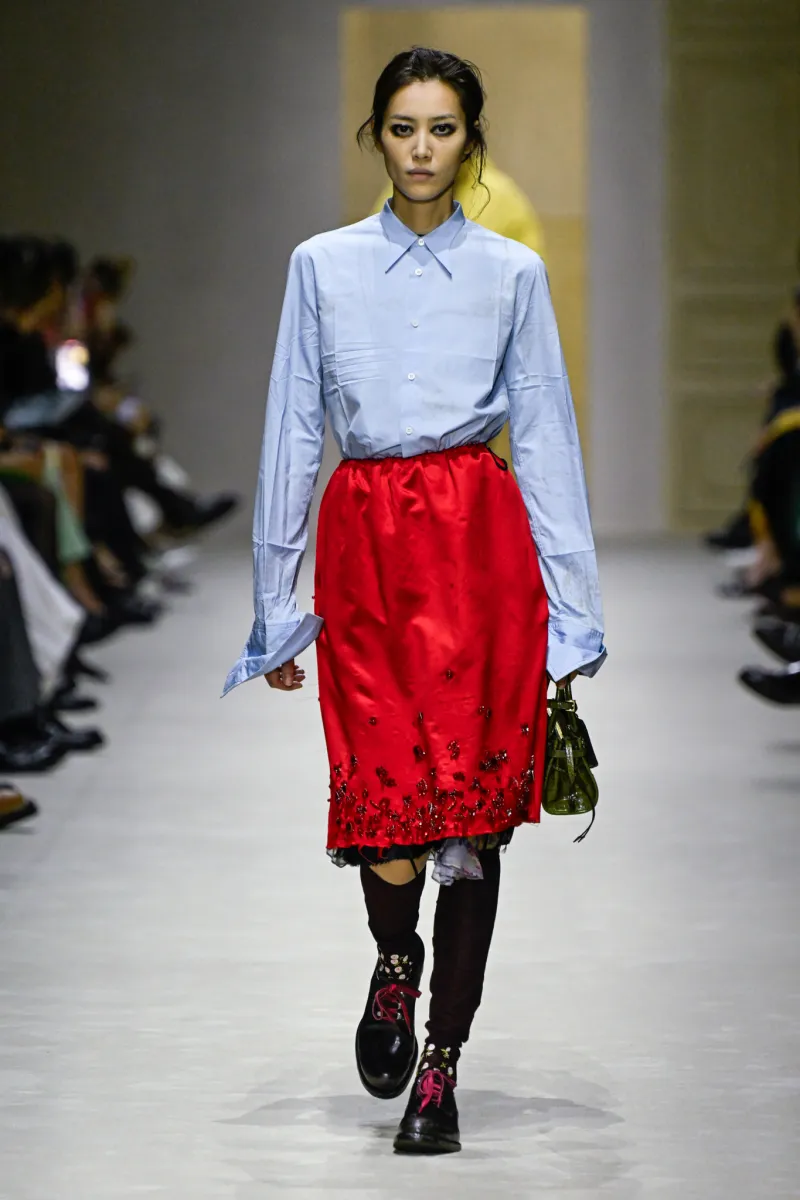
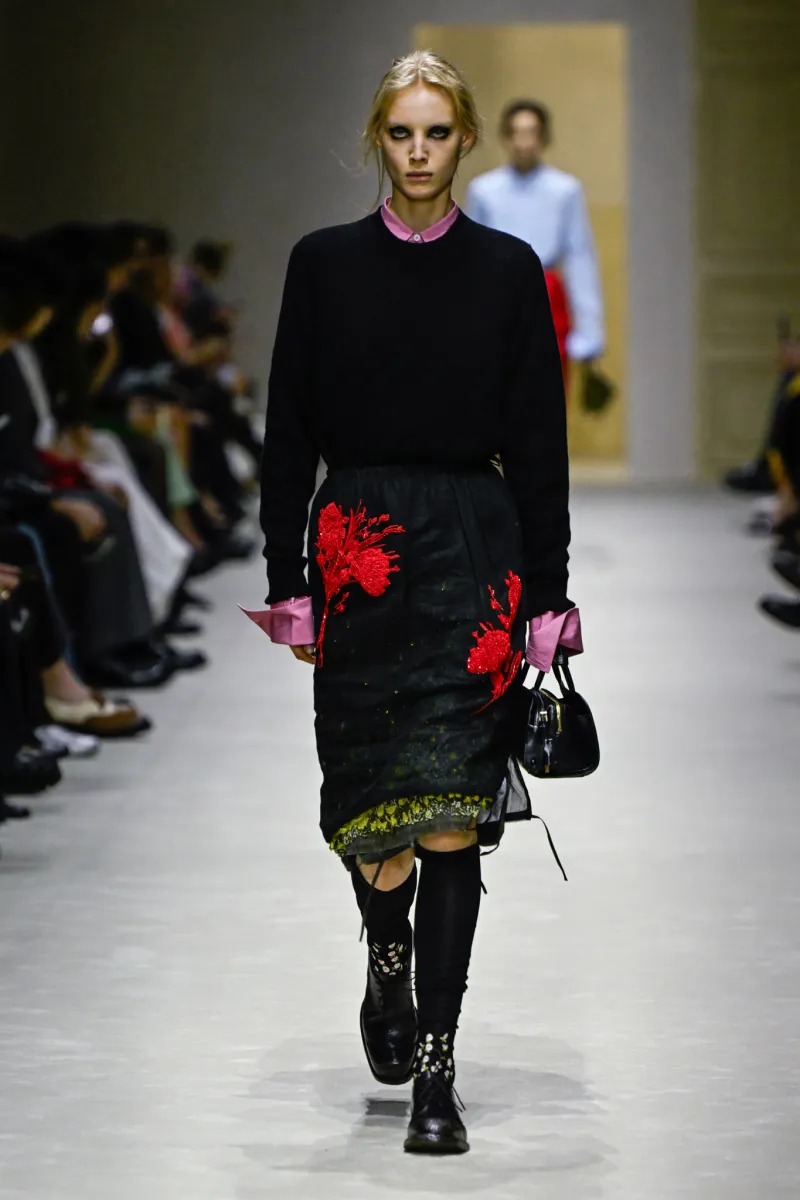
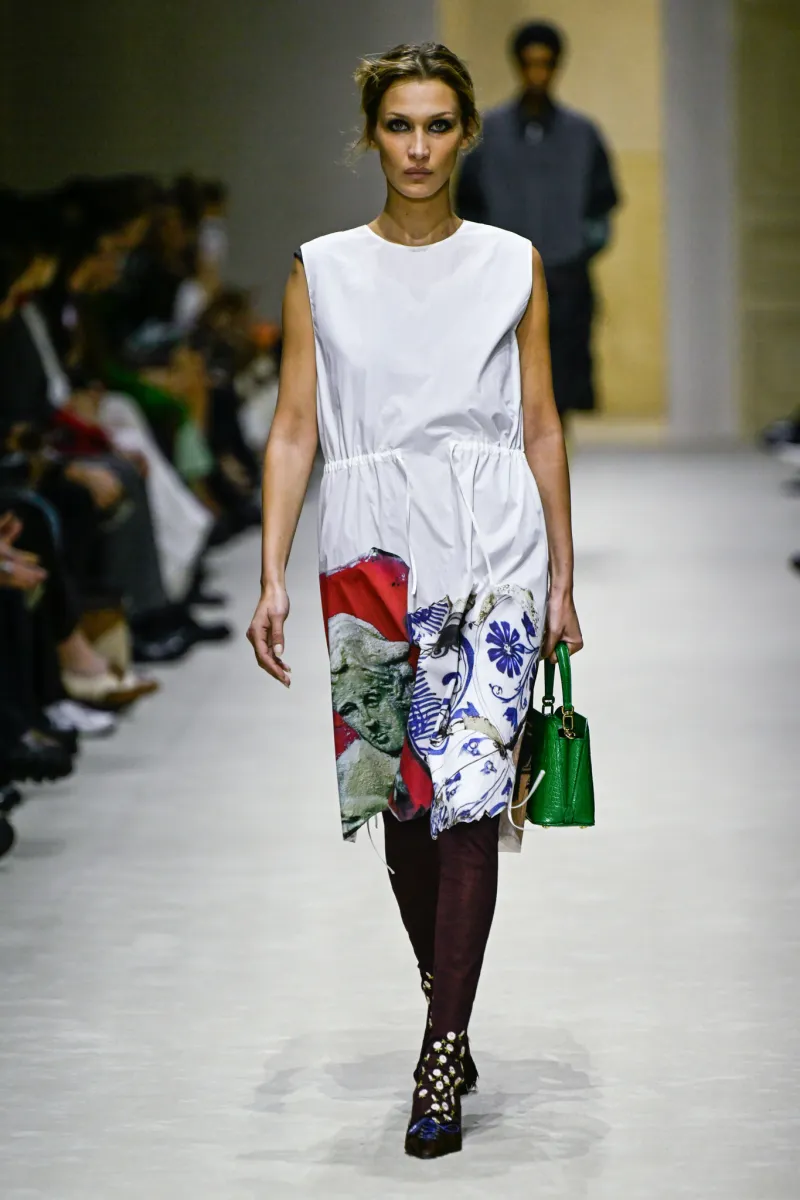
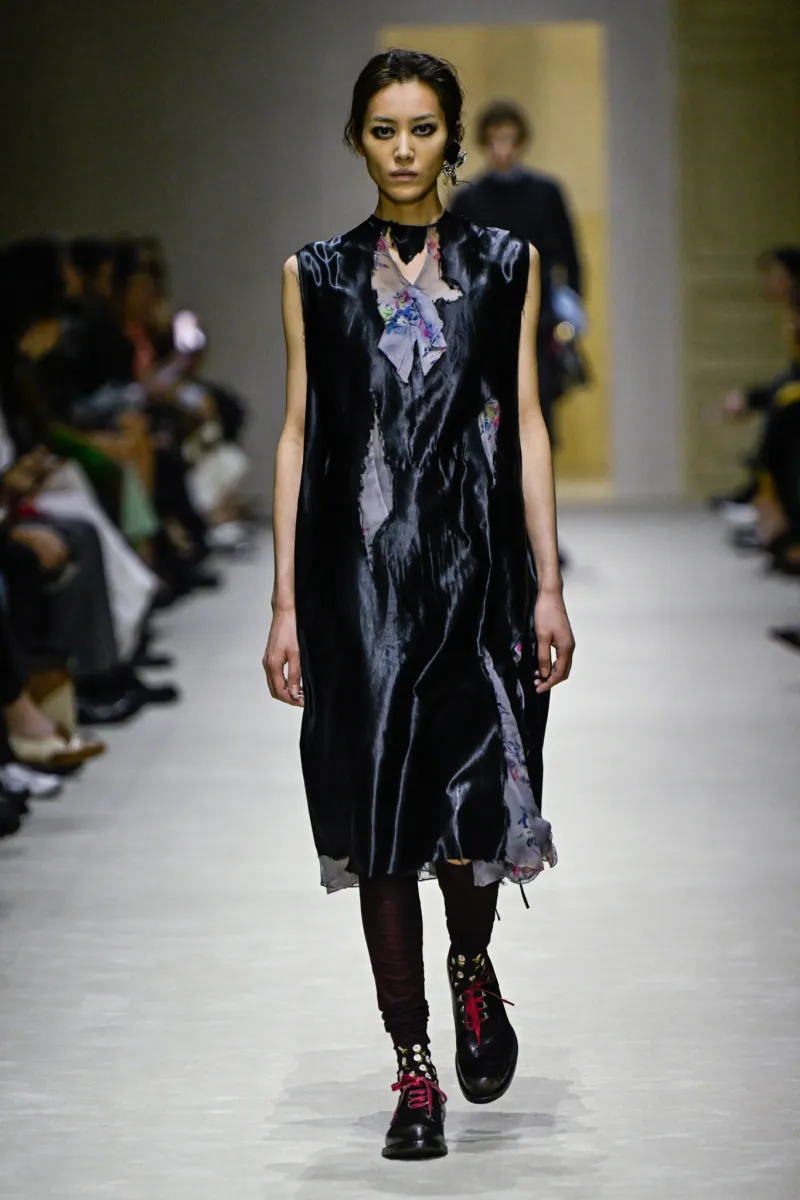
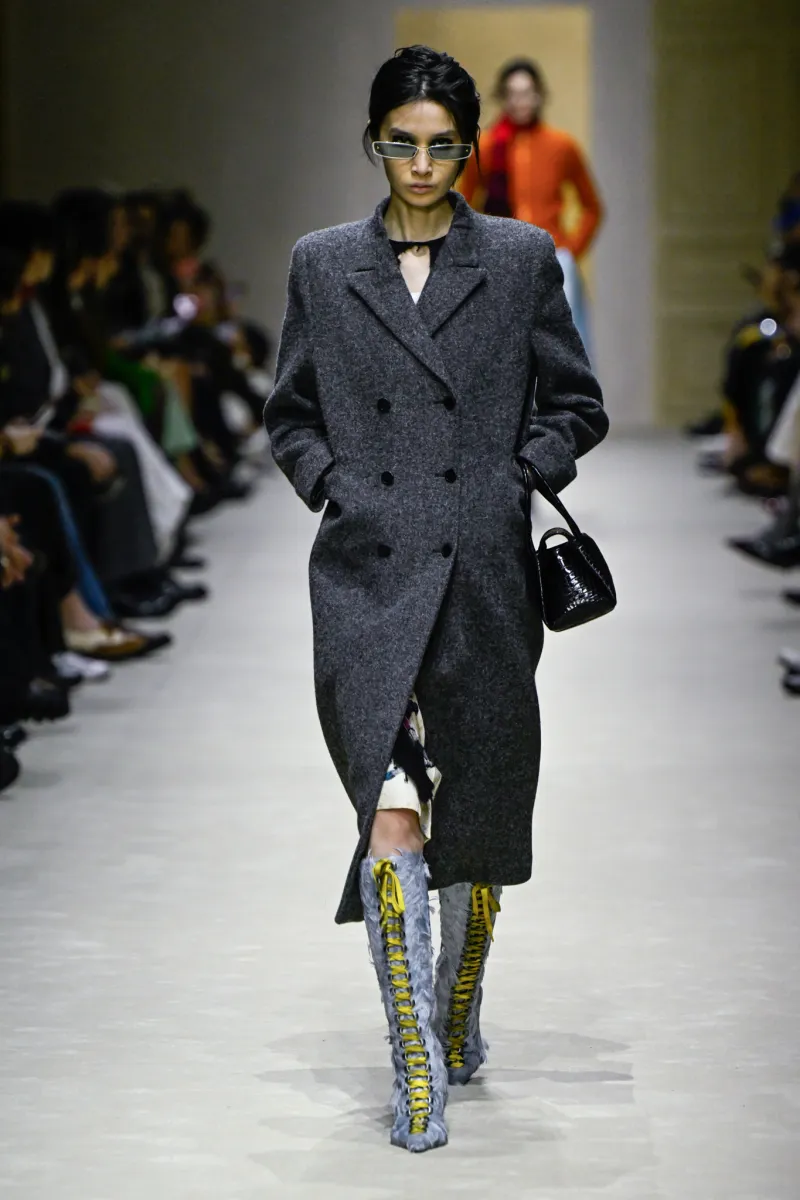
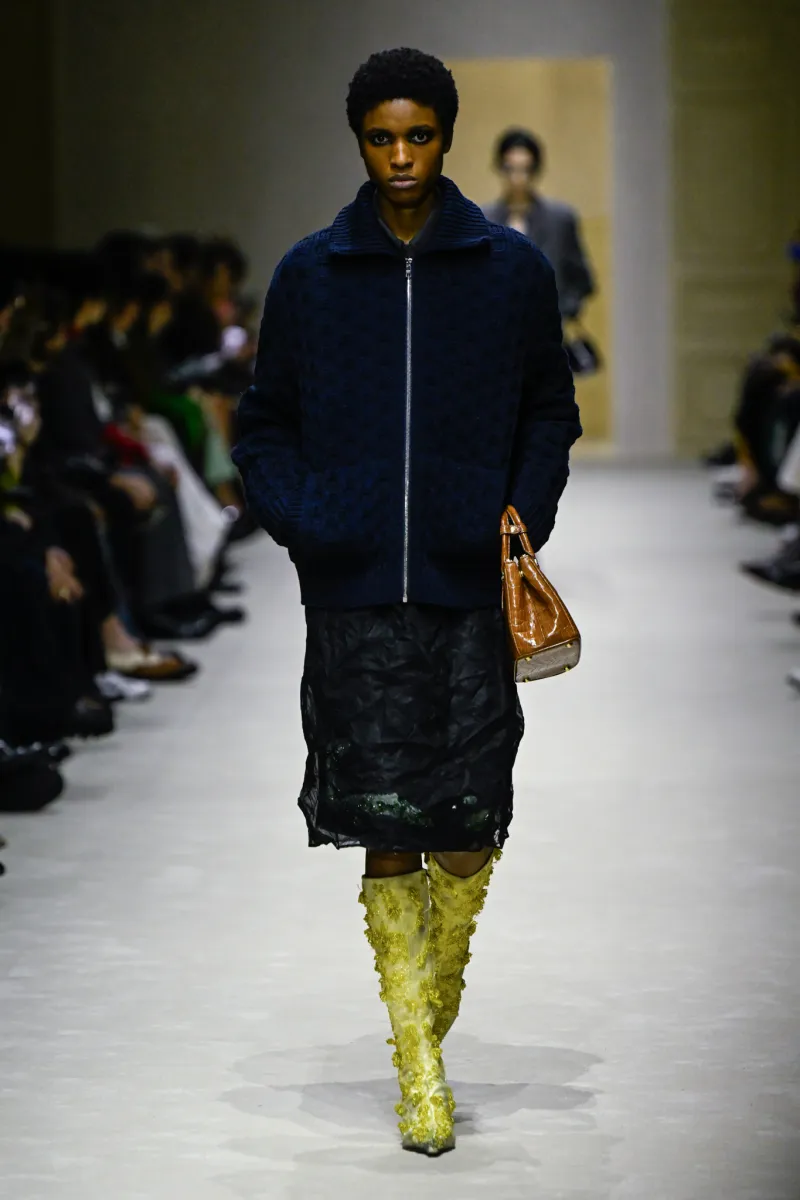
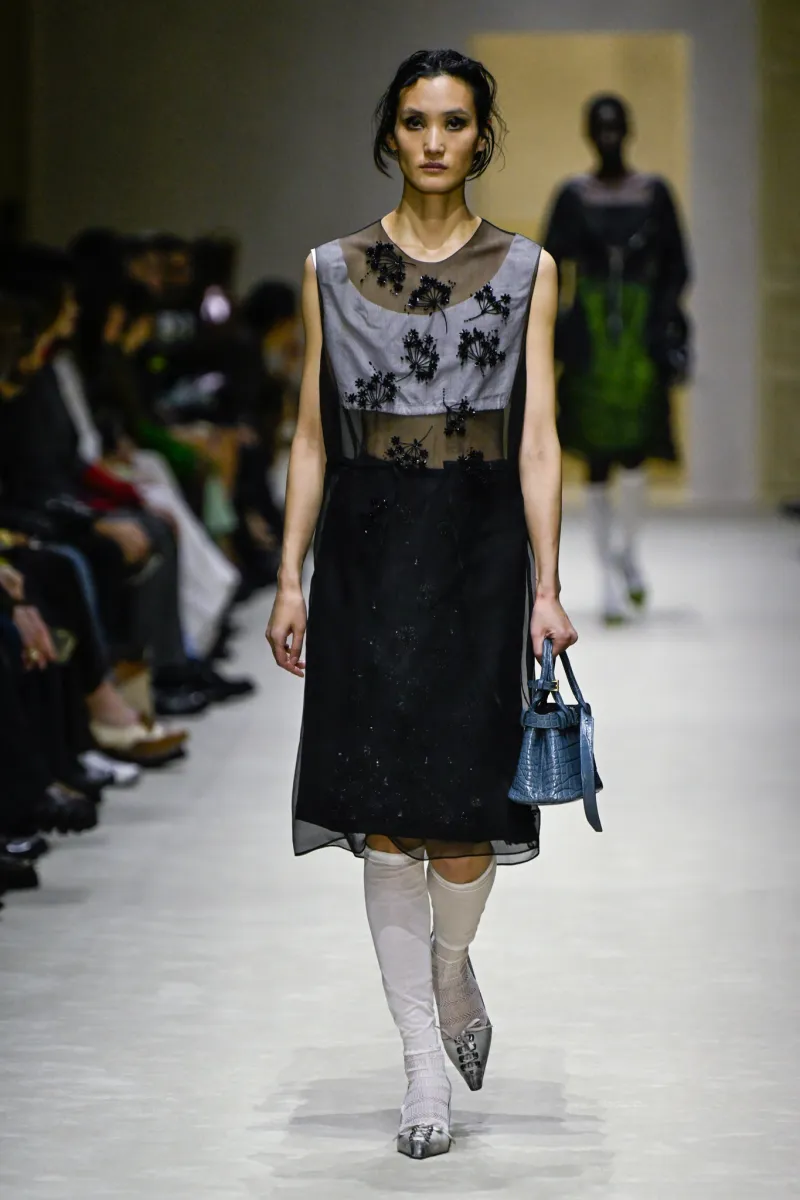
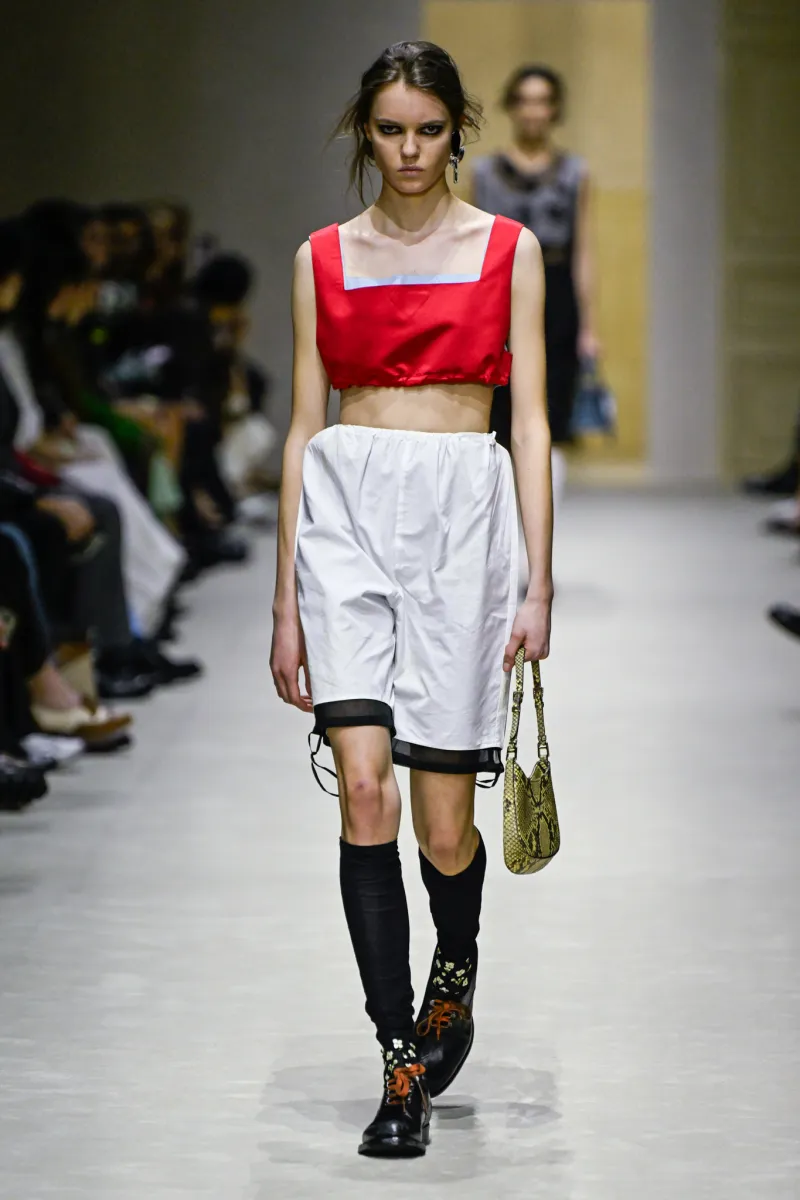
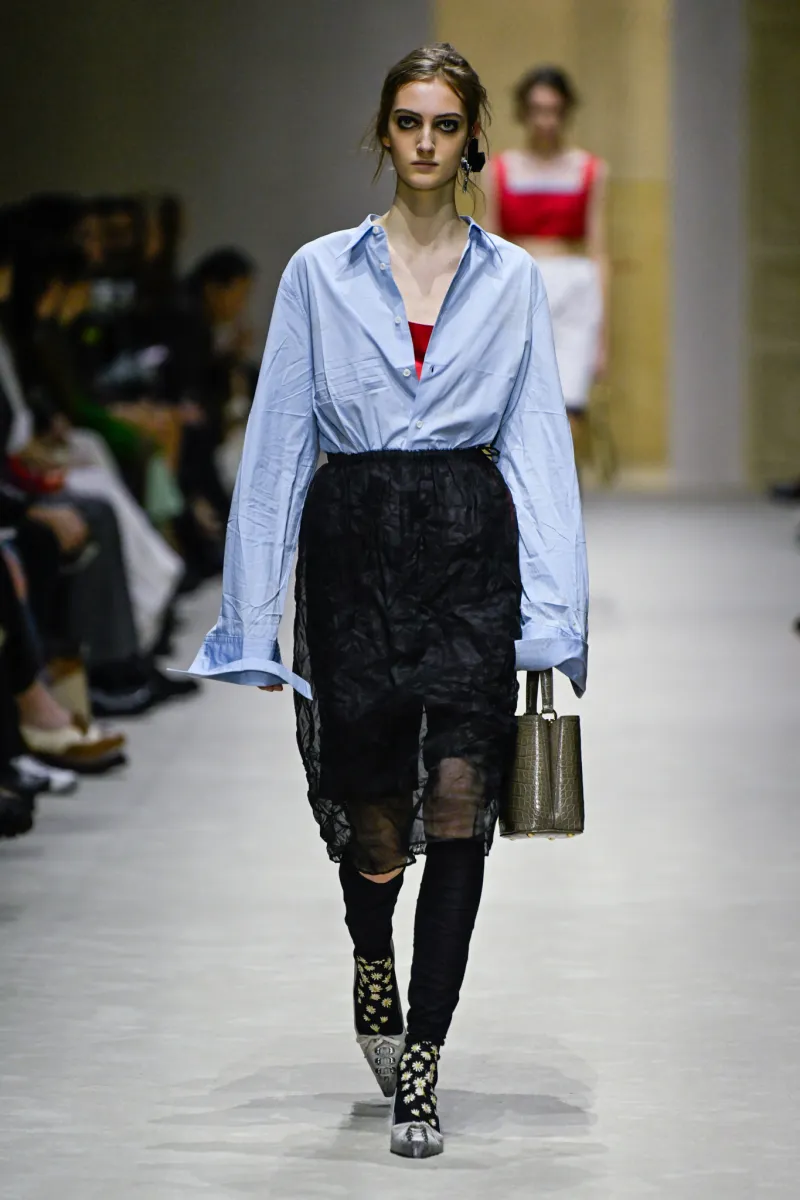
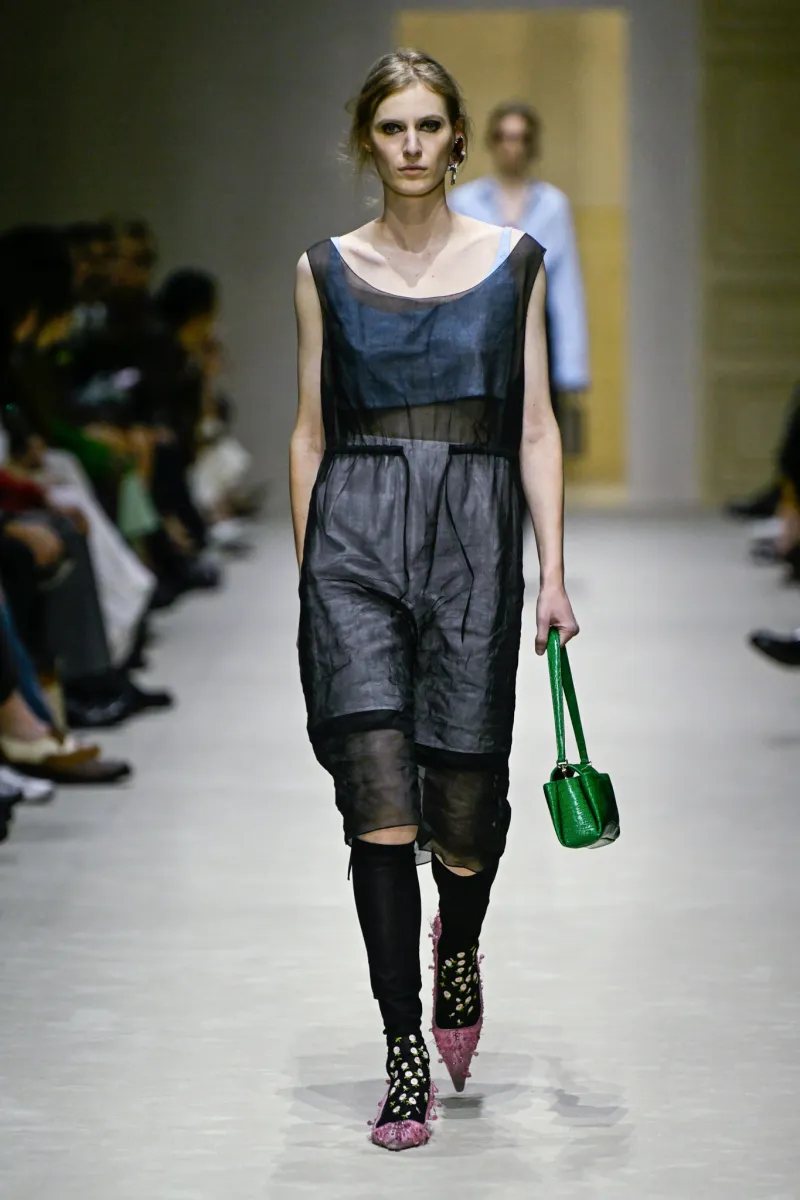
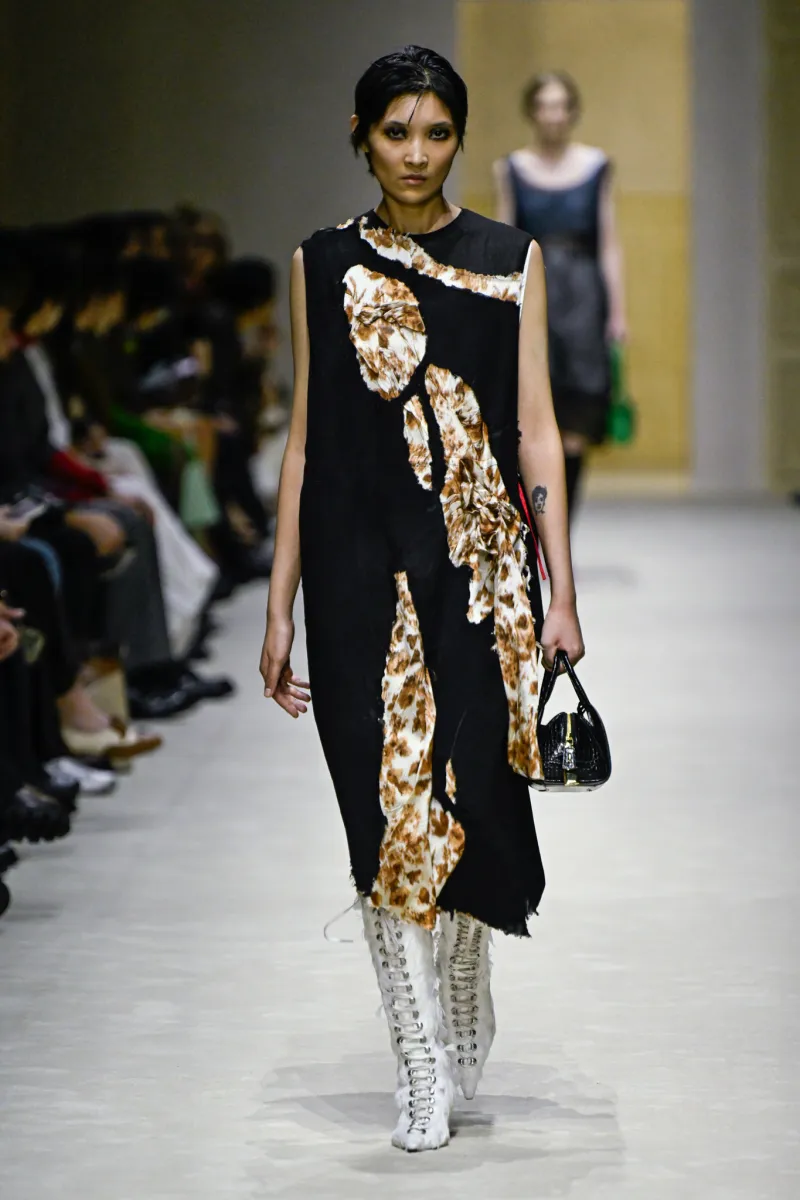
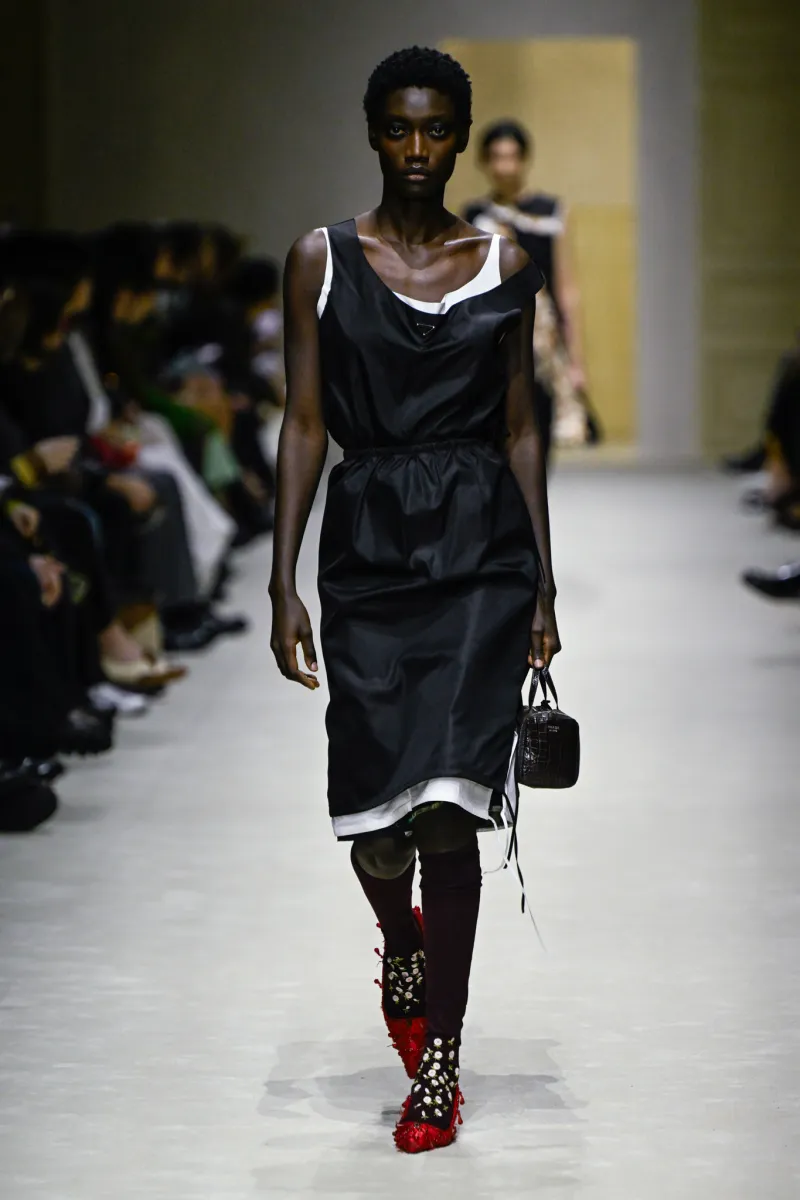
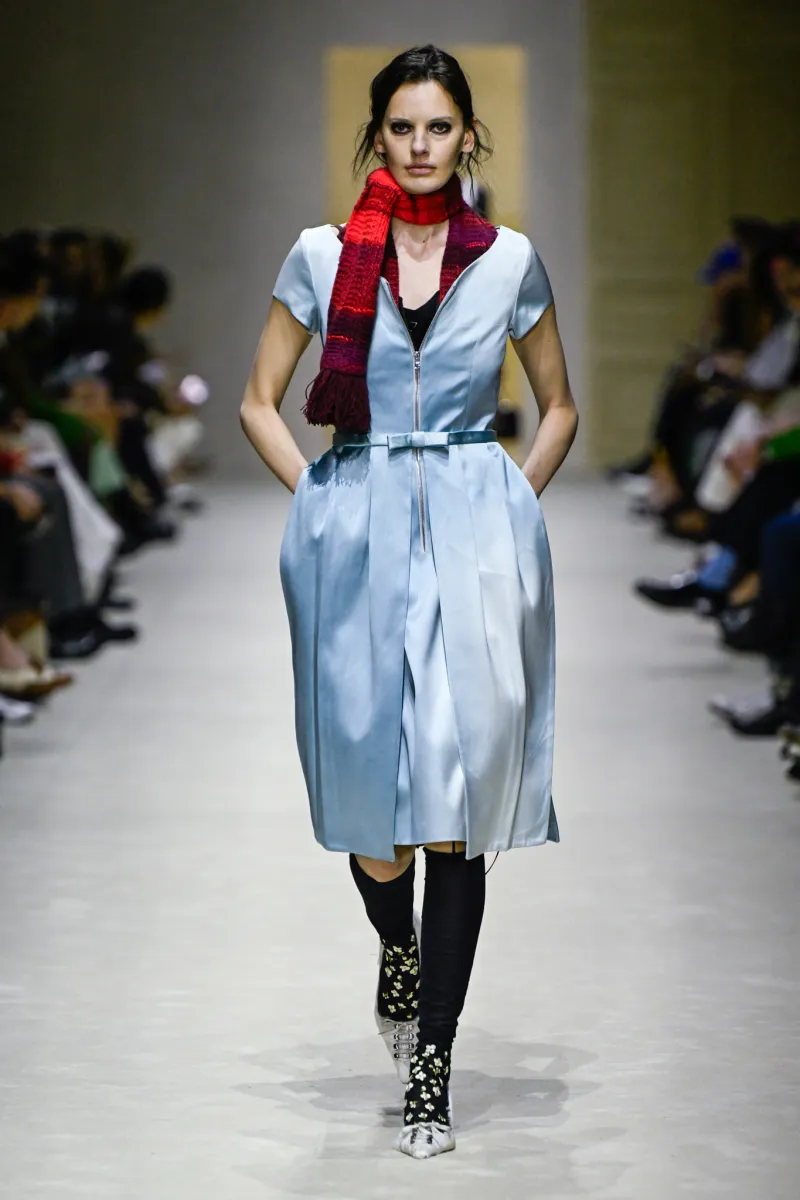
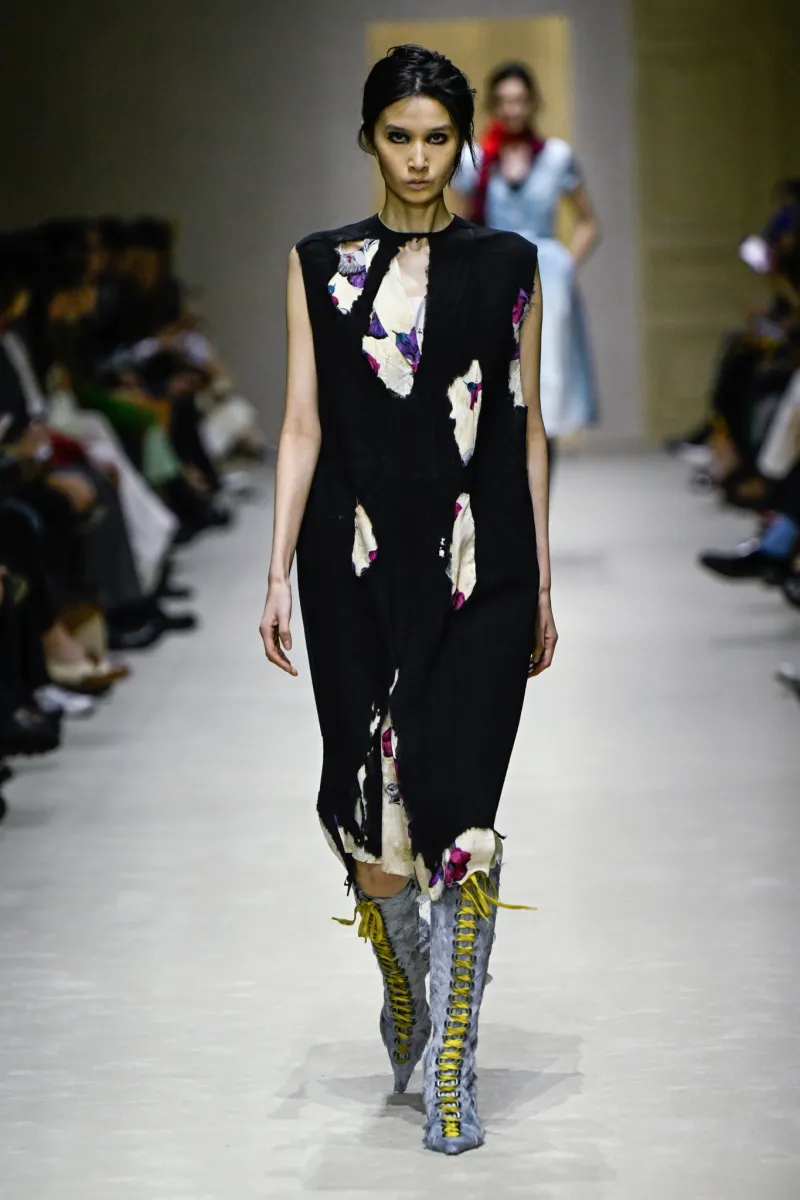
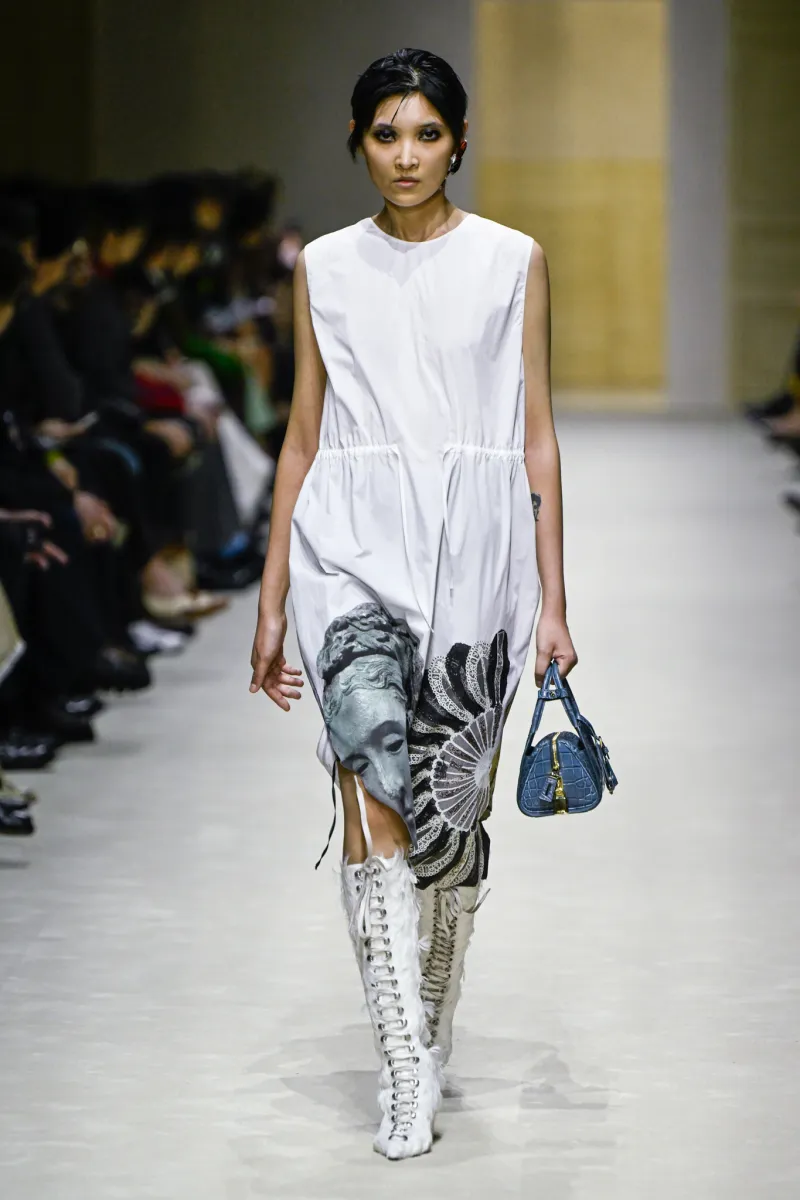
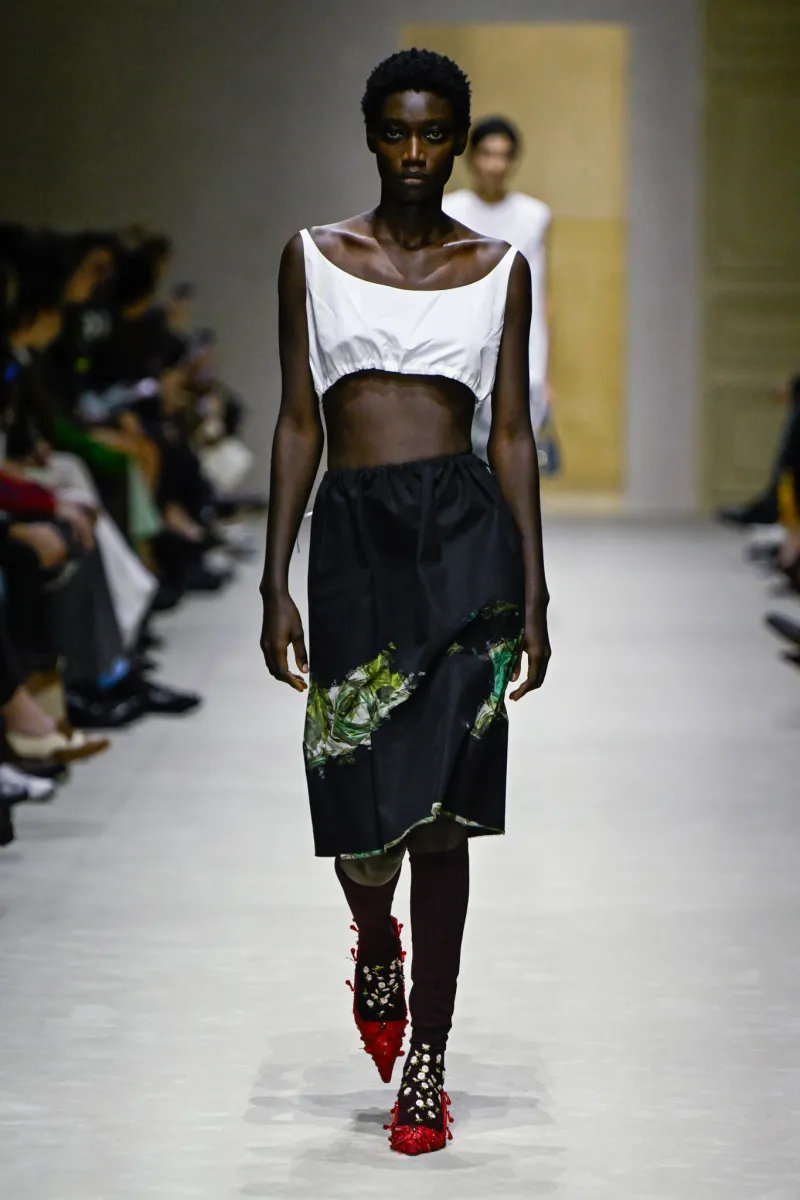
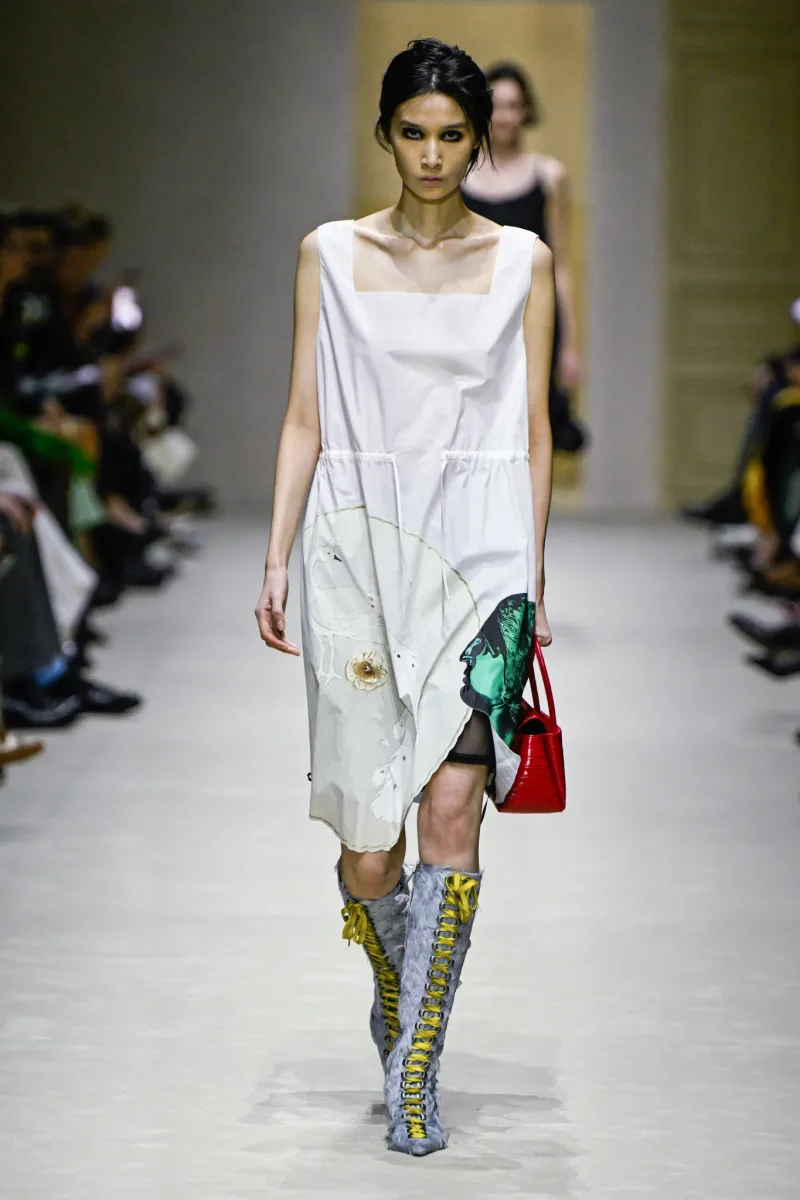
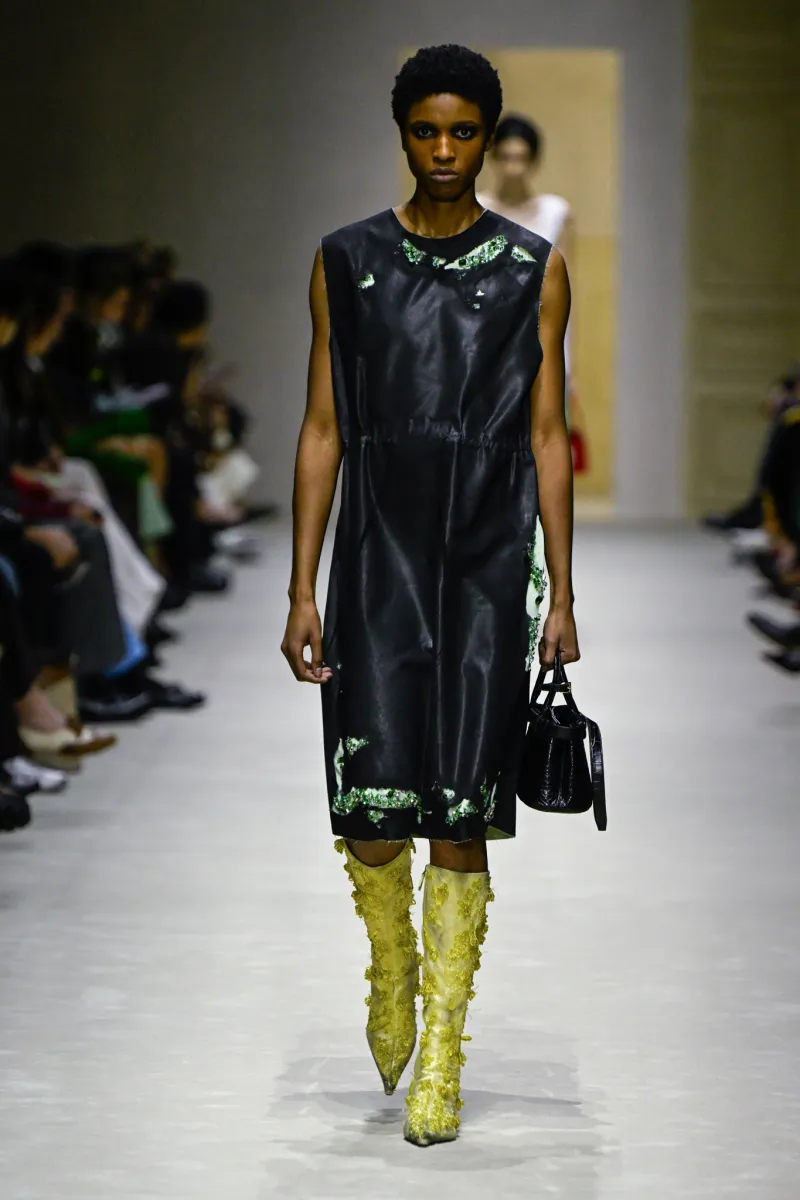
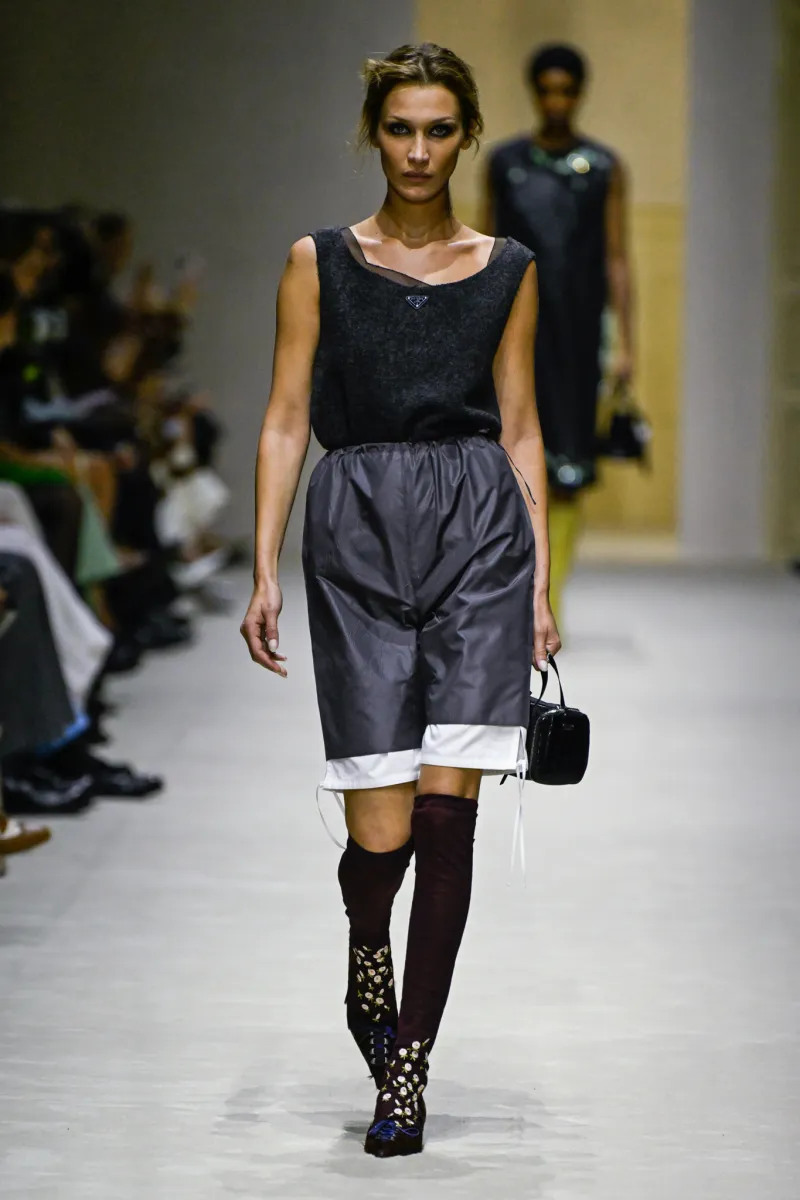
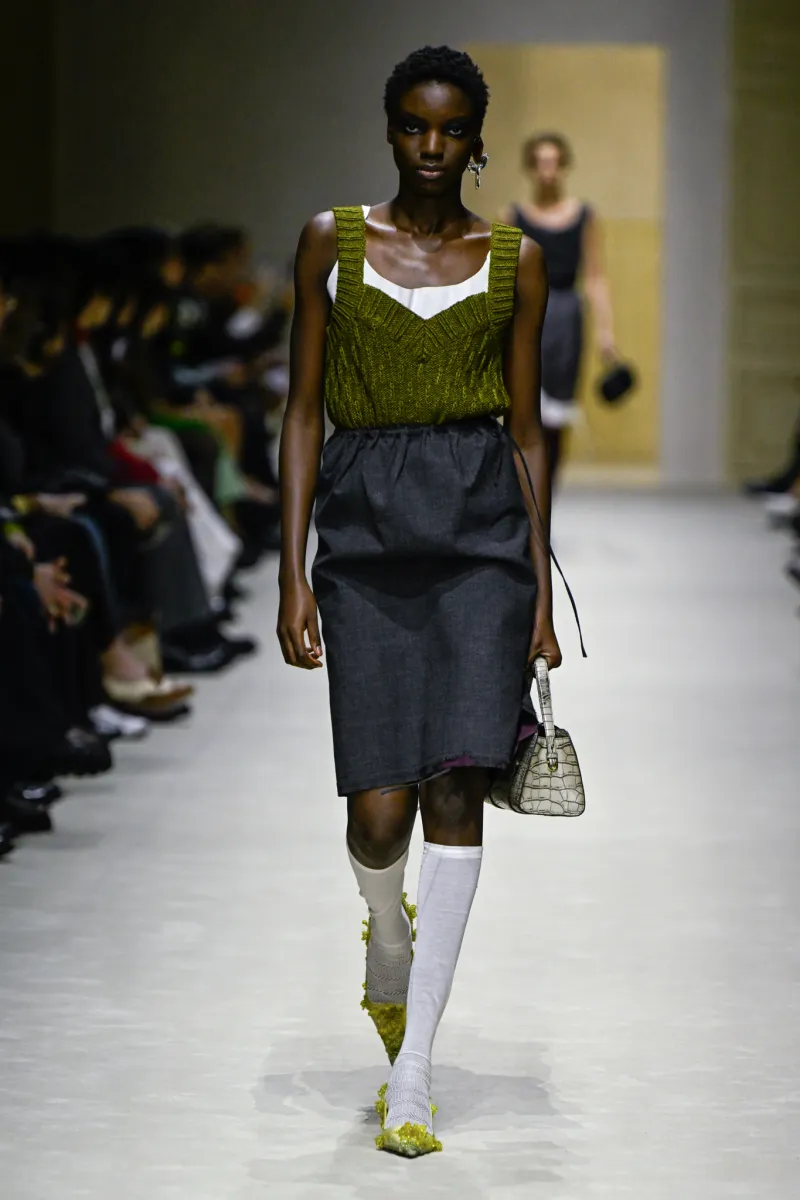
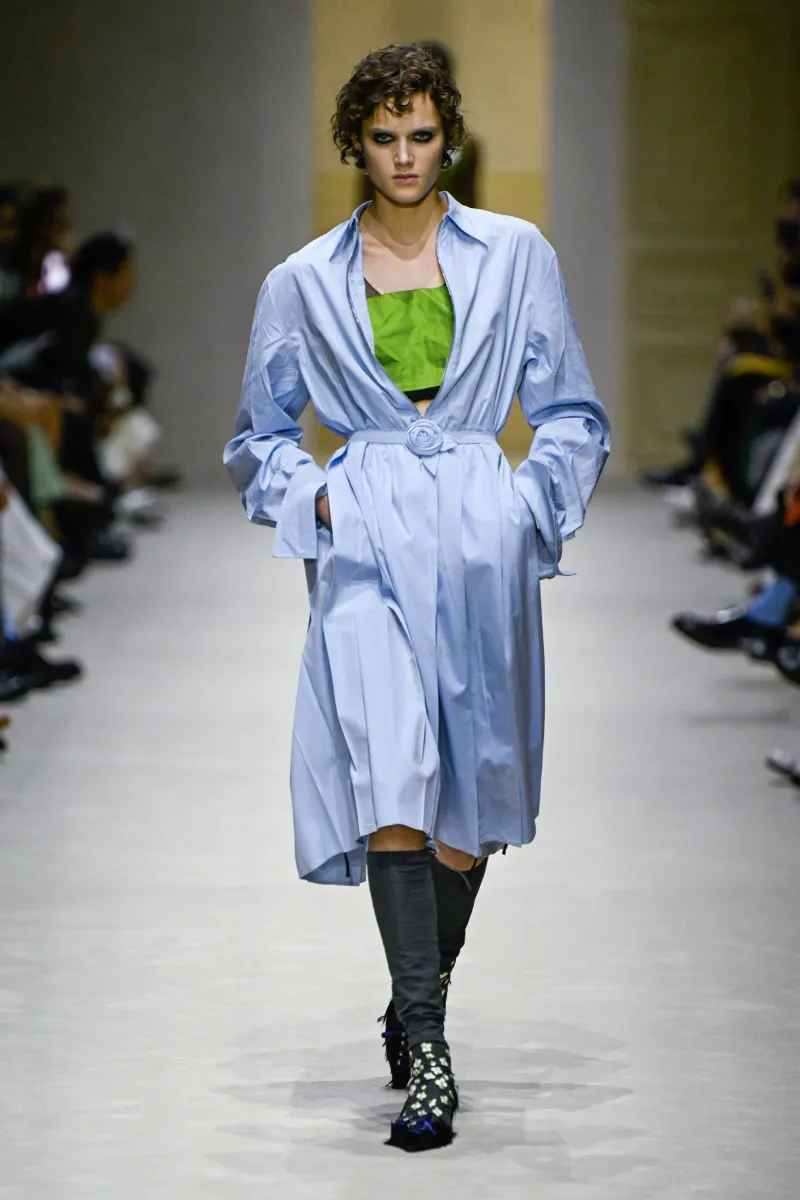
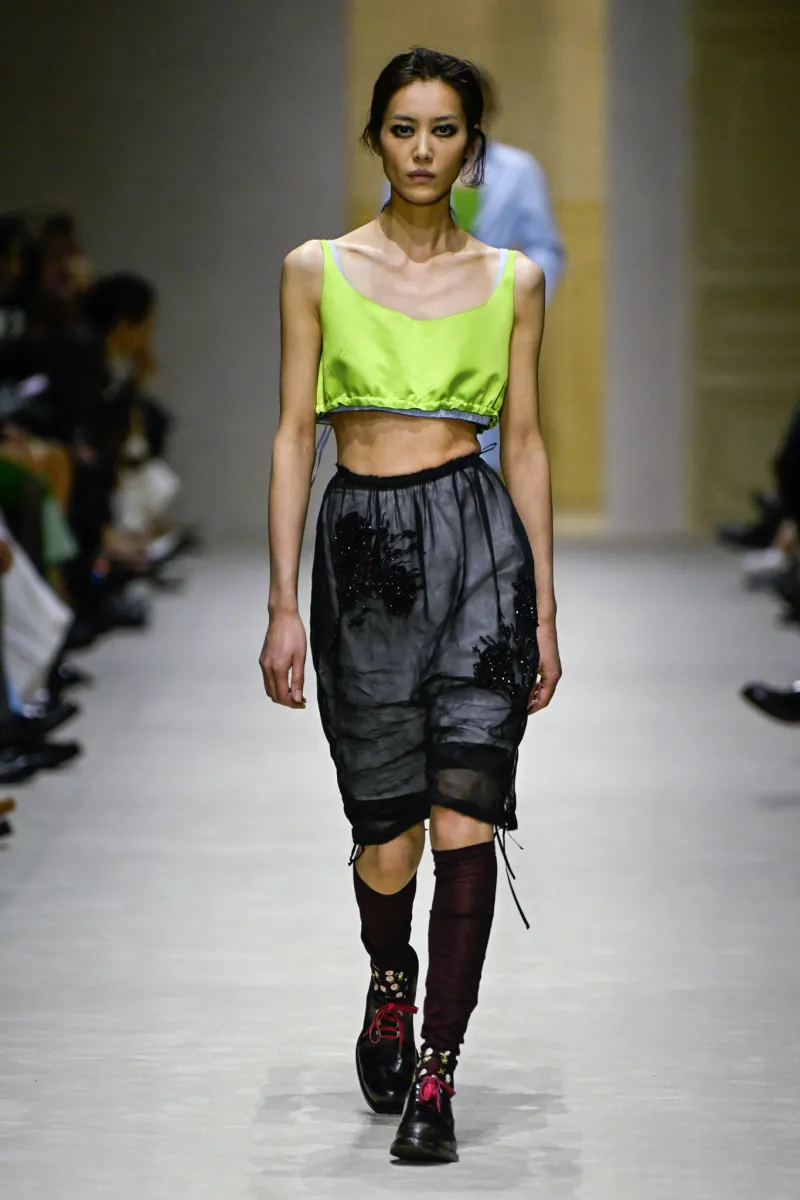
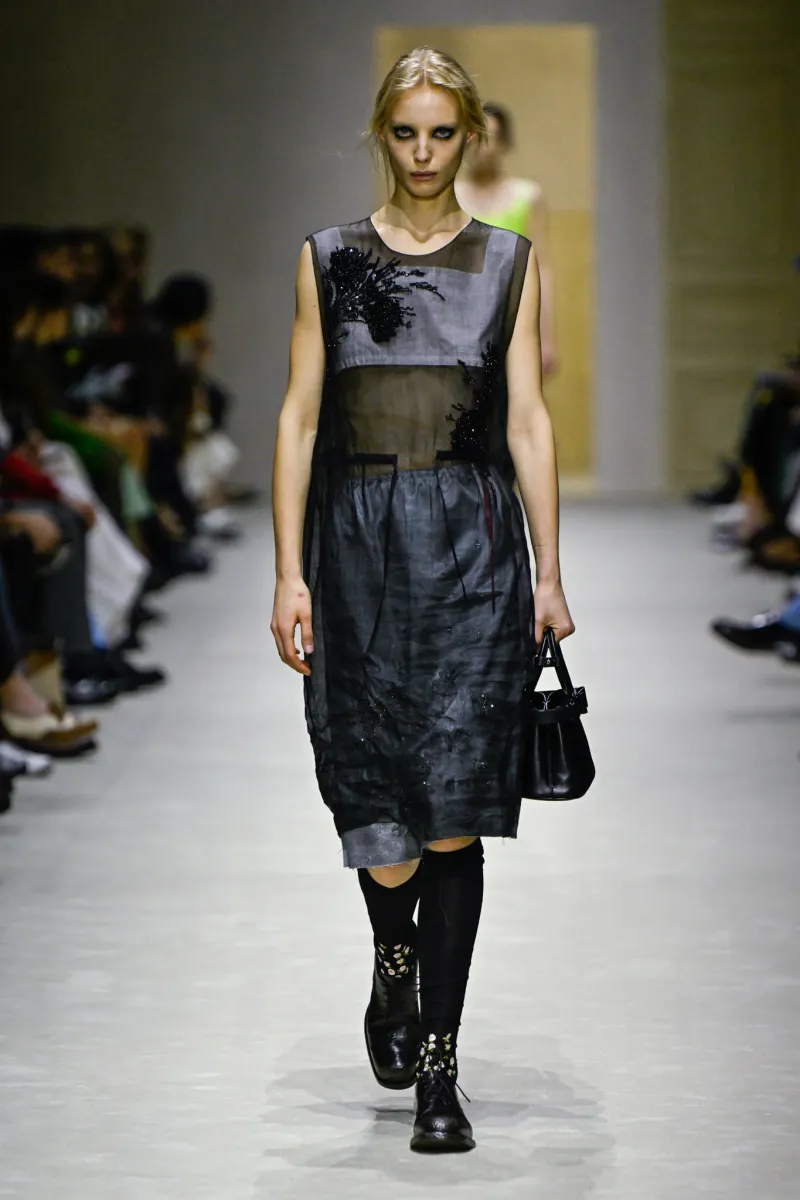
Backstage, Simons framed the idea simply. What goes with what? What still works? What happens if you try something differently? Those questions shaped a show that unfolded less like a parade of outfits and more like an exercise in lived-in possibility.
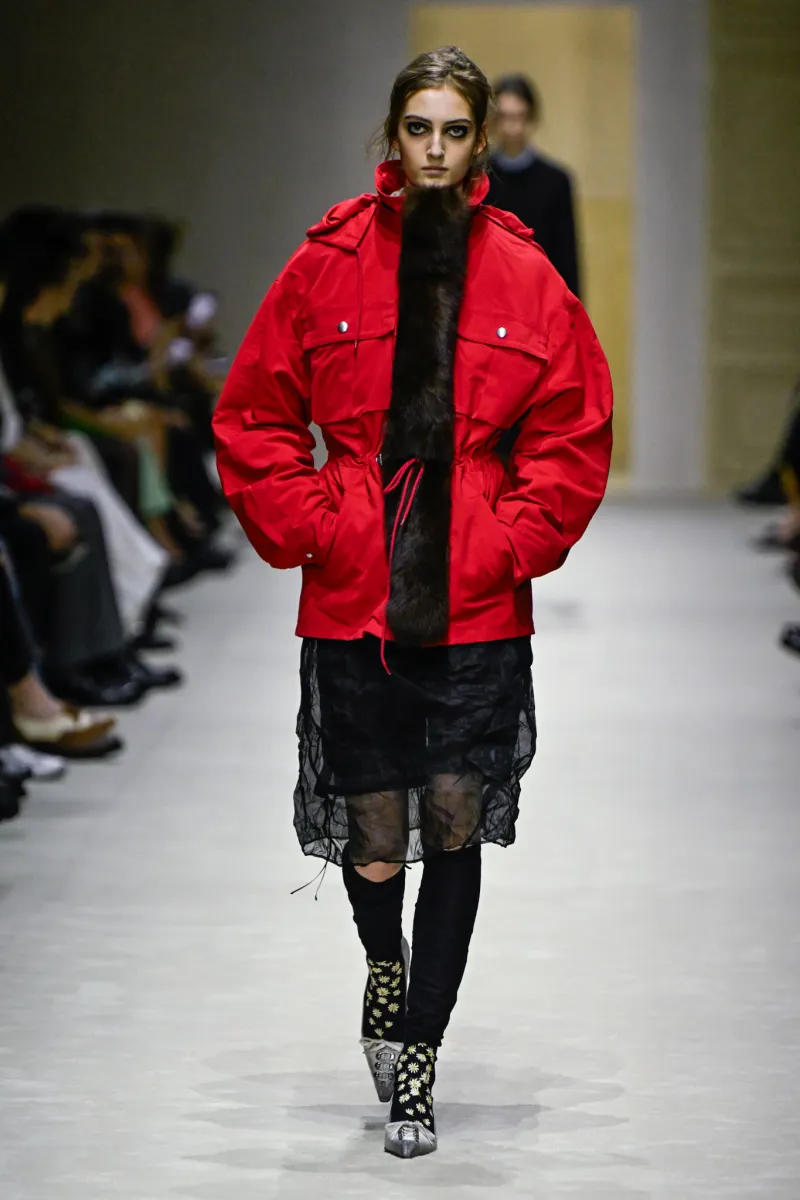
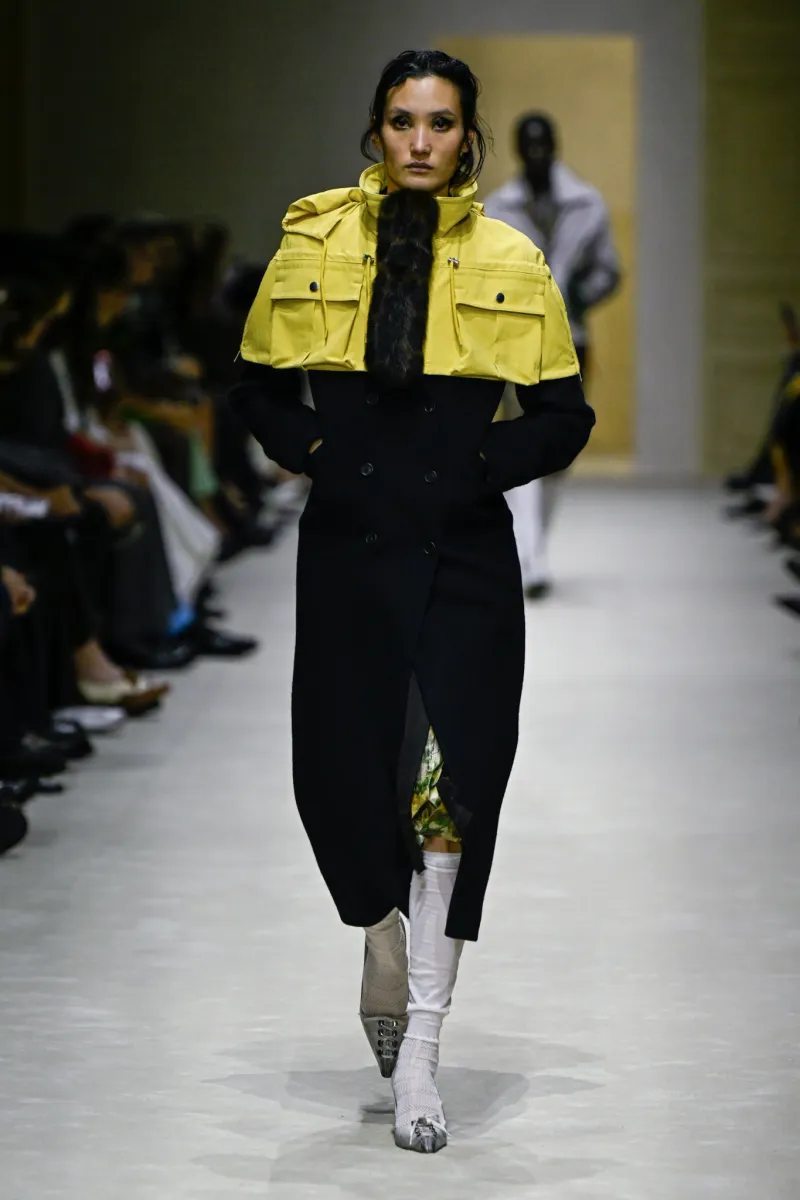
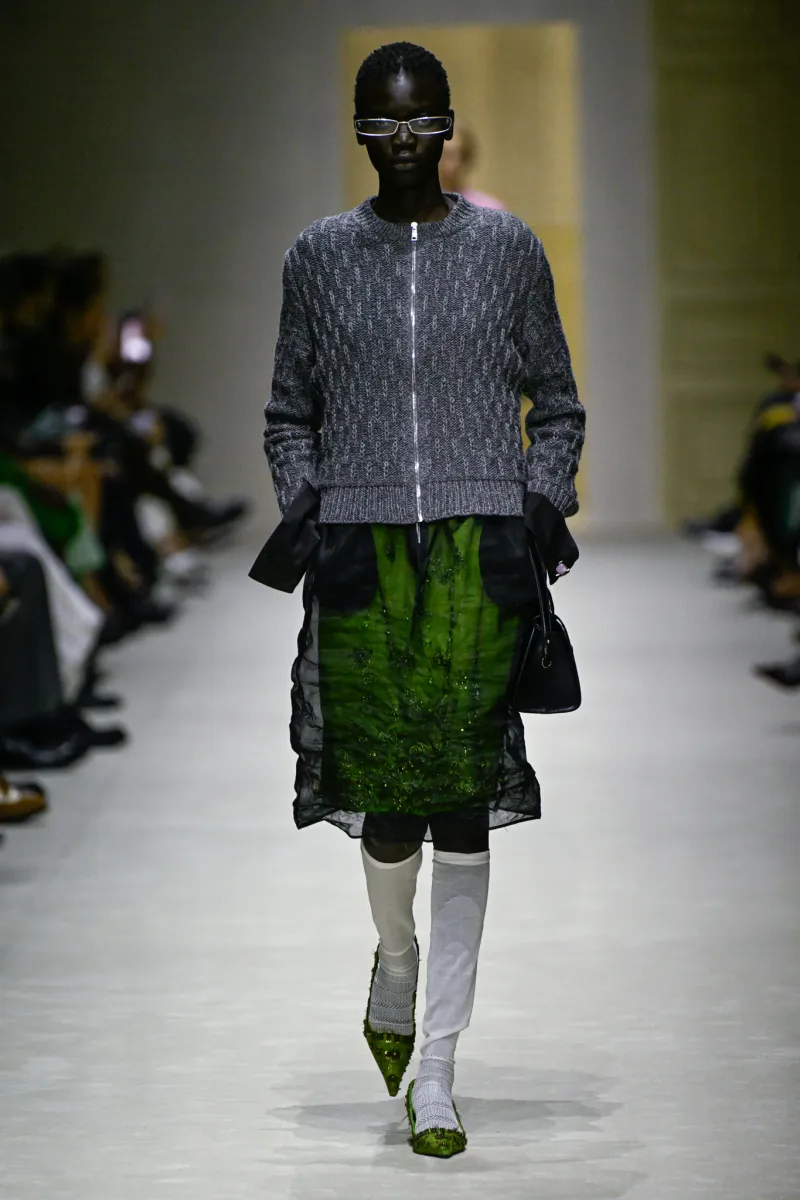
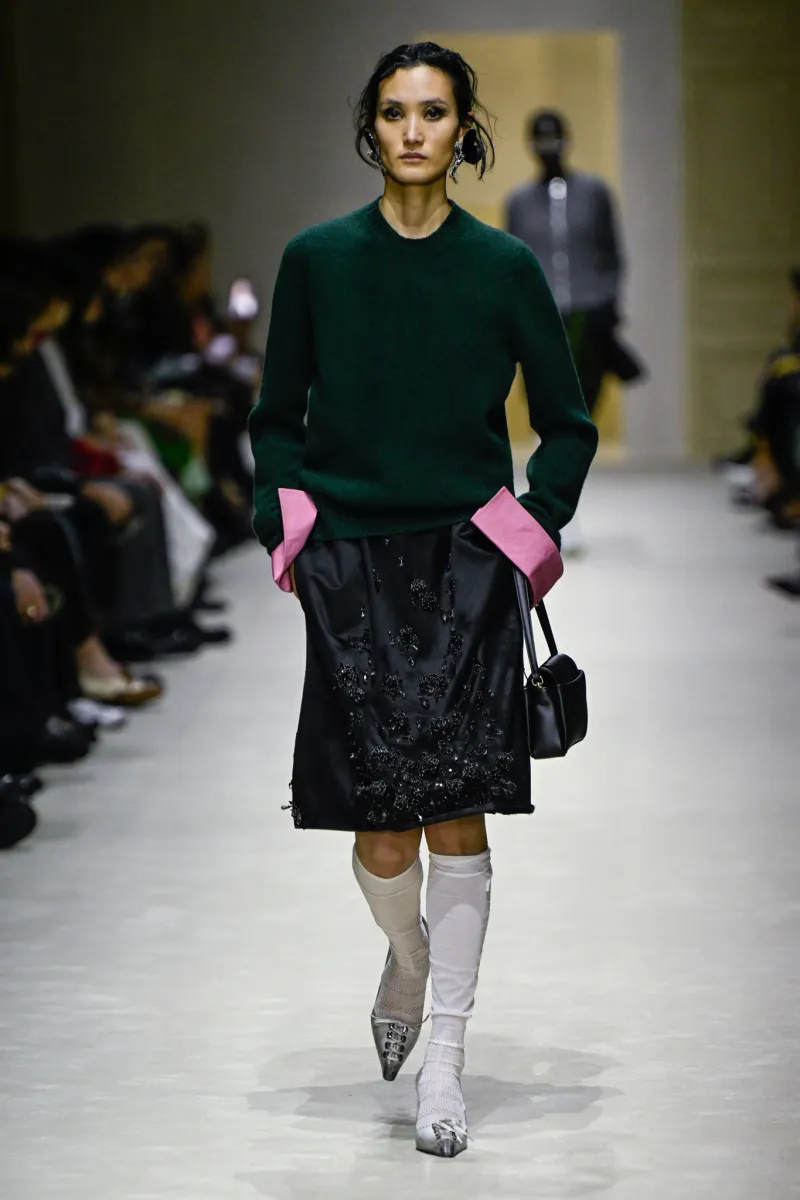
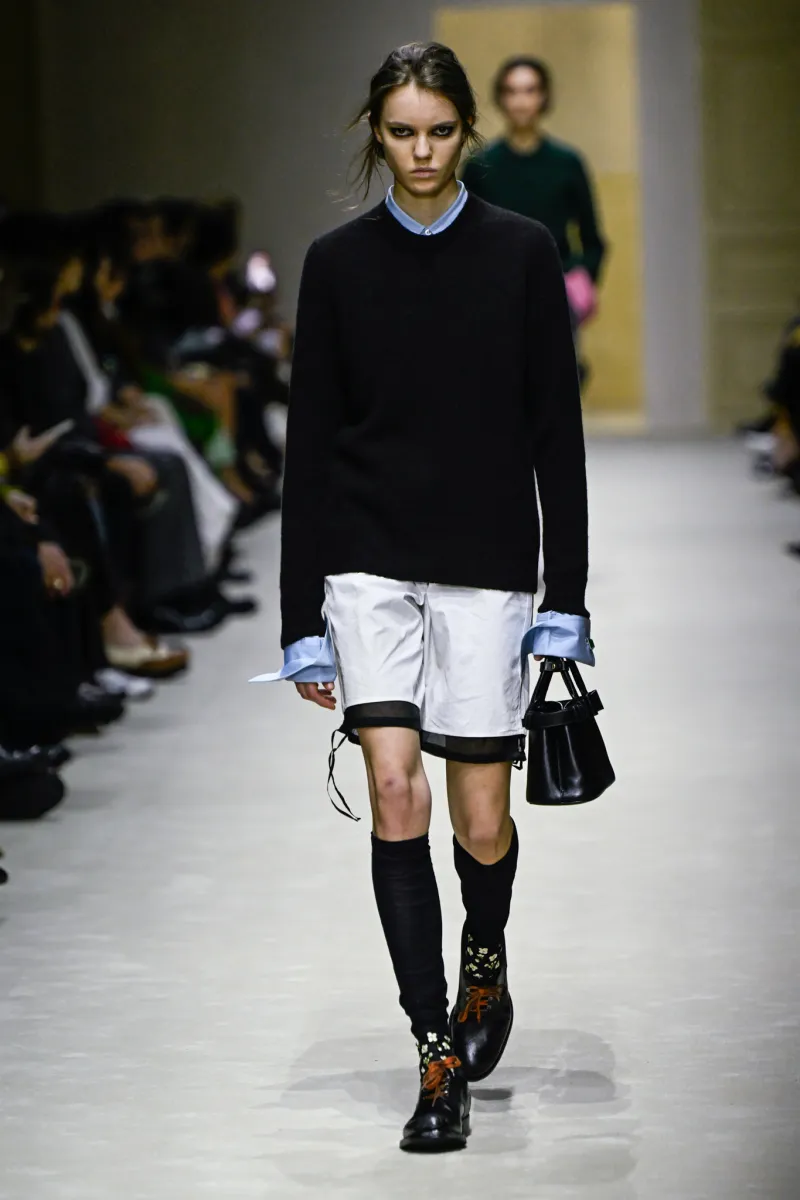
To communicate that point, the designers made a striking choice. Just 15 models walked the show, each appearing four times in progressively altered layers. The result was 60 exits that revealed clothing not as fixed statements, but as evolving combinations. It took a moment for the concept to land, but once it did, the effect felt quietly radical and surprisingly generous. The message wasn’t about novelty for novelty’s sake, but about imagination, restraint, and reuse.
Clothes That Reveal Themselves Over Time
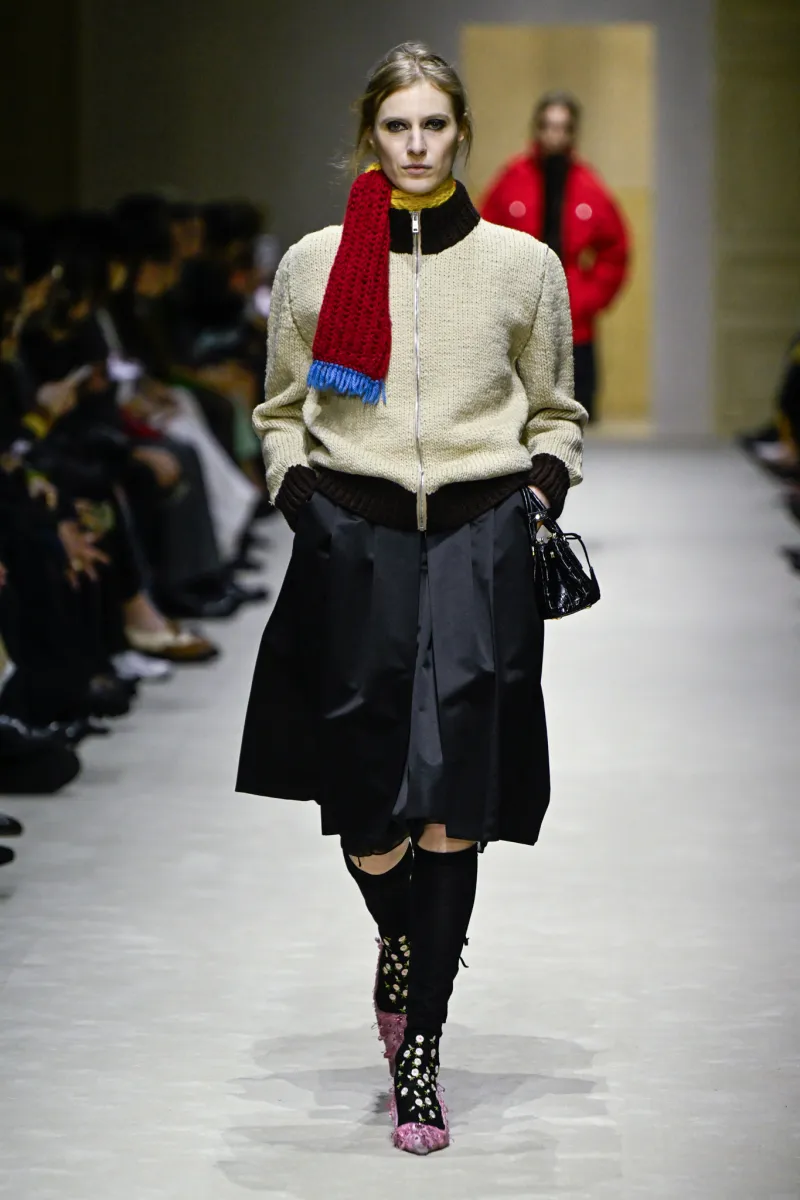
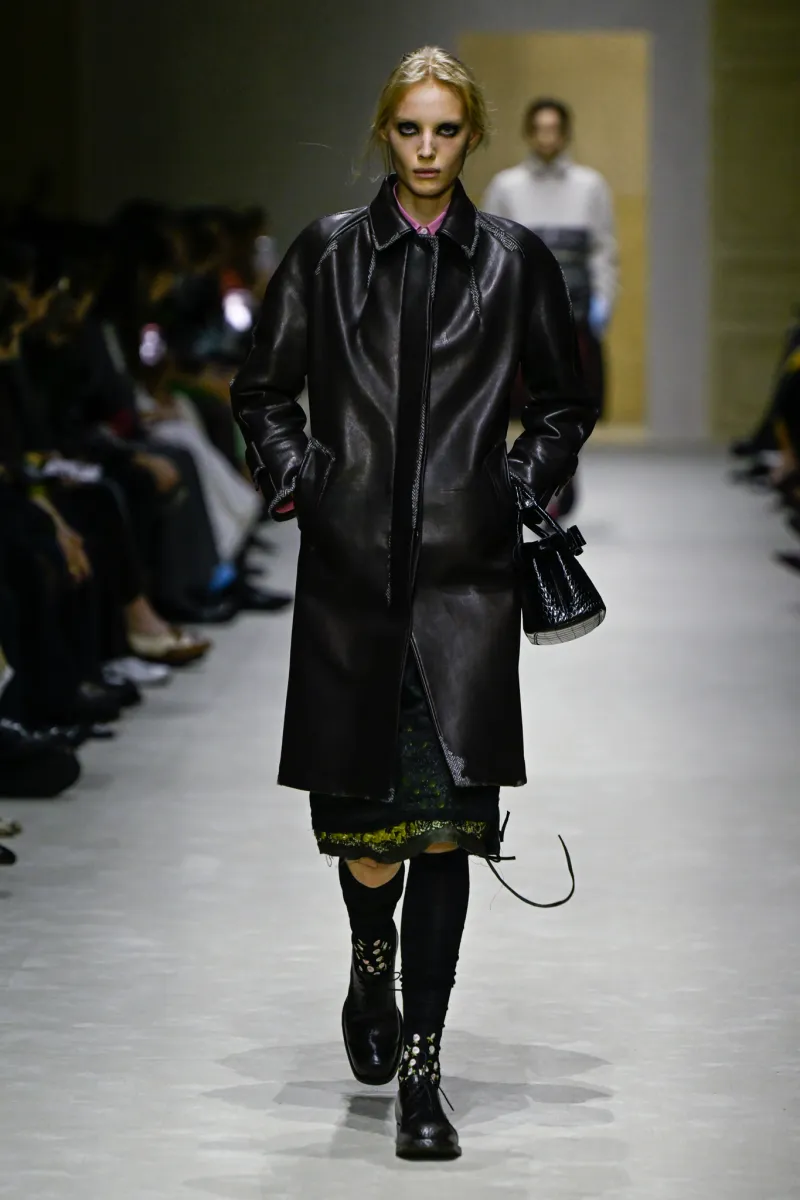
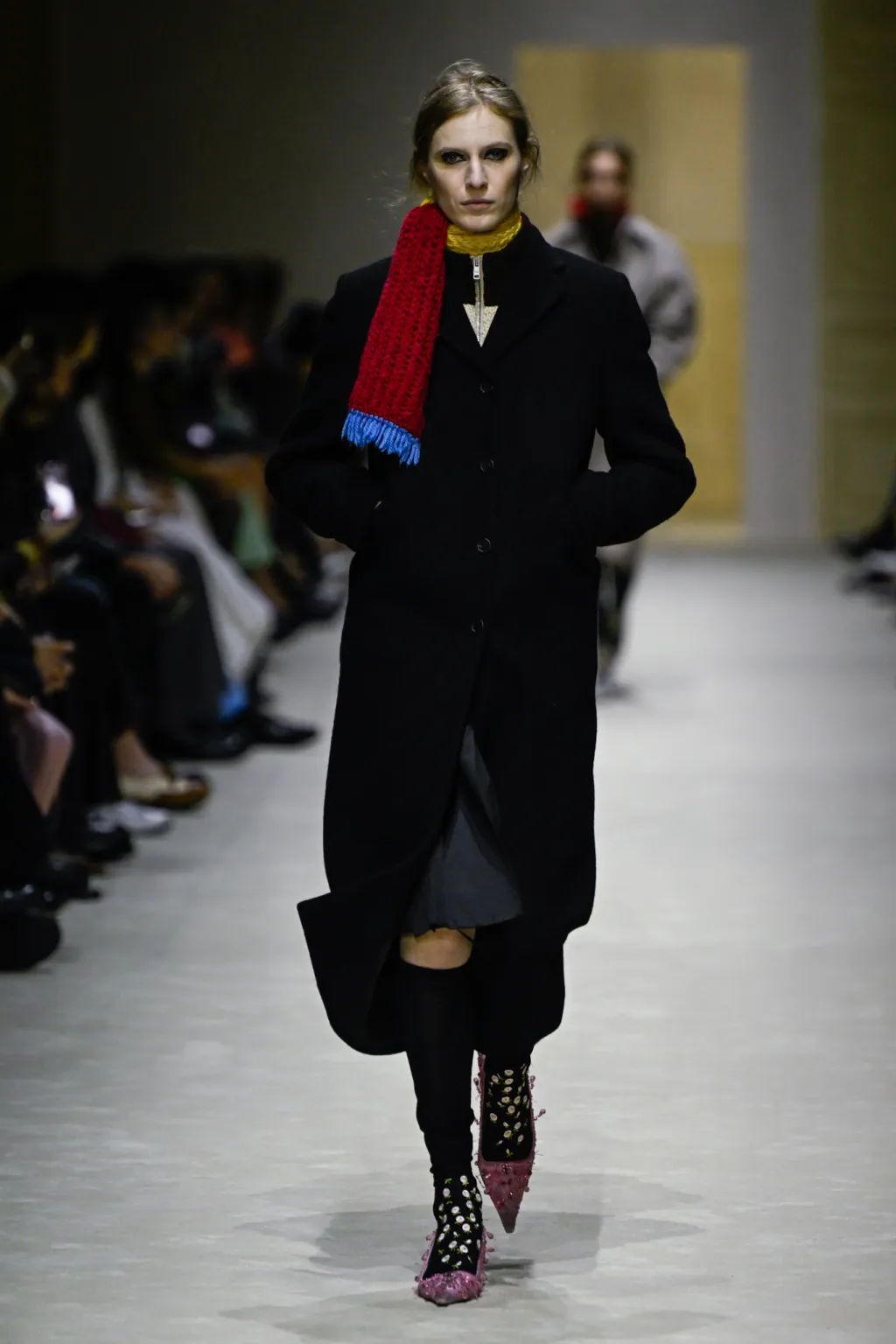
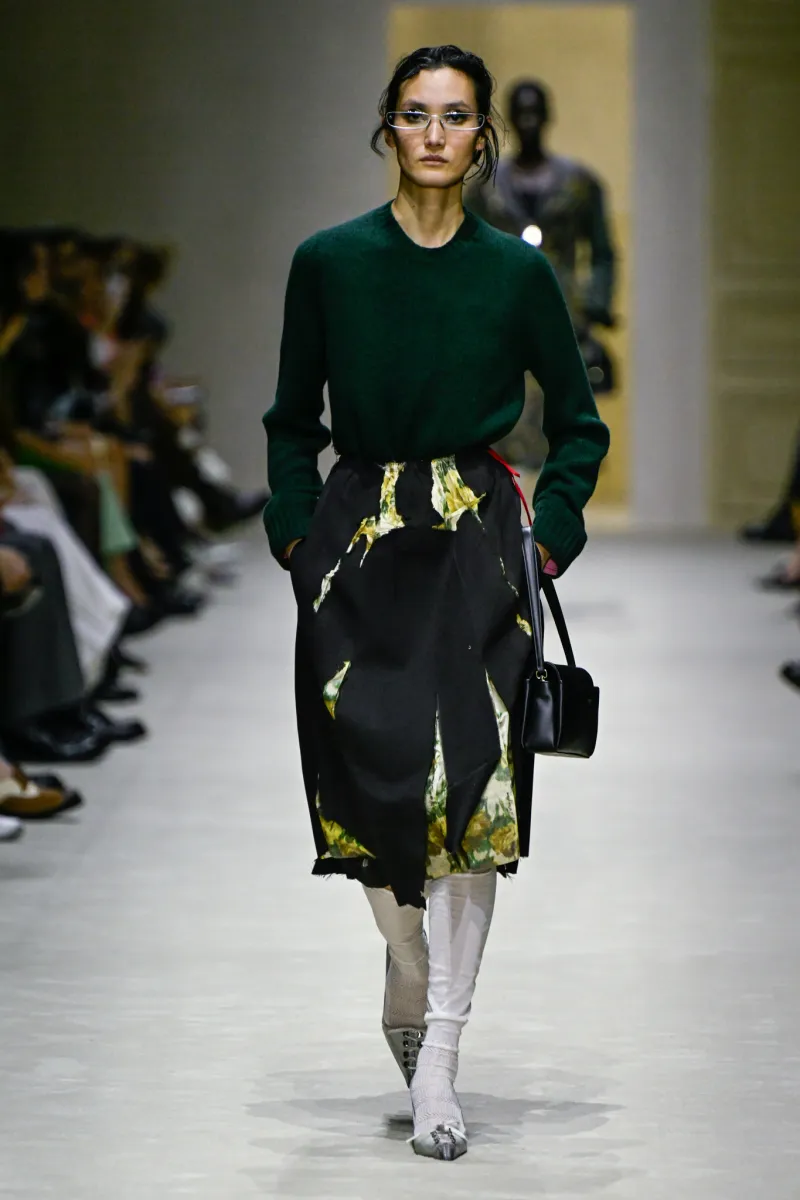
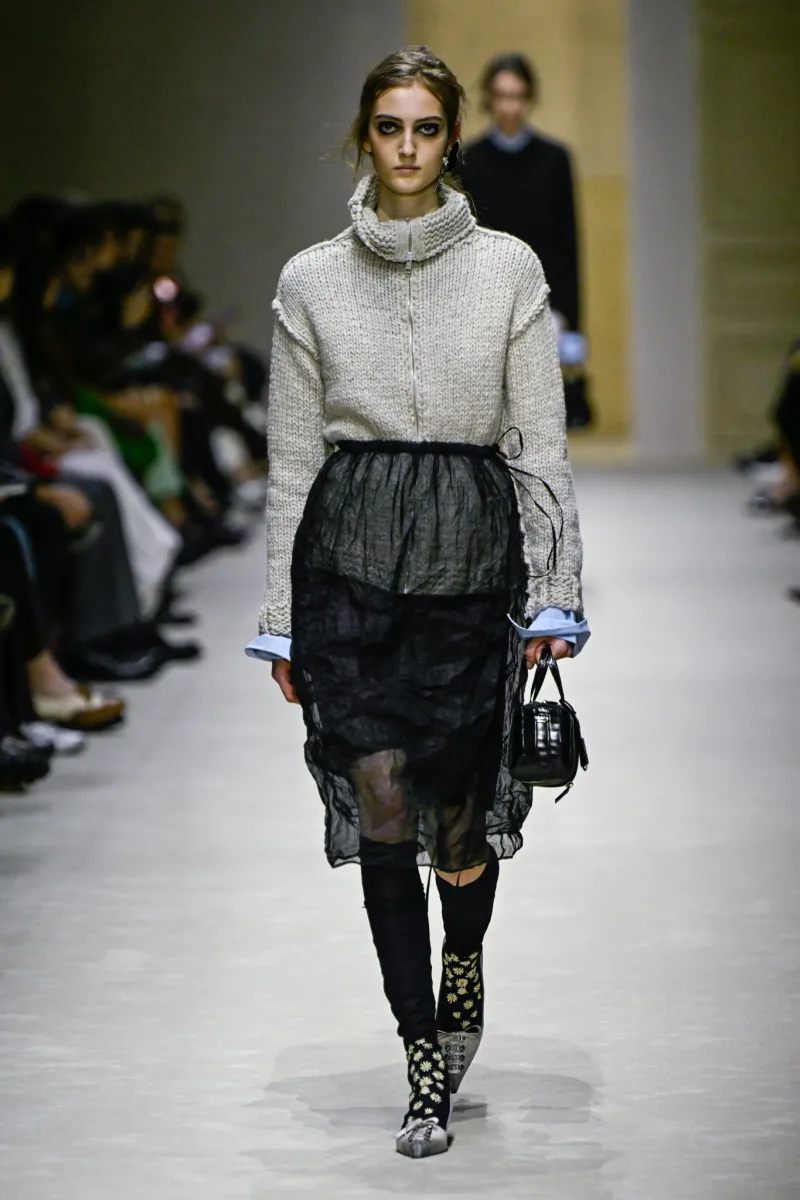
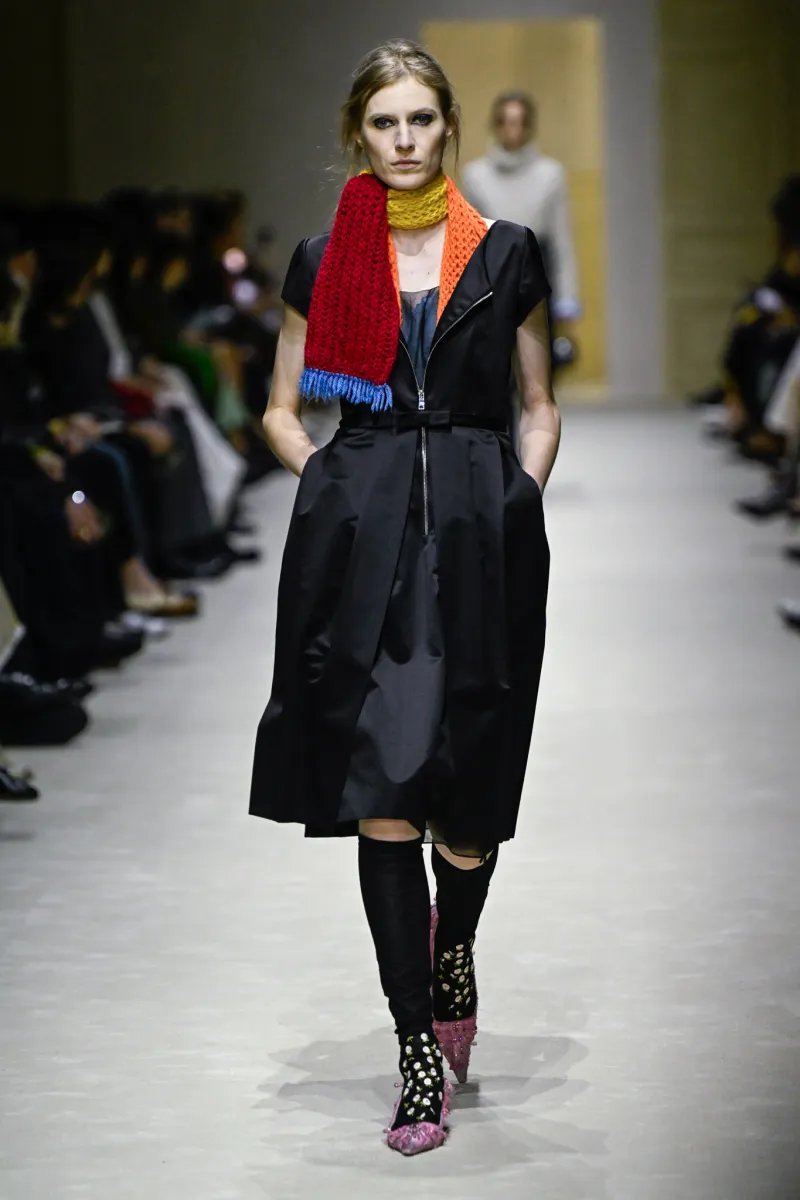
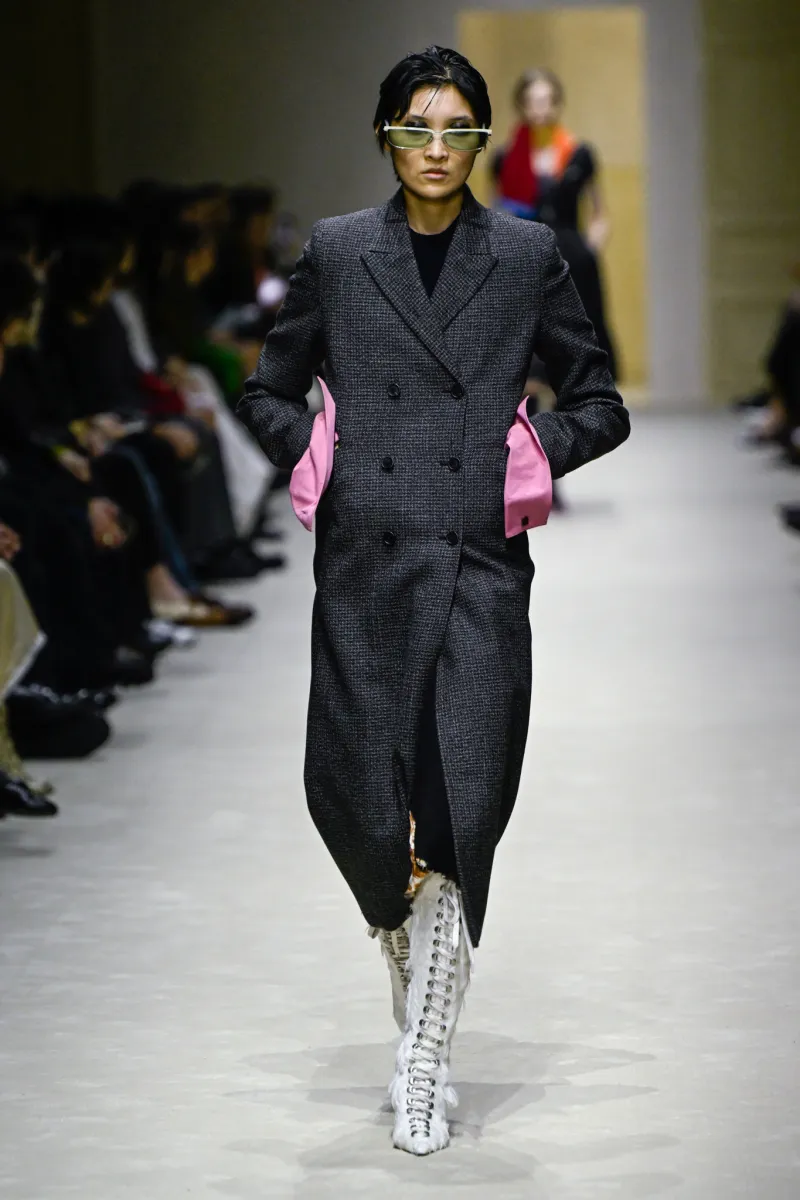
Julia Nobis embodied the idea perfectly. She opened the show in a long black coat, reminiscent of the compact silhouettes seen in the house’s recent menswear, paired with a neatly wrapped hand-knit scarf. When she returned, the coat was gone, exposing a chunky zip-up sweater beneath. On her third appearance, the sweater disappeared too, revealing that what had seemed like a skirt was actually a dress. By her fourth walk, even that peeled away, exposing a sheer shift and modest, almost vintage undergarments underneath.
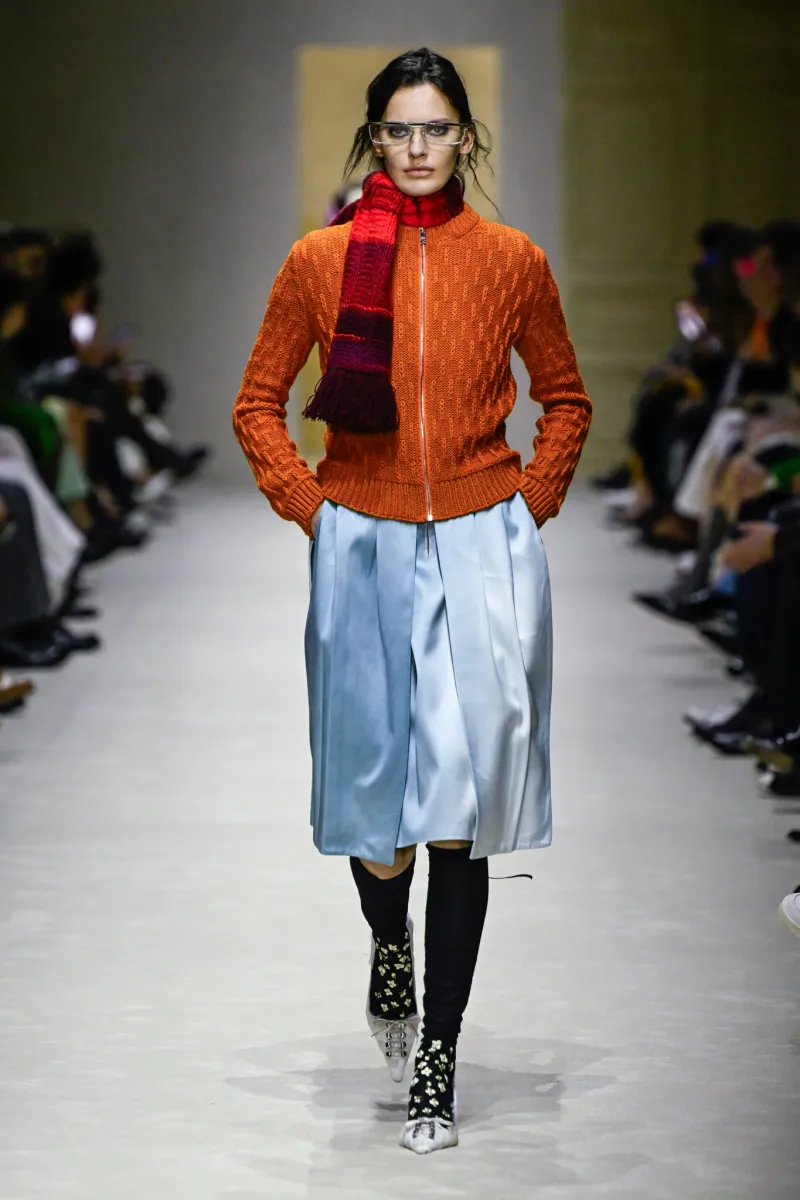
That slow revelation became a recurring rhythm as models including Bella Hadid, Liu Wen, and Amanda Murphy rotated through their own wardrobe evolutions. Each pass reframed what had come before, turning familiar garments into something newly understood.
The Beauty of Wear and Time
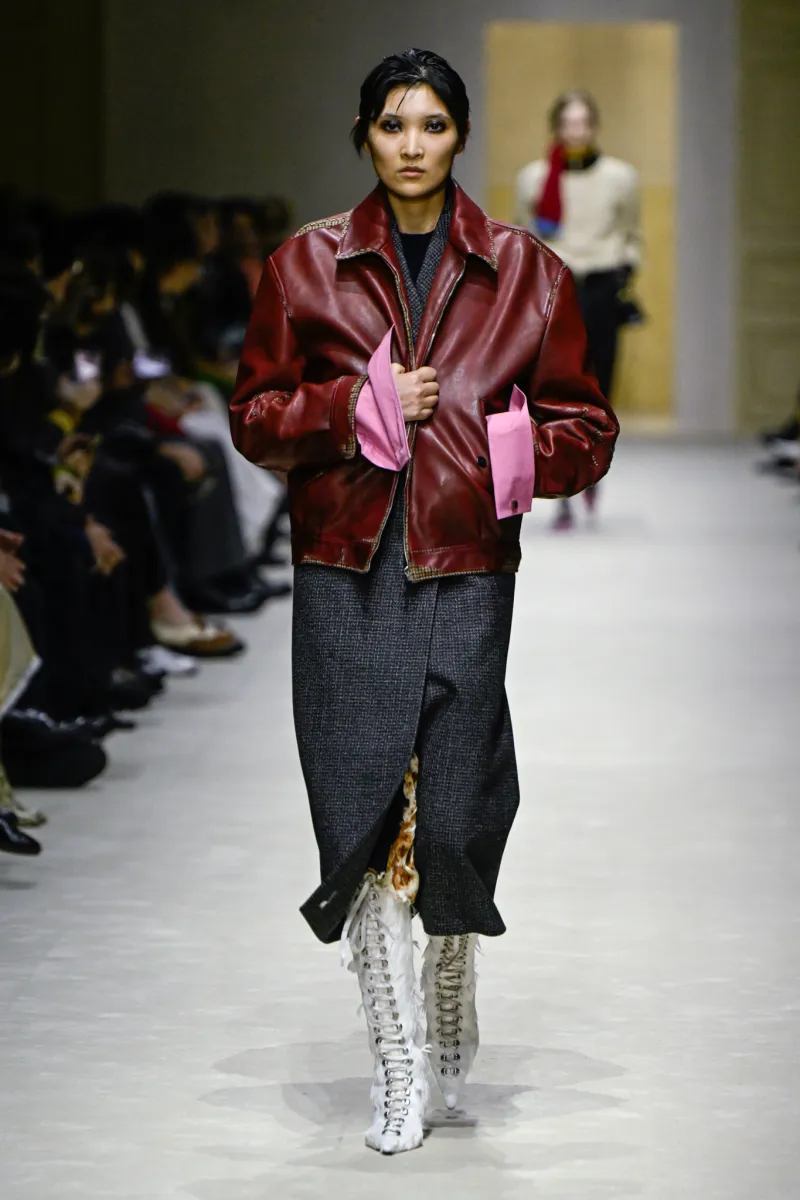
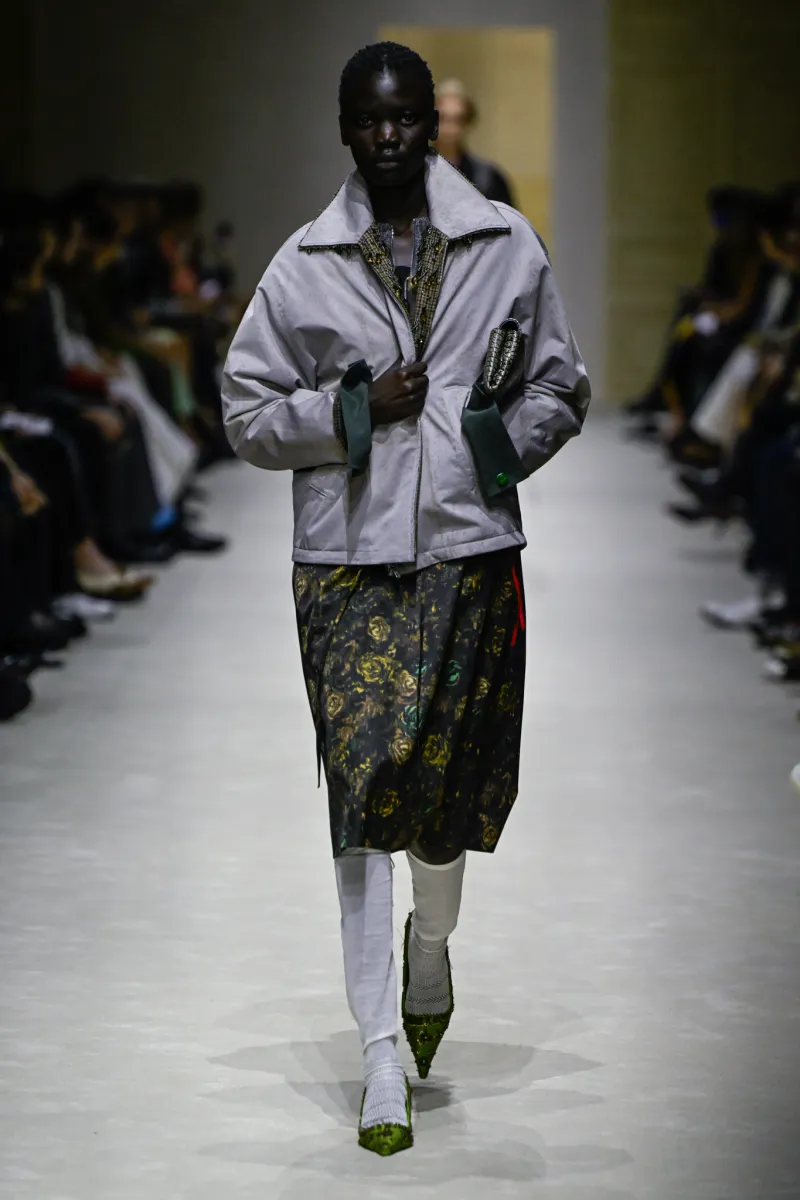
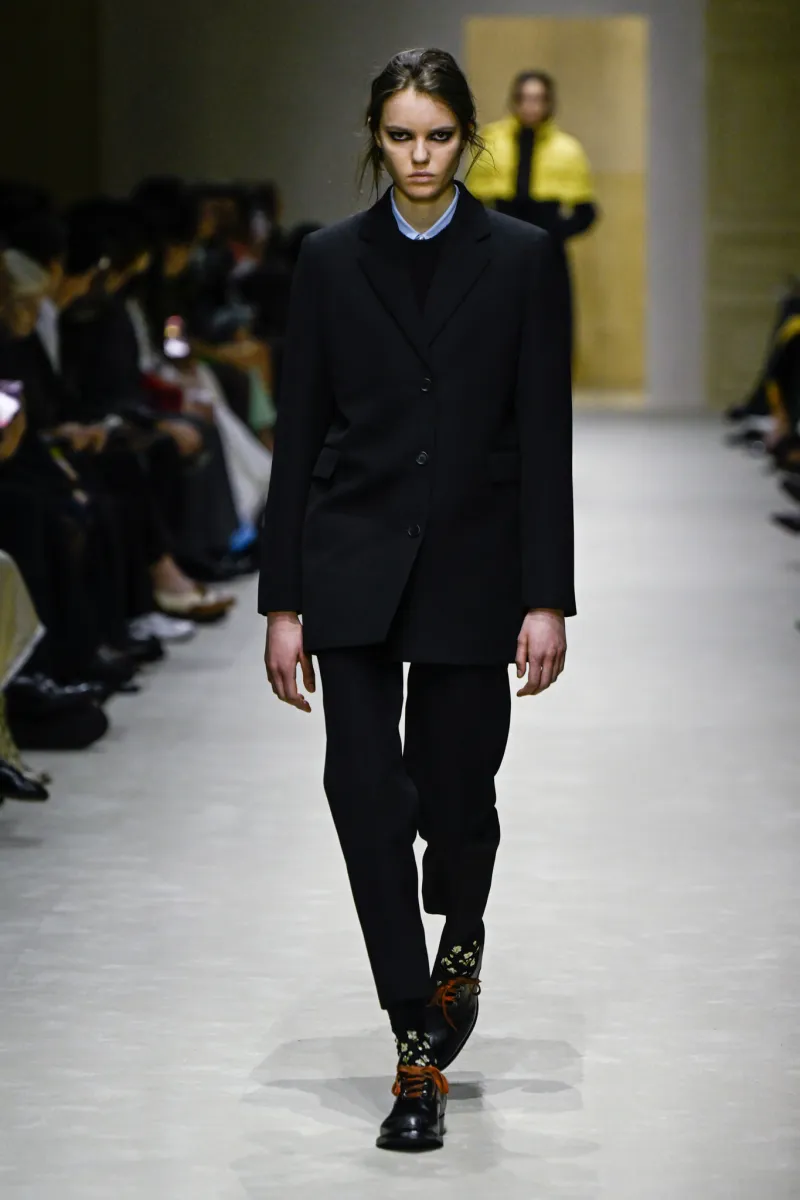
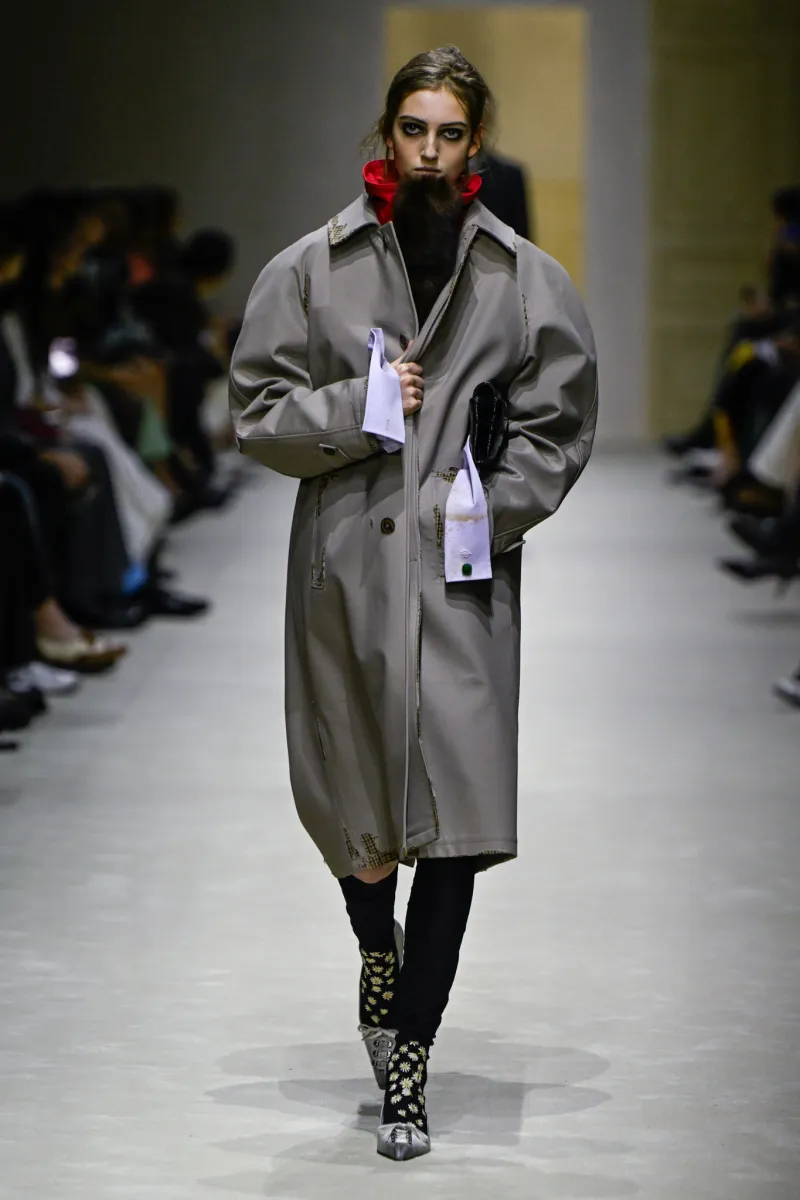
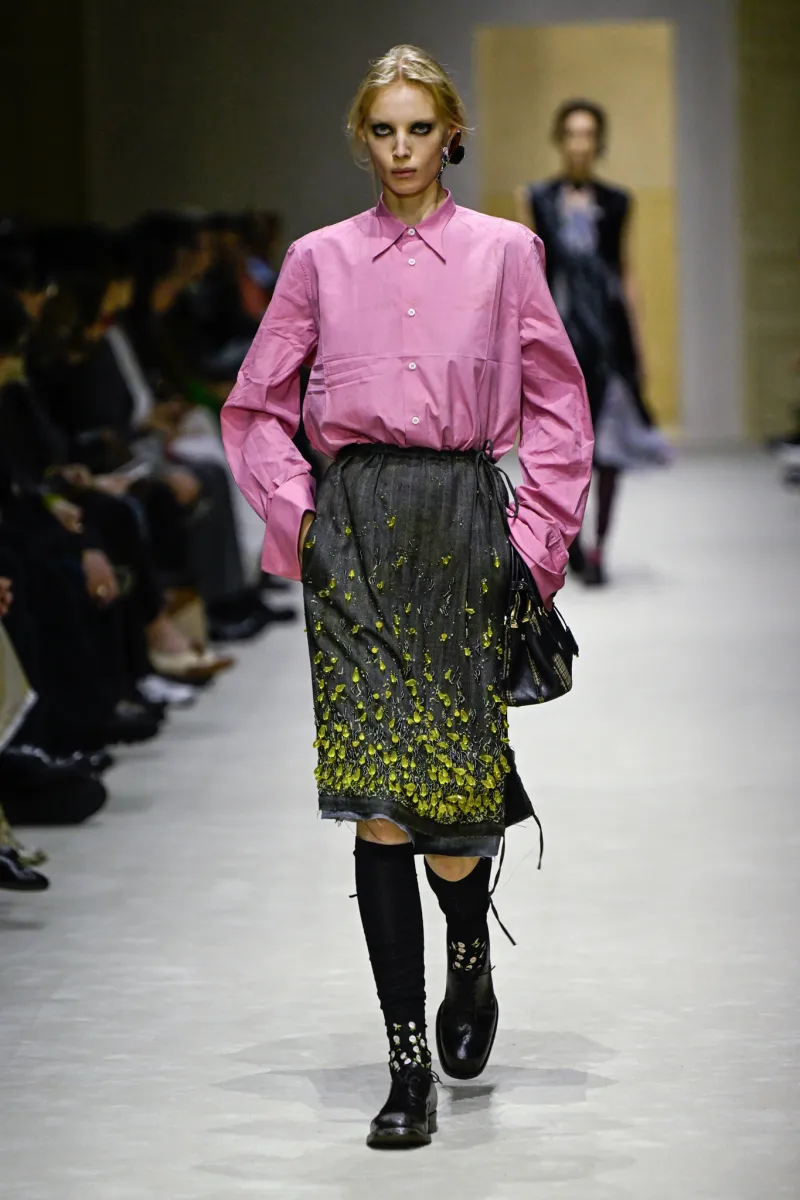
Like the men’s collection shown earlier in the season, the Fall 2026 women’s looks embraced signs of age and use. These clothes appeared as though they had already lived a life: cuffs slightly discolored, hems fraying or trailing loose threads, waxed Harrington jackets peeling to expose houndstooth linings beneath. Oxford shoes arrived with scuffed heels, as if already broken in.
Rather than diminishing their appeal, these details enhanced it. In an era shaped by resale culture and archival obsession, imperfections read as proof of authenticity even desirability. Prada and Simons seemed keenly aware of that shift, leaning into the emotional resonance of clothes that look remembered rather than pristine.
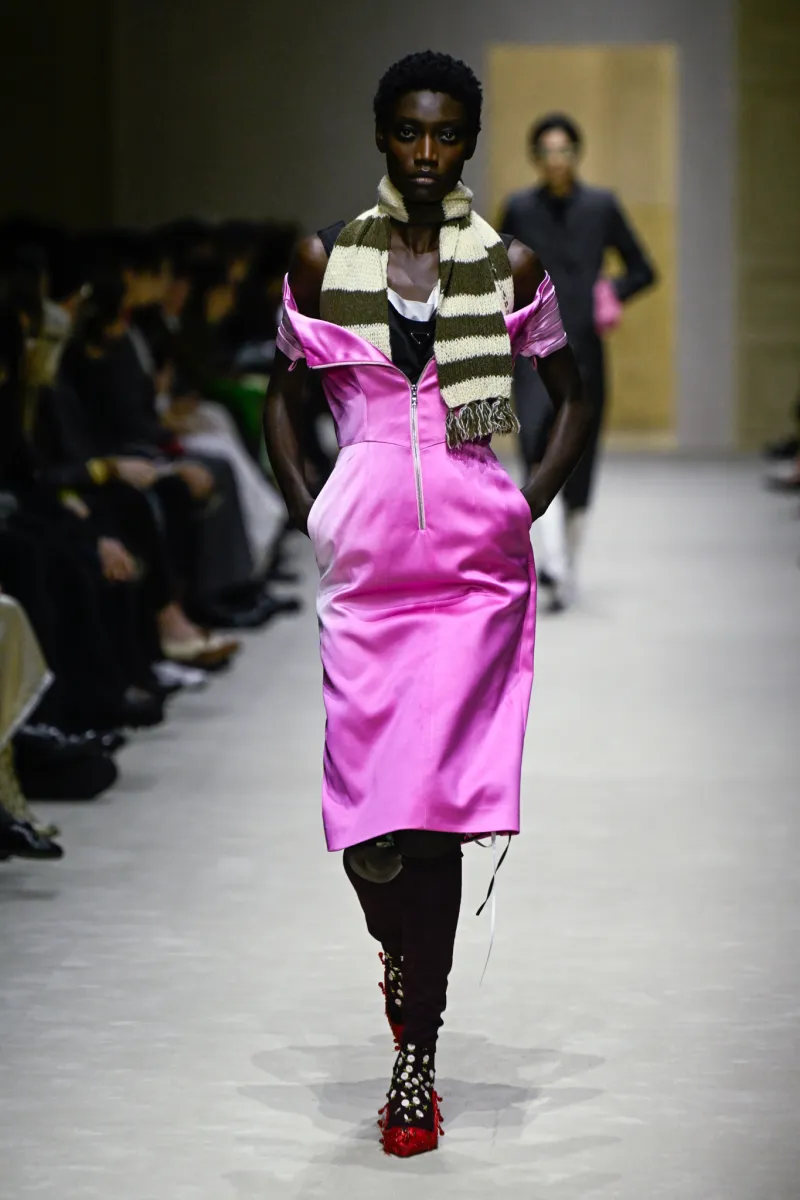
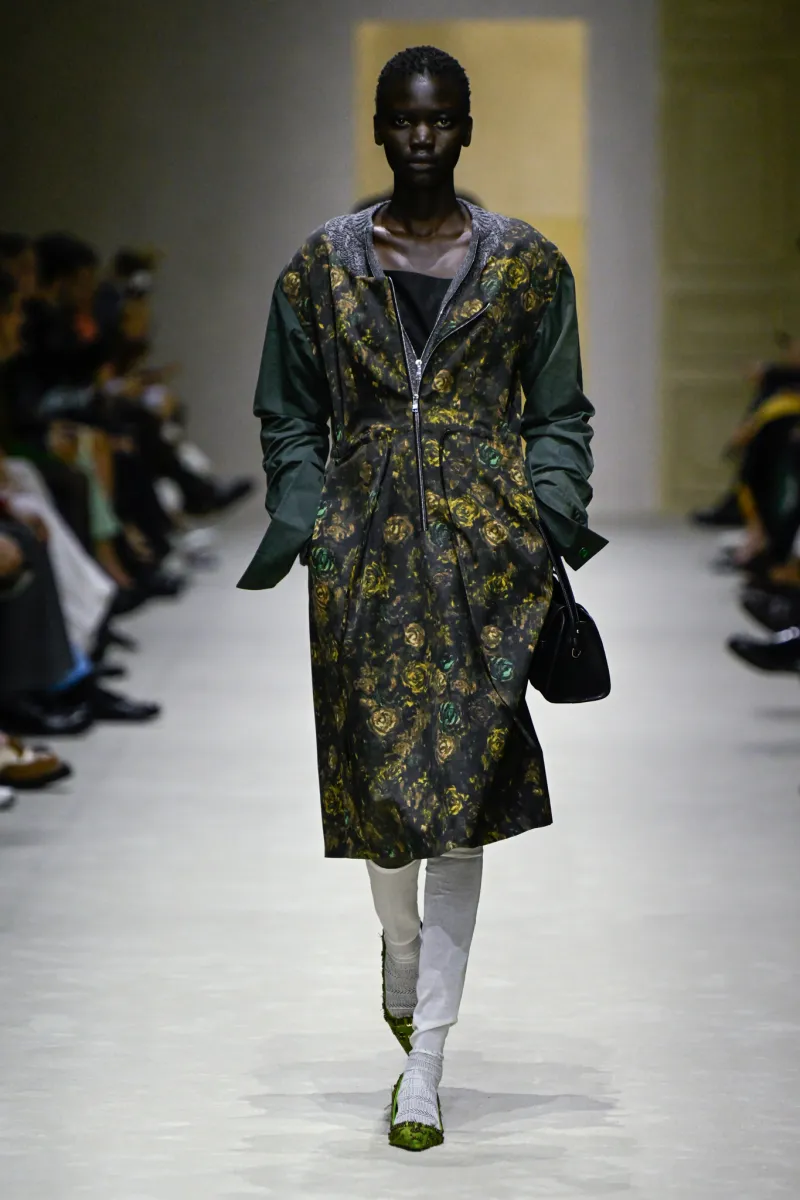
References to the house’s own history surfaced throughout the collection, deliberately and without nostalgia for nostalgia’s sake. A floral print here, a familiar pink duchesse satin there the kind of details that devoted Prada followers would spot instantly. Even the way models held their coats felt unmistakably Miuccia, as did the softly slouched socks embroidered with flowers.
These gestures didn’t feel like retro revival so much as conversation. In a period of industry recalibration, looking inward offered both stability and clarity. For anyone who has ever stood in front of an overstuffed wardrobe wondering what Mrs. Prada herself might do, the show offered thoughtful, practical inspiration.
As Simons explained, the collection wasn’t driven by a rigid narrative. There was no storyline to decode, no prescribed meaning to follow. Instead, it proposed freedom — the freedom to combine, reinterpret, and adapt.

 By Staffeditor6 | 27 February 2026