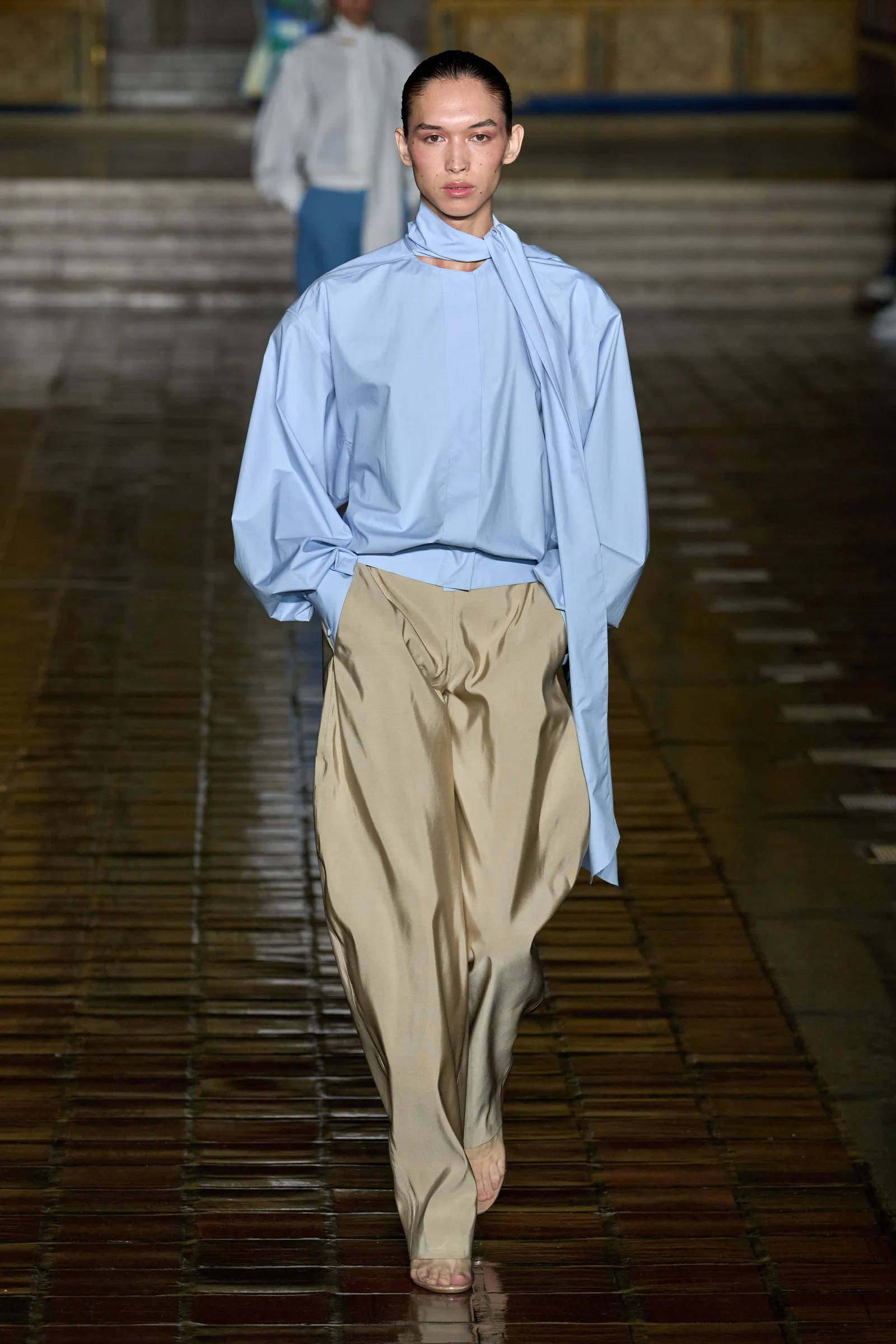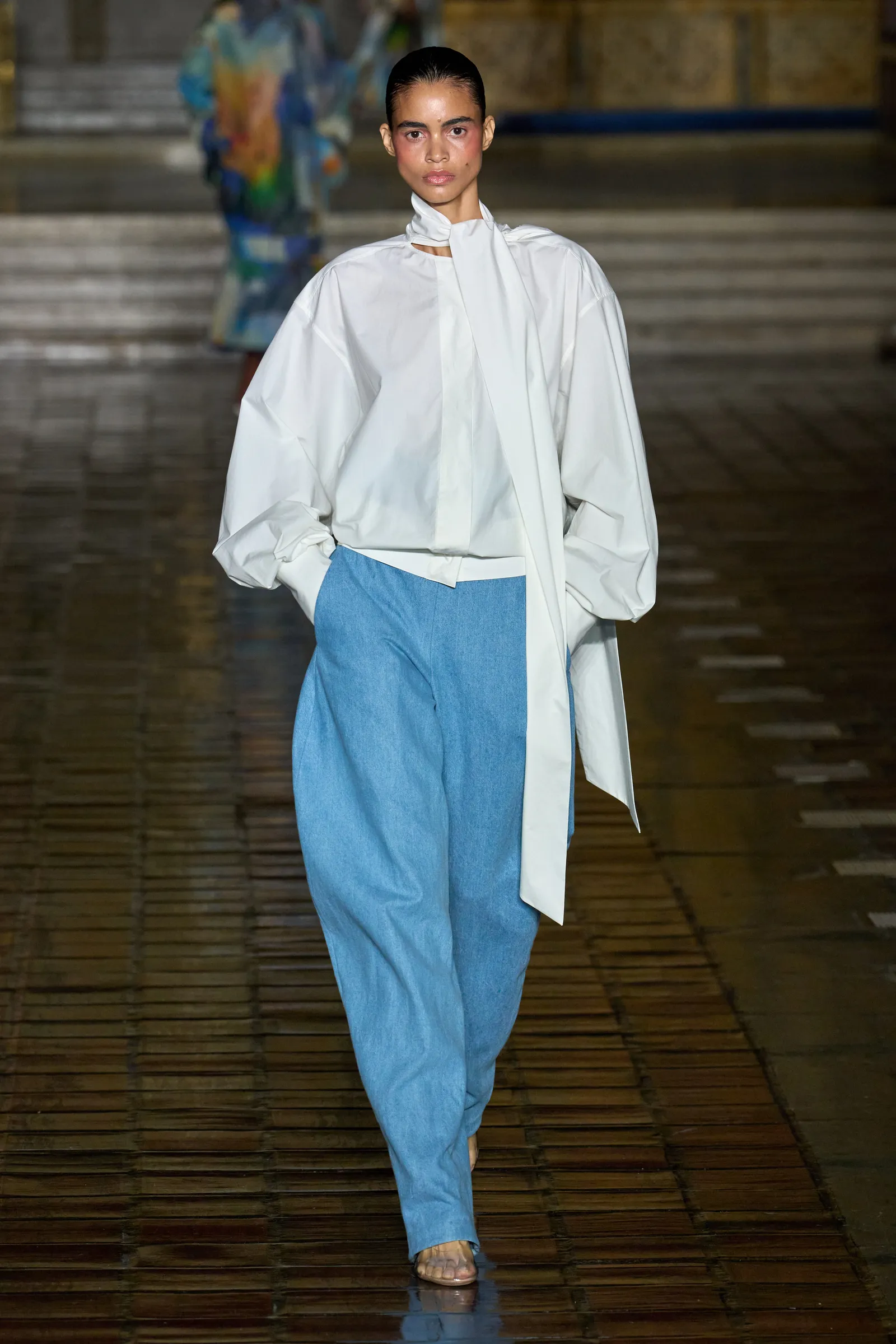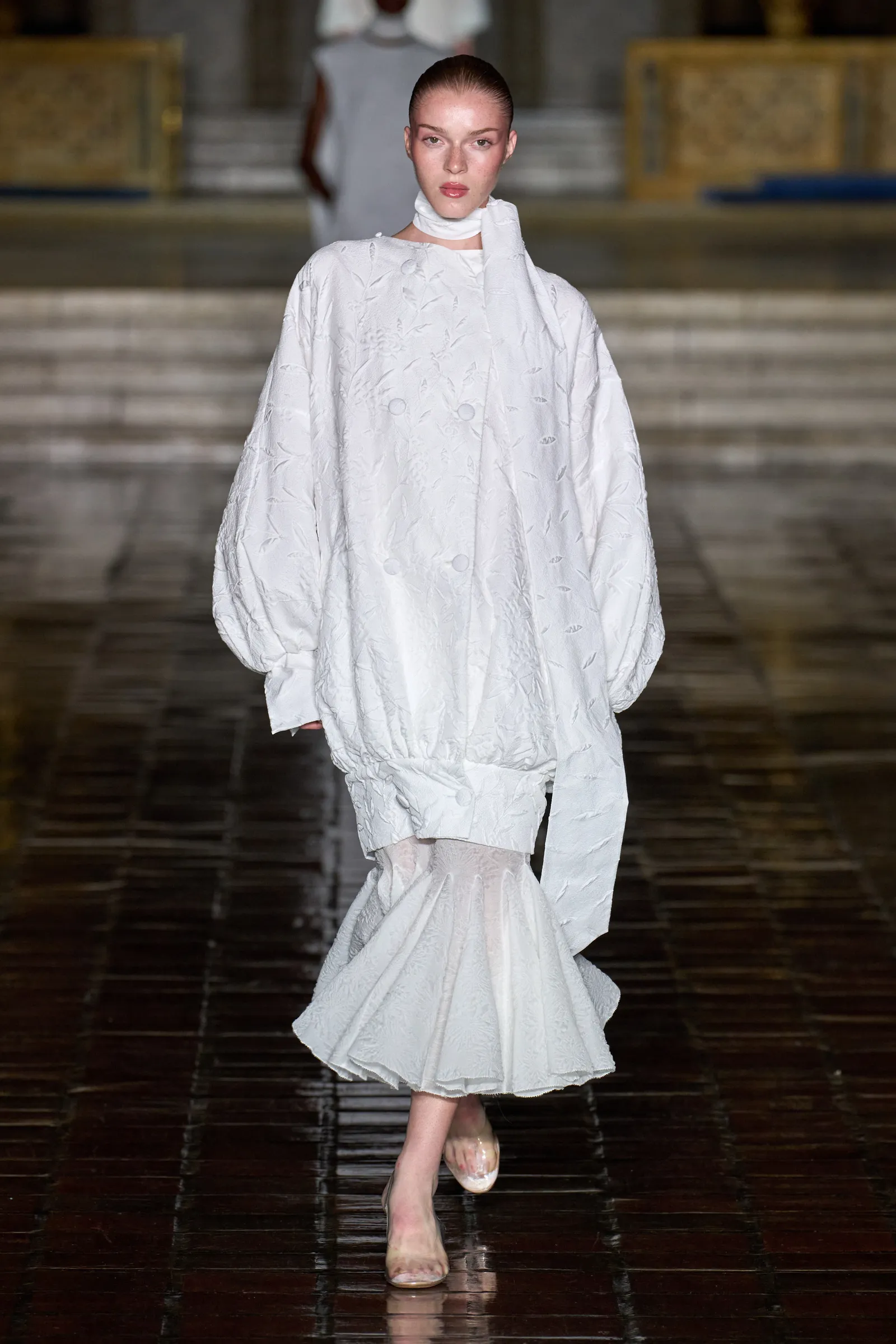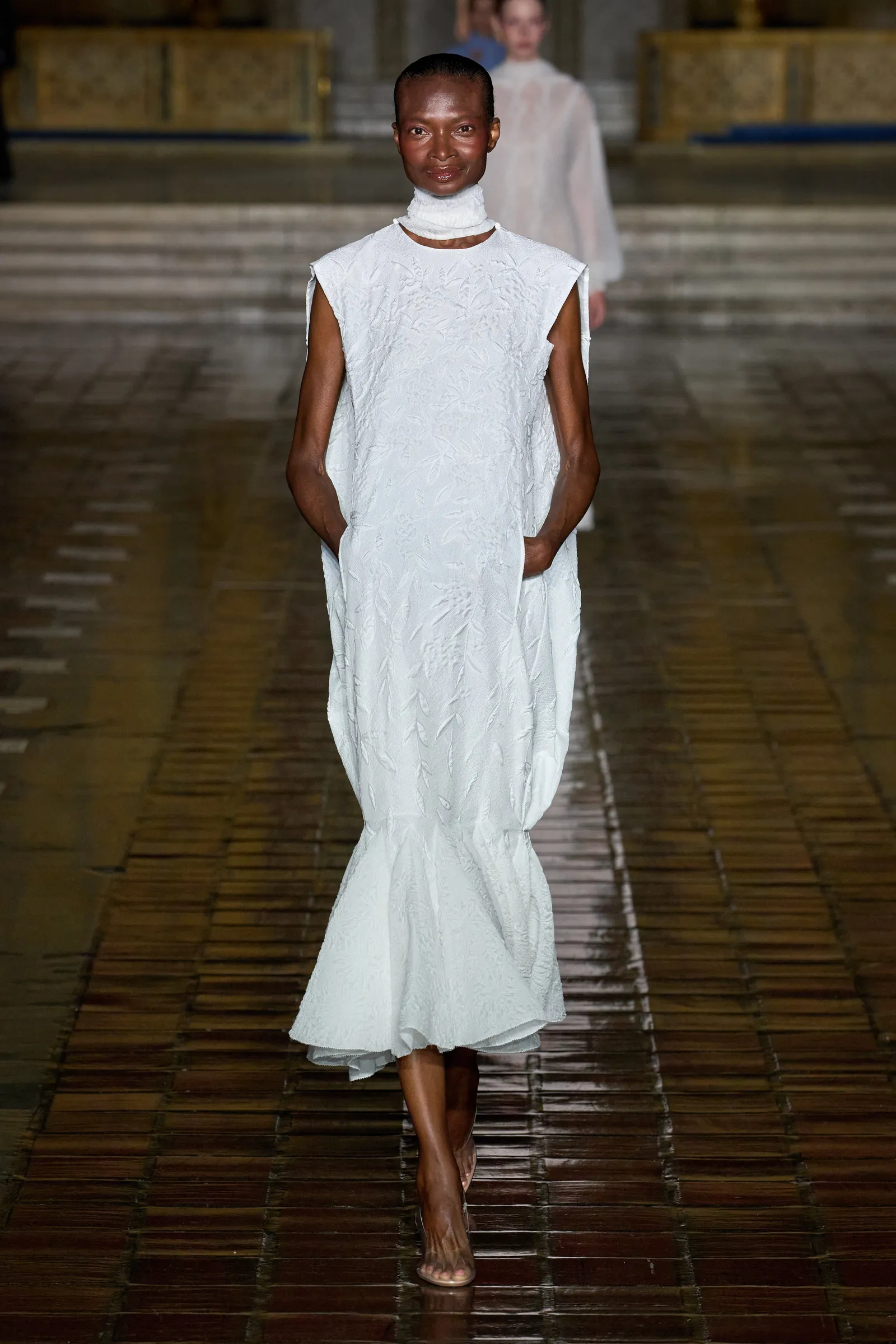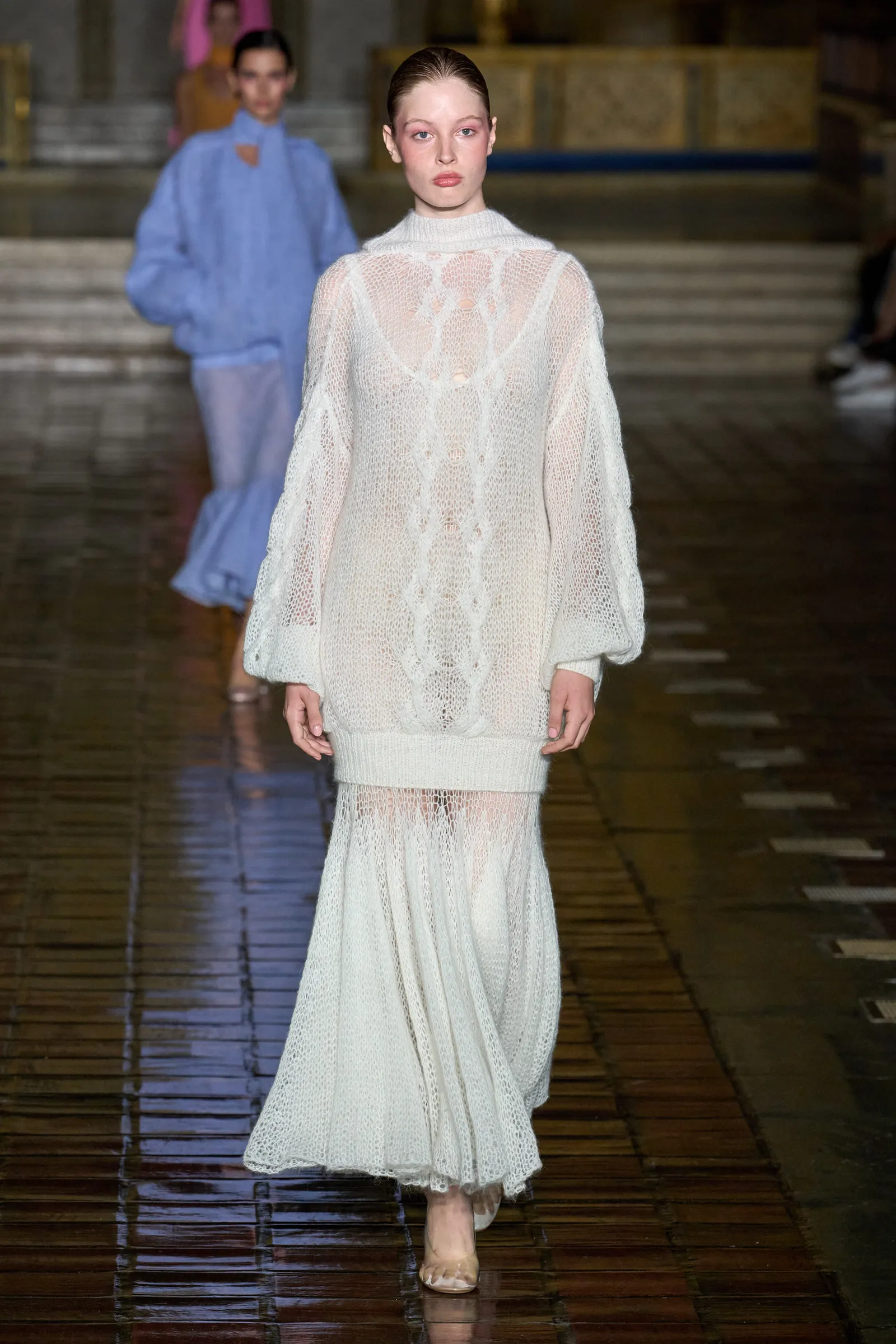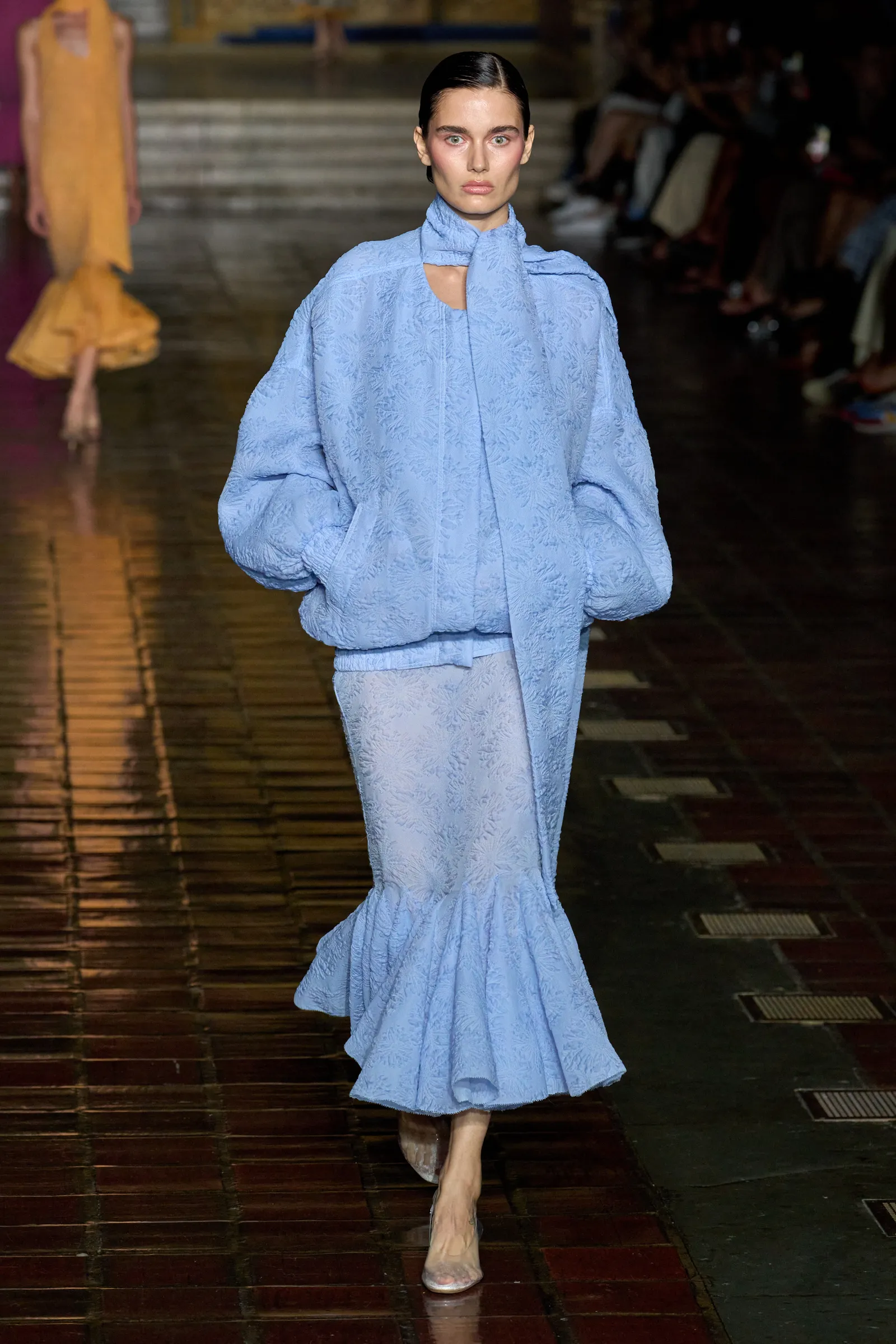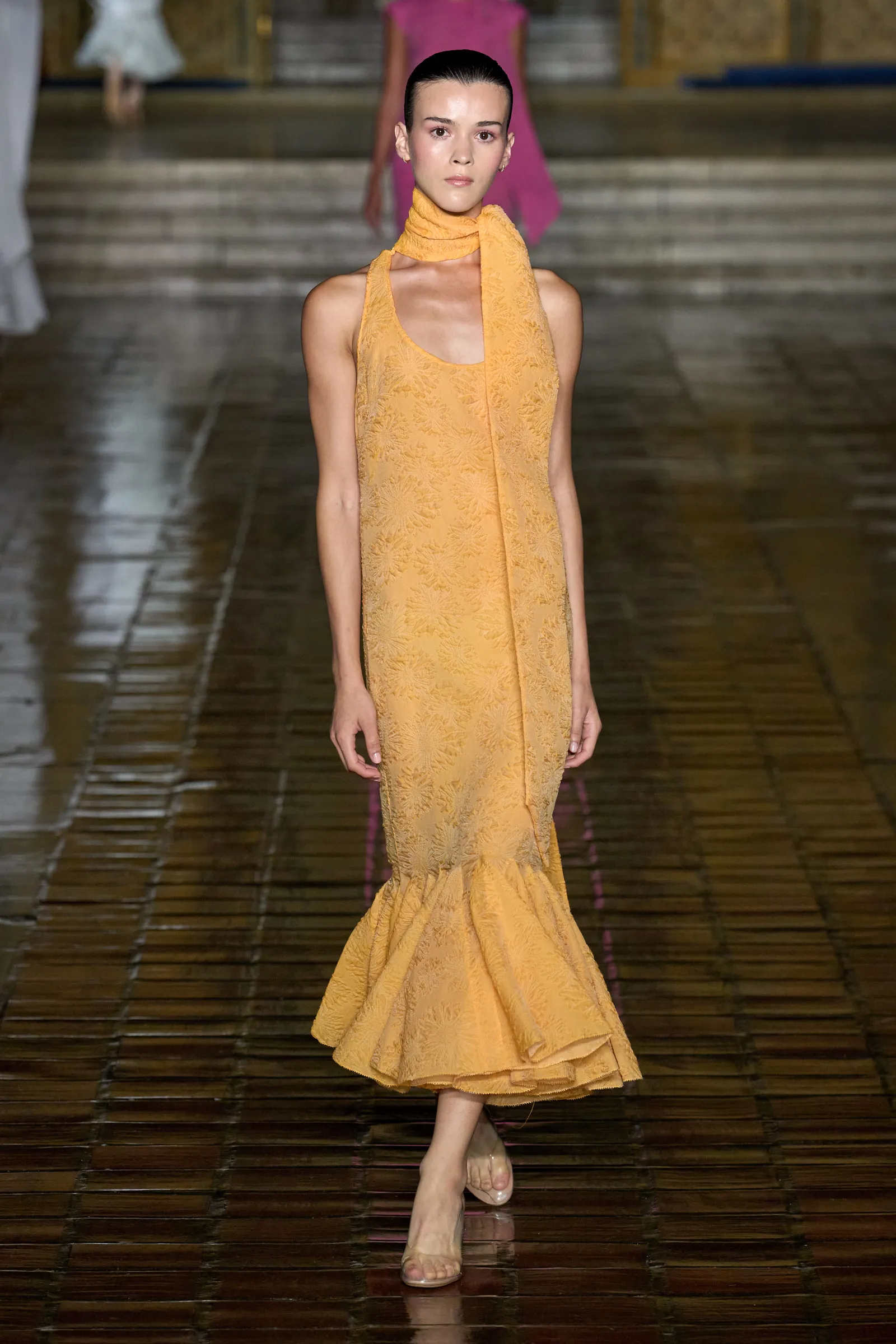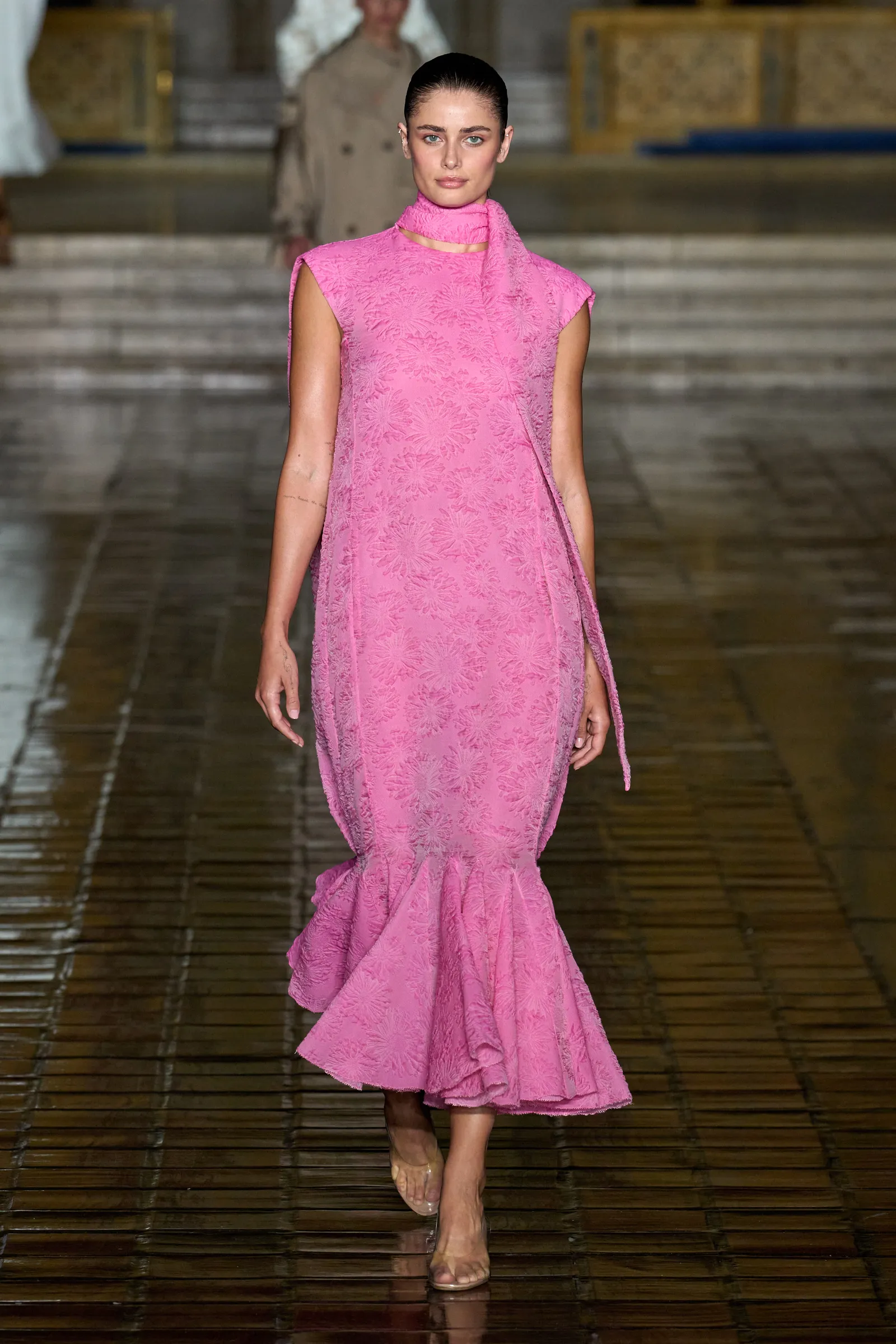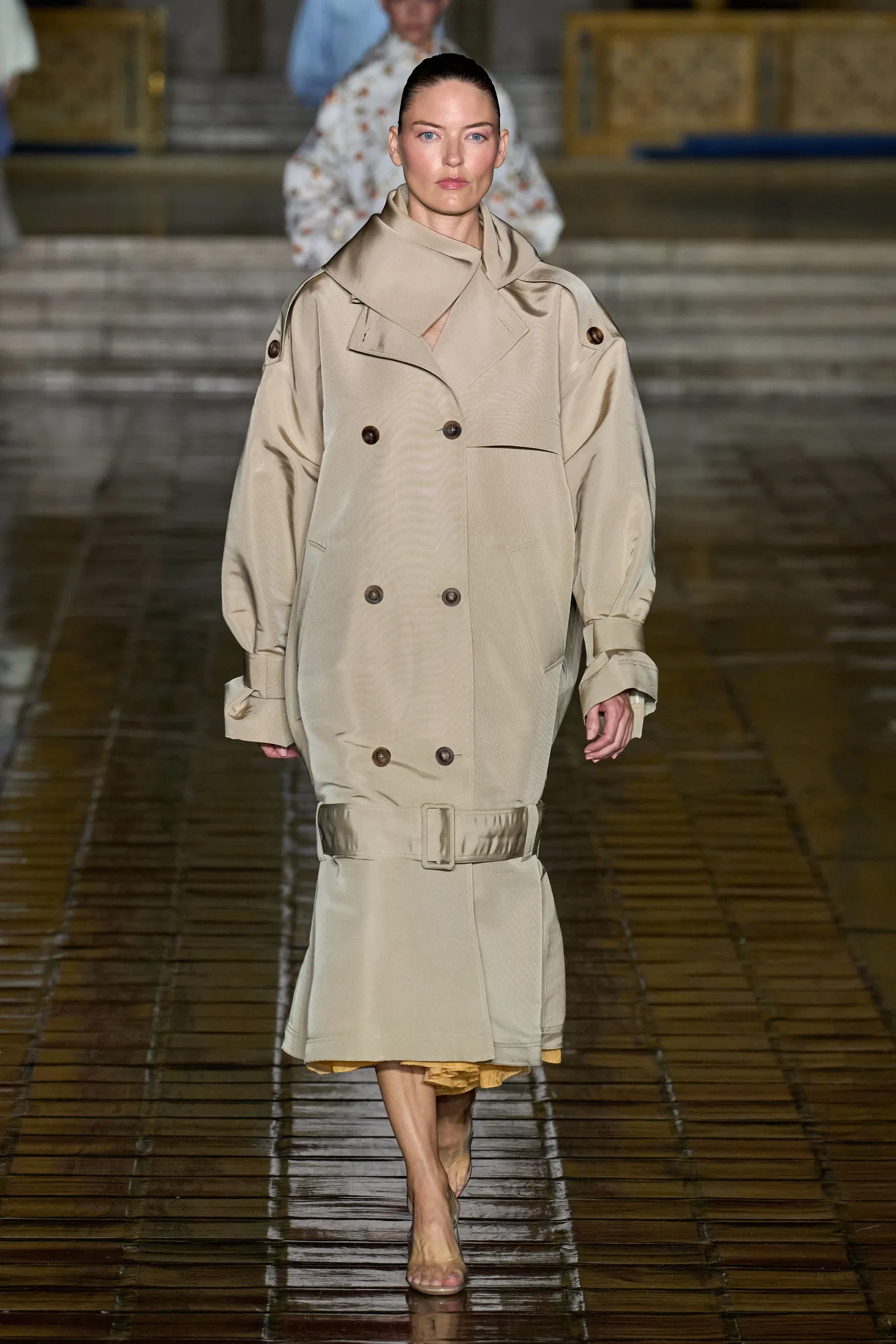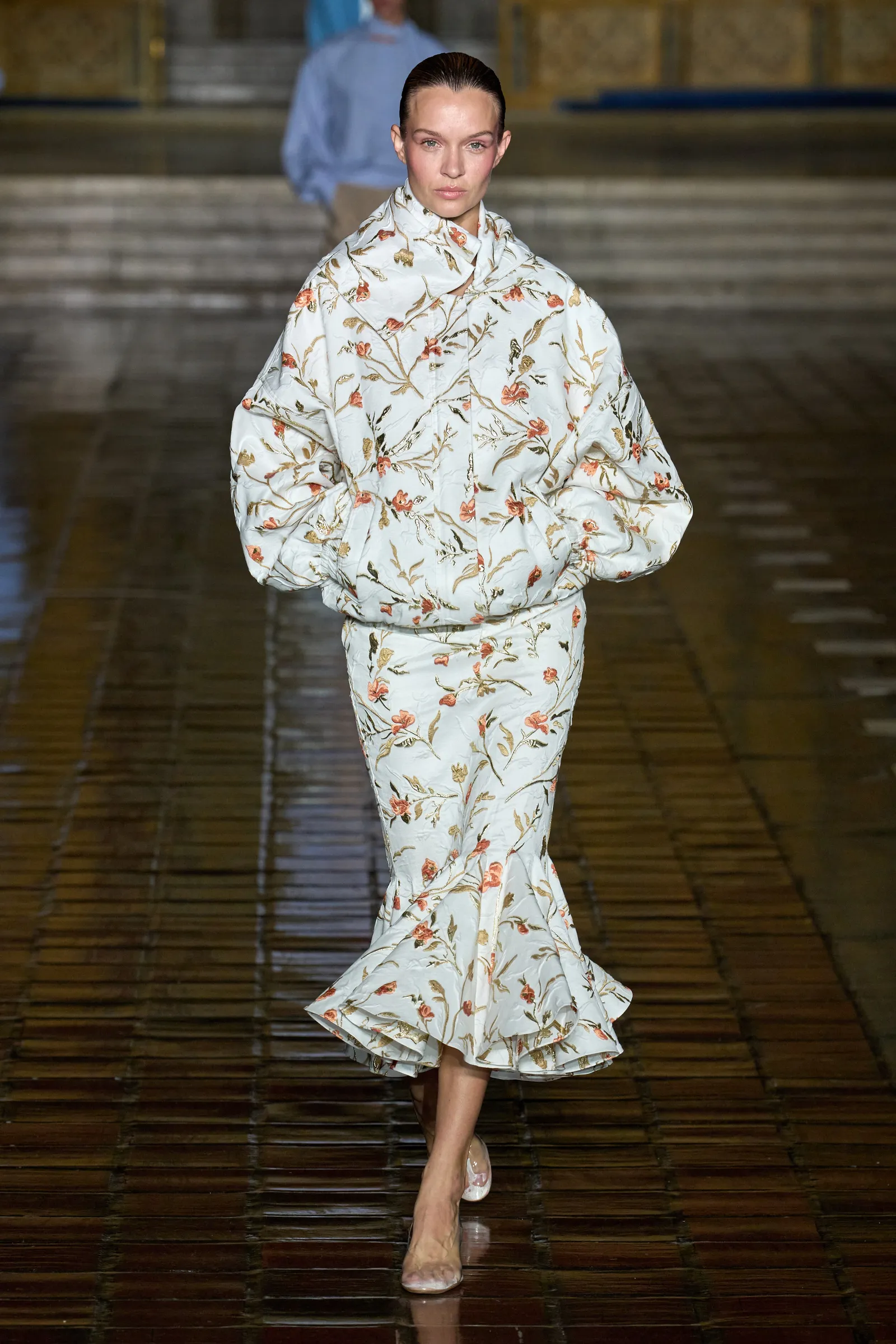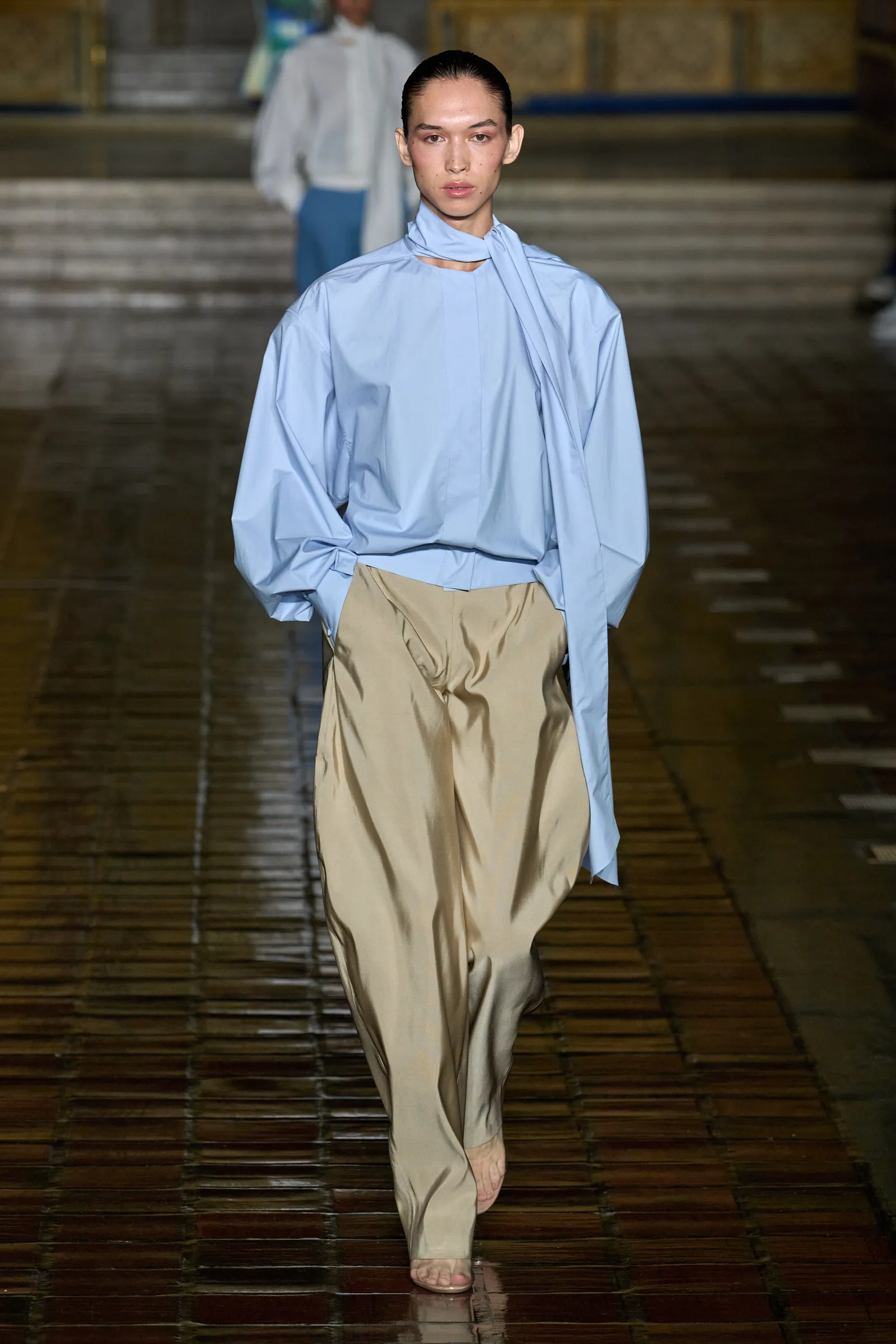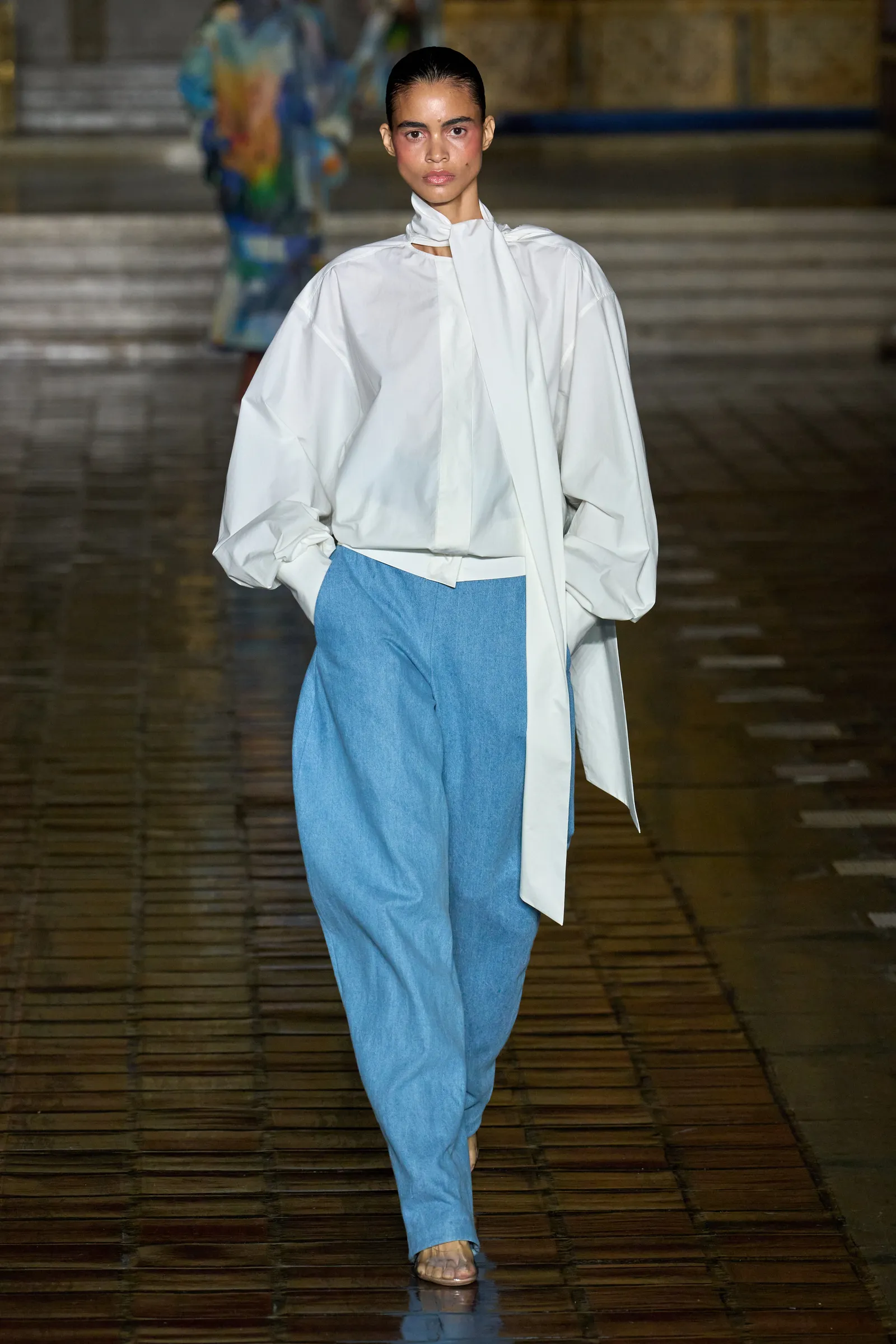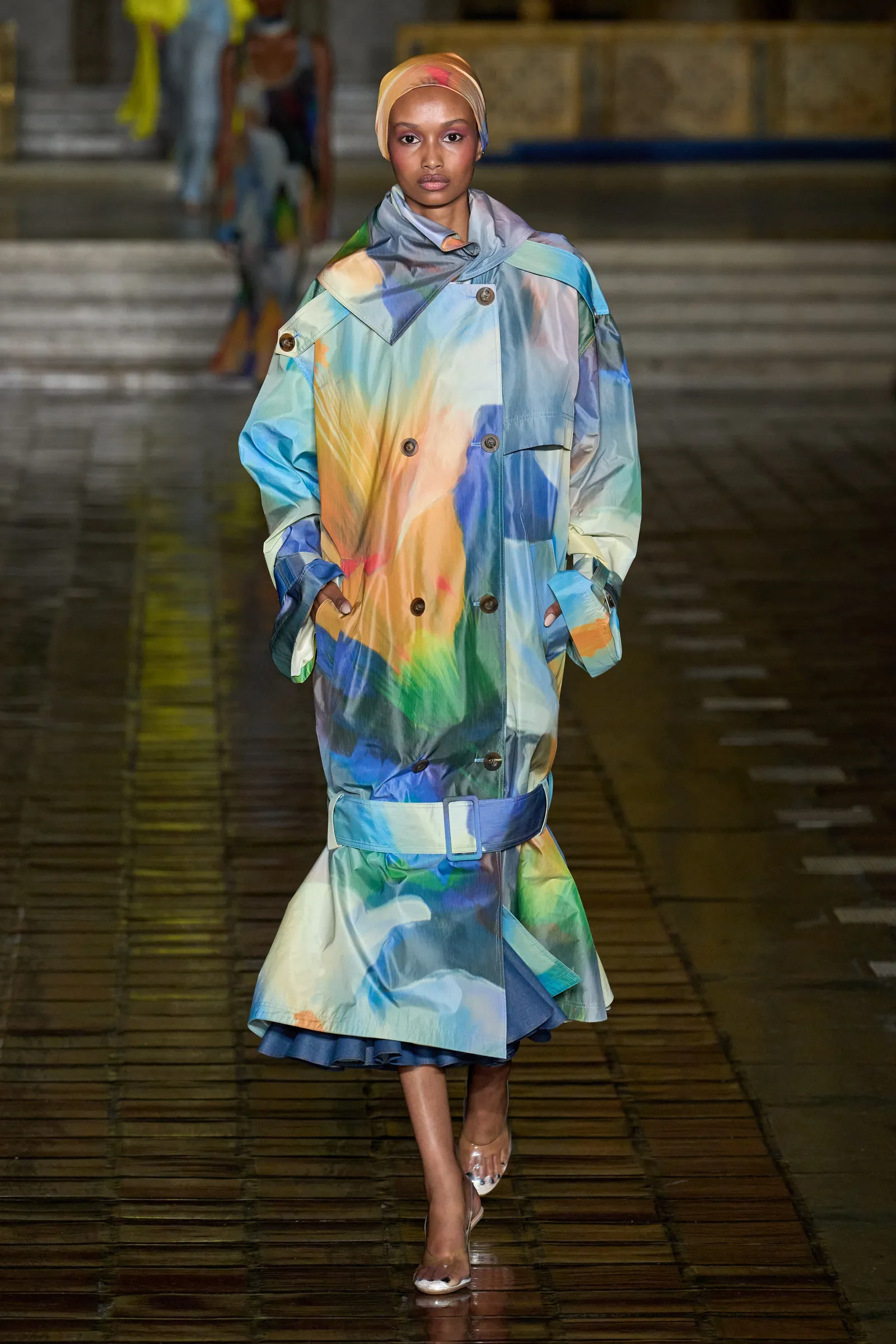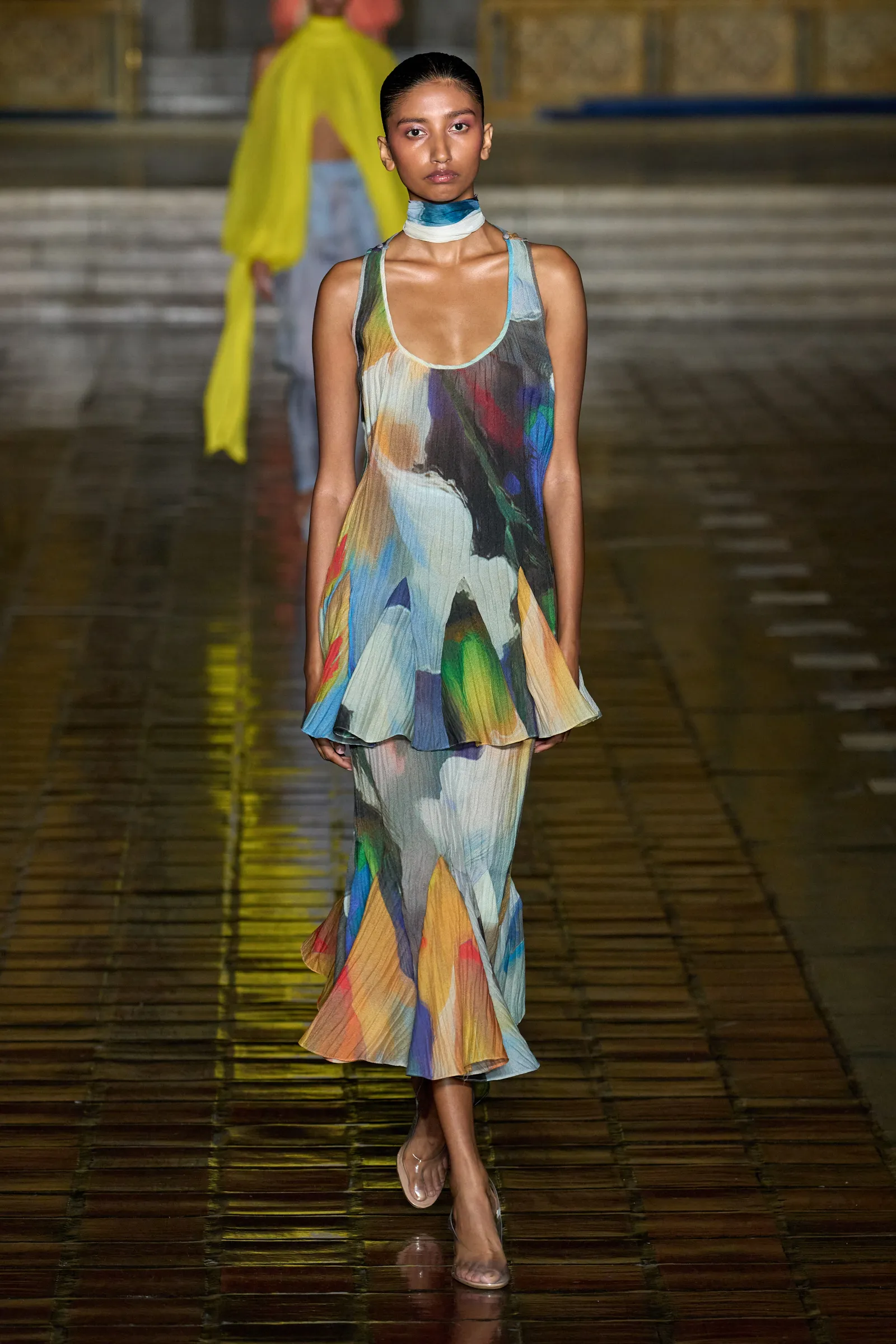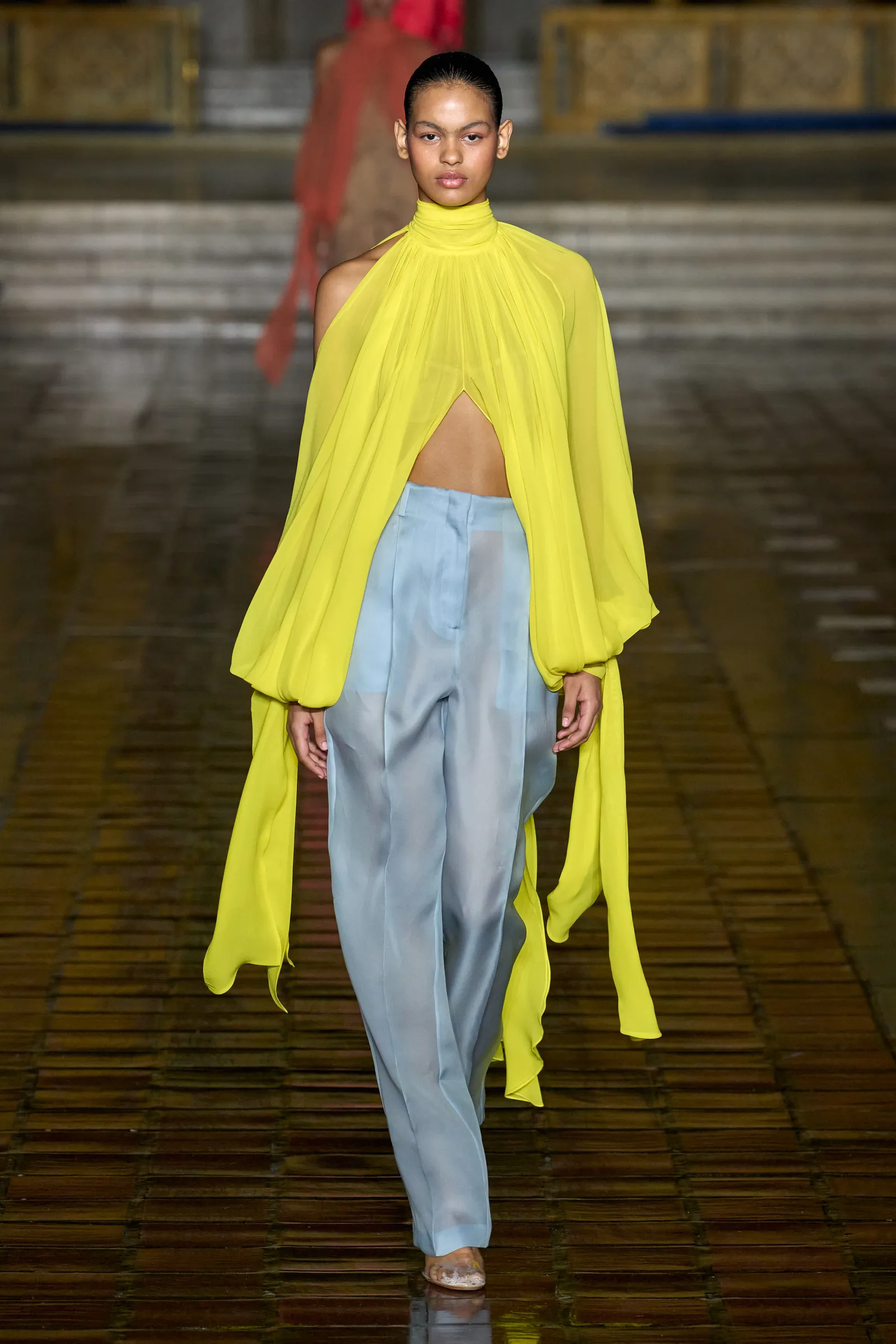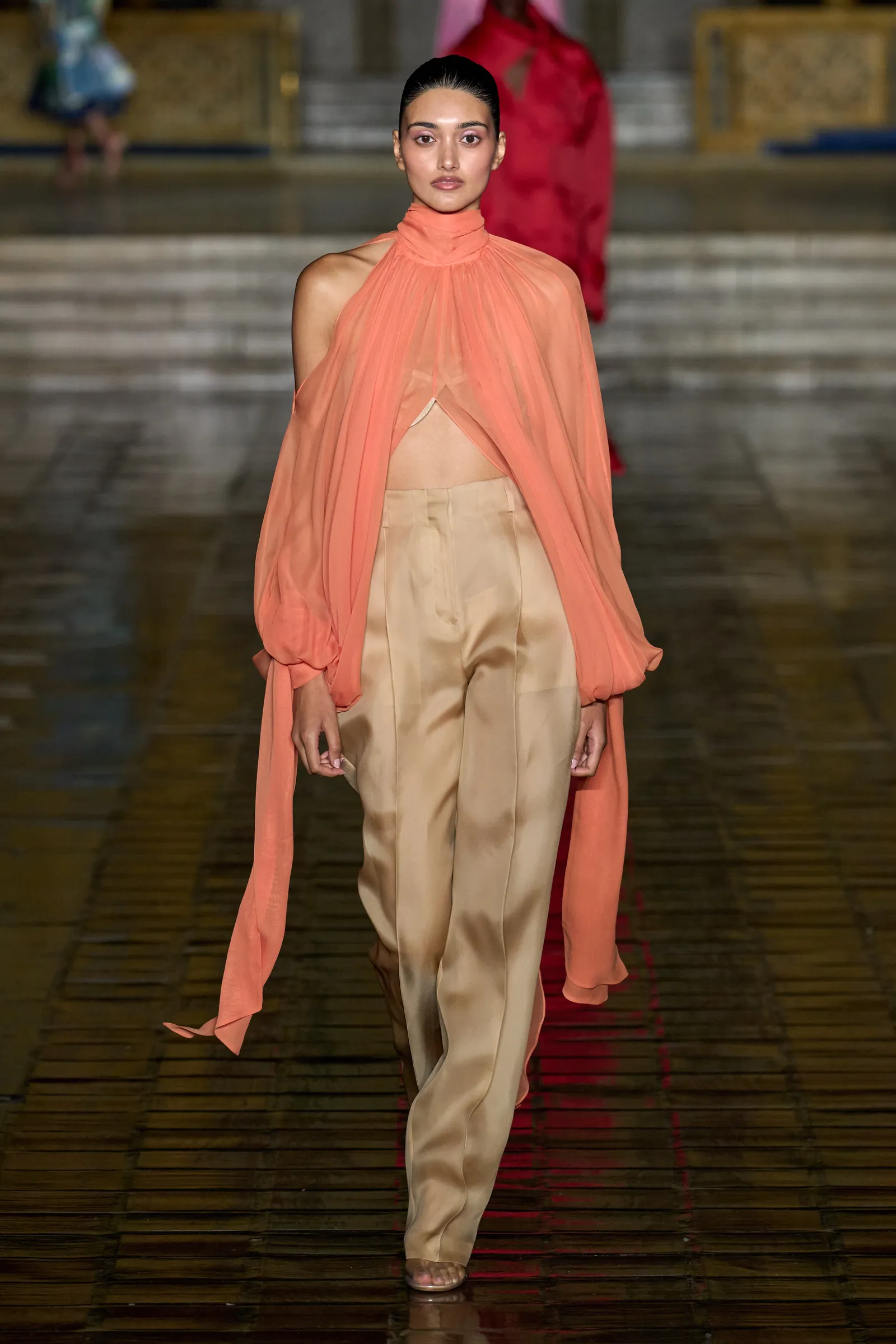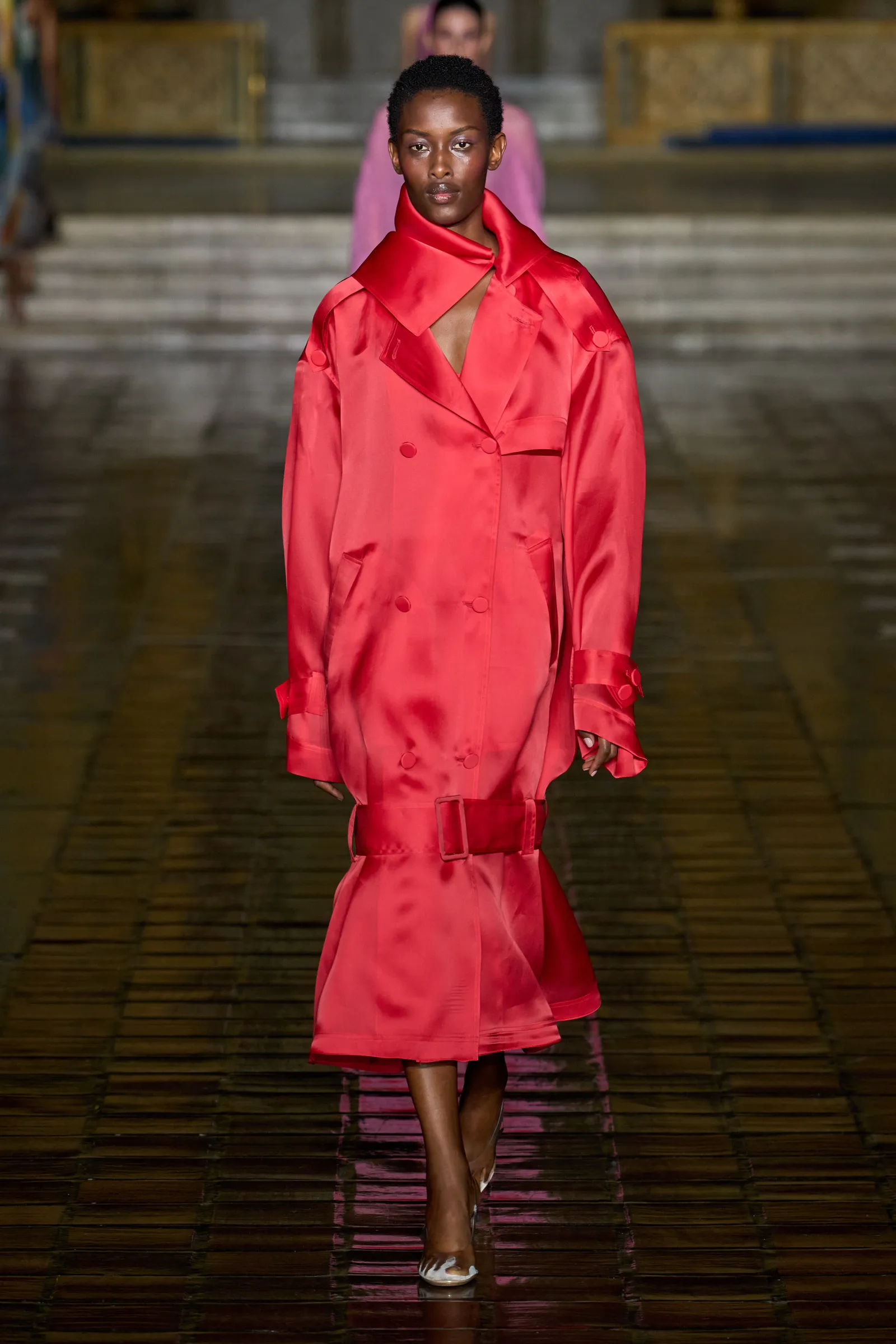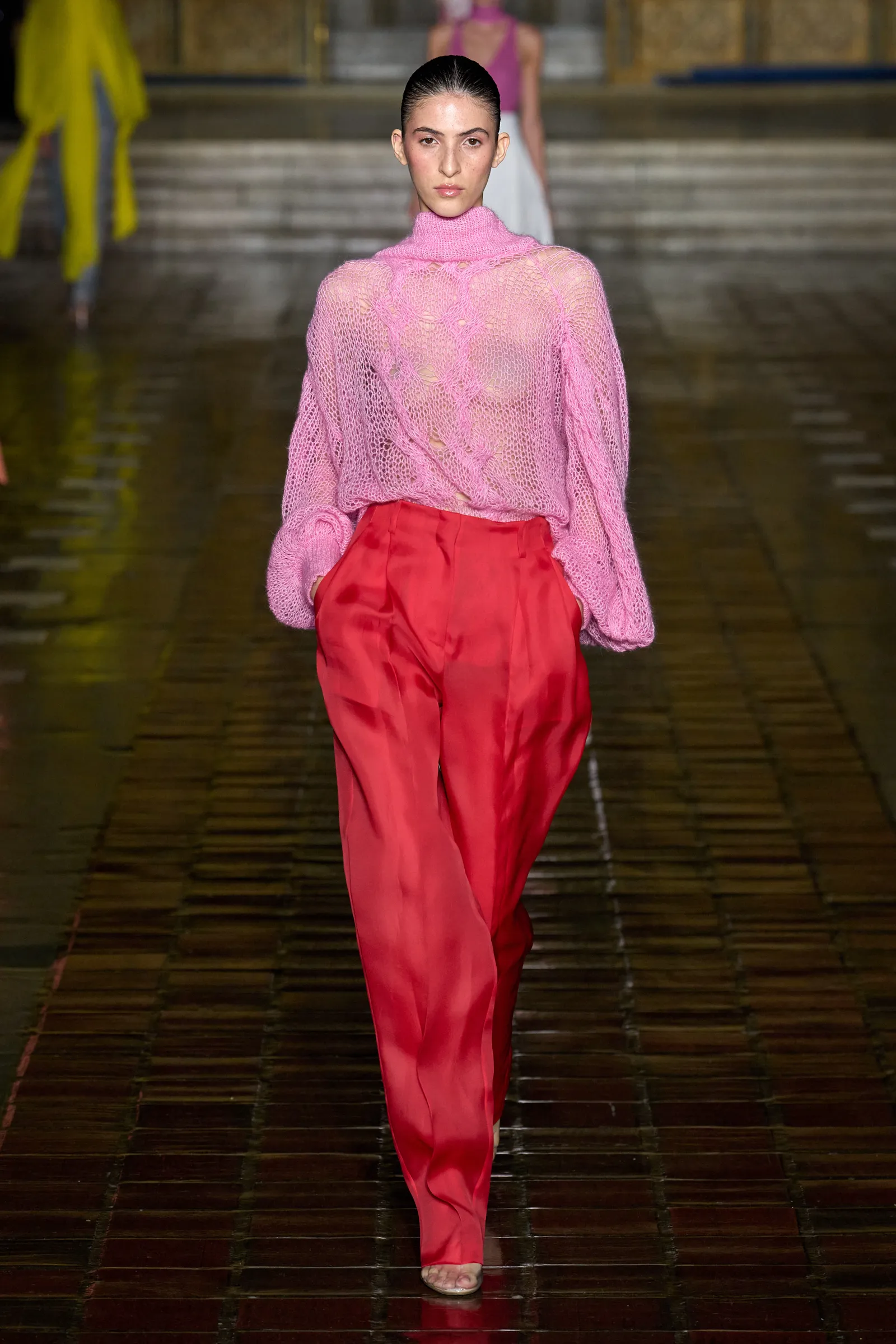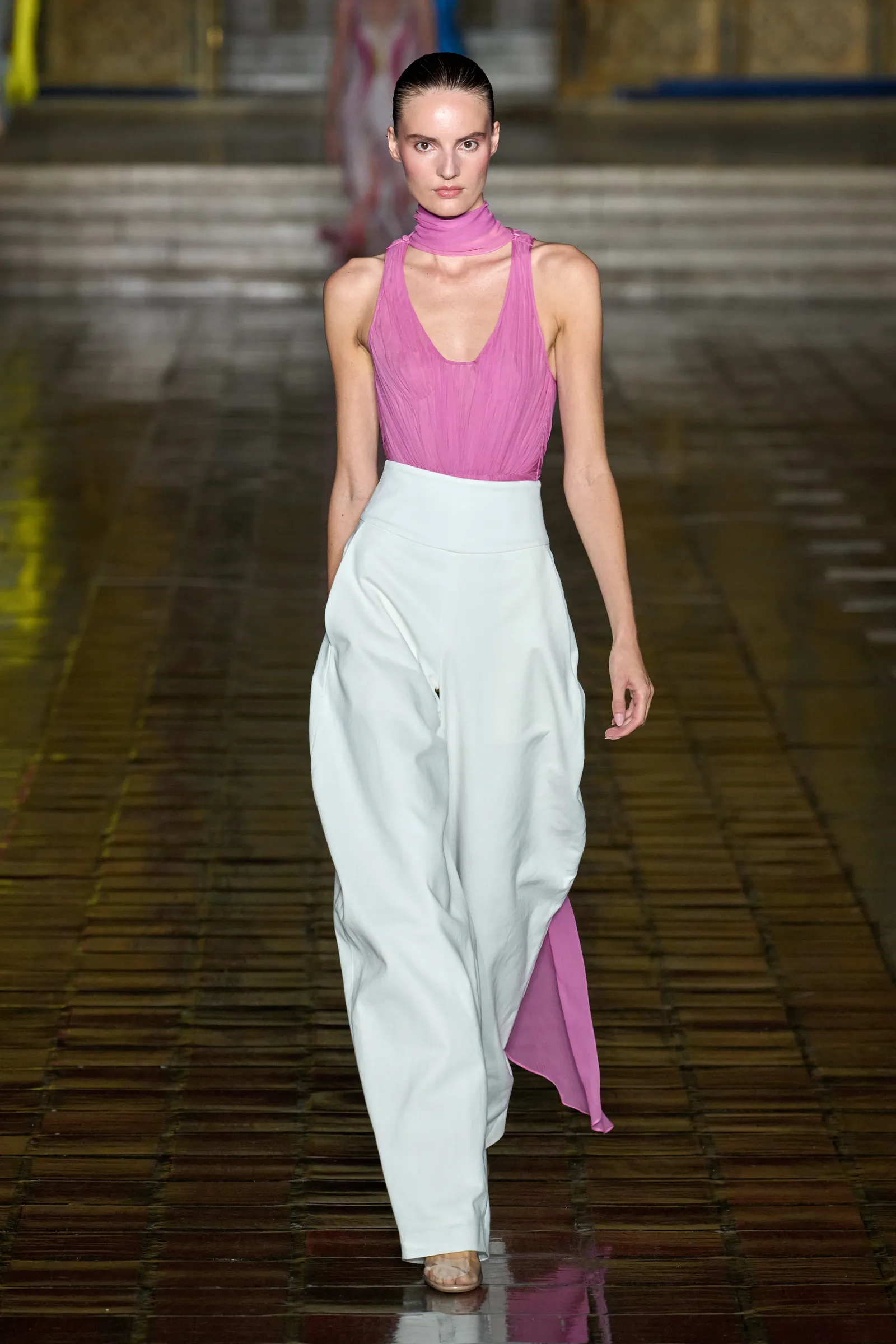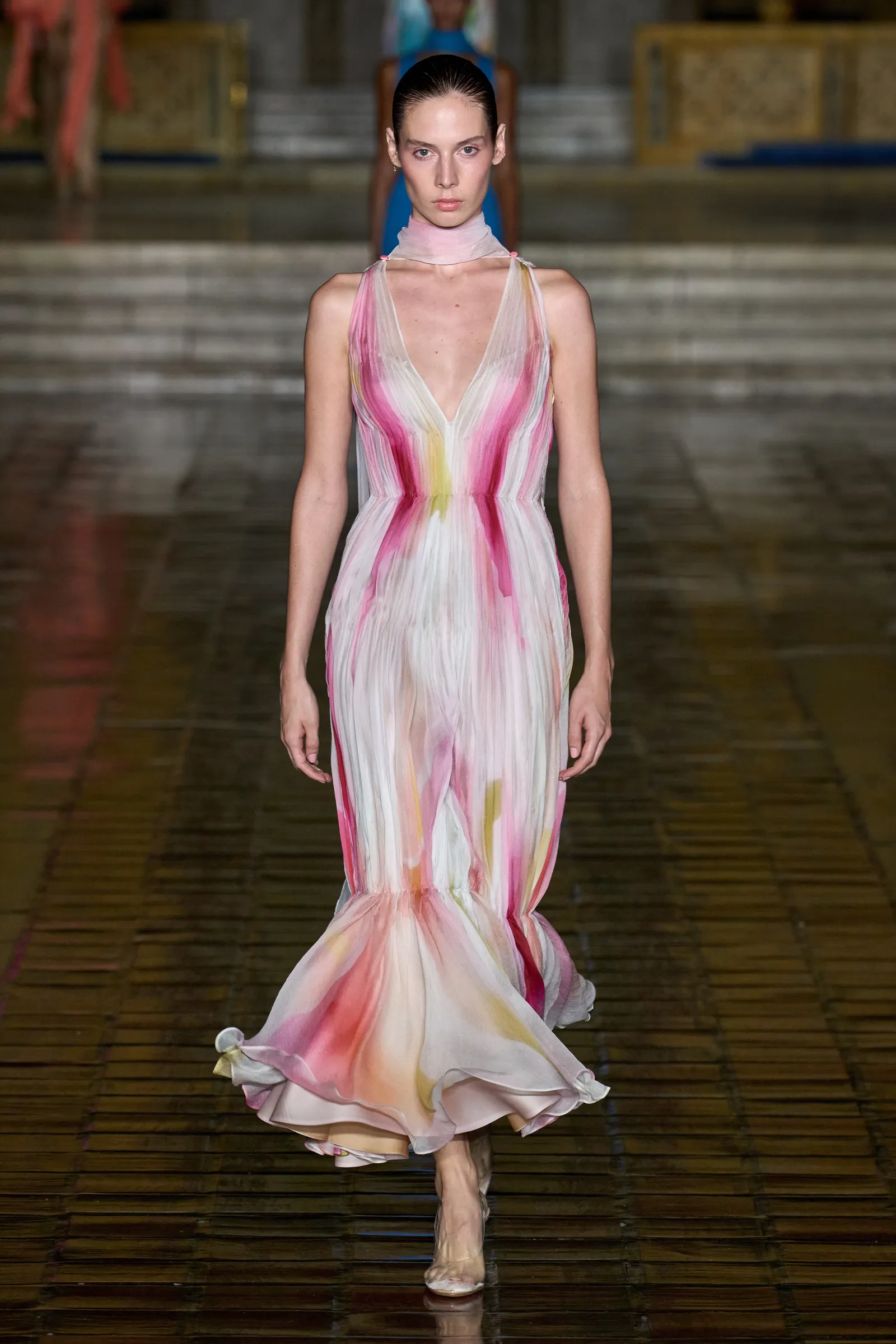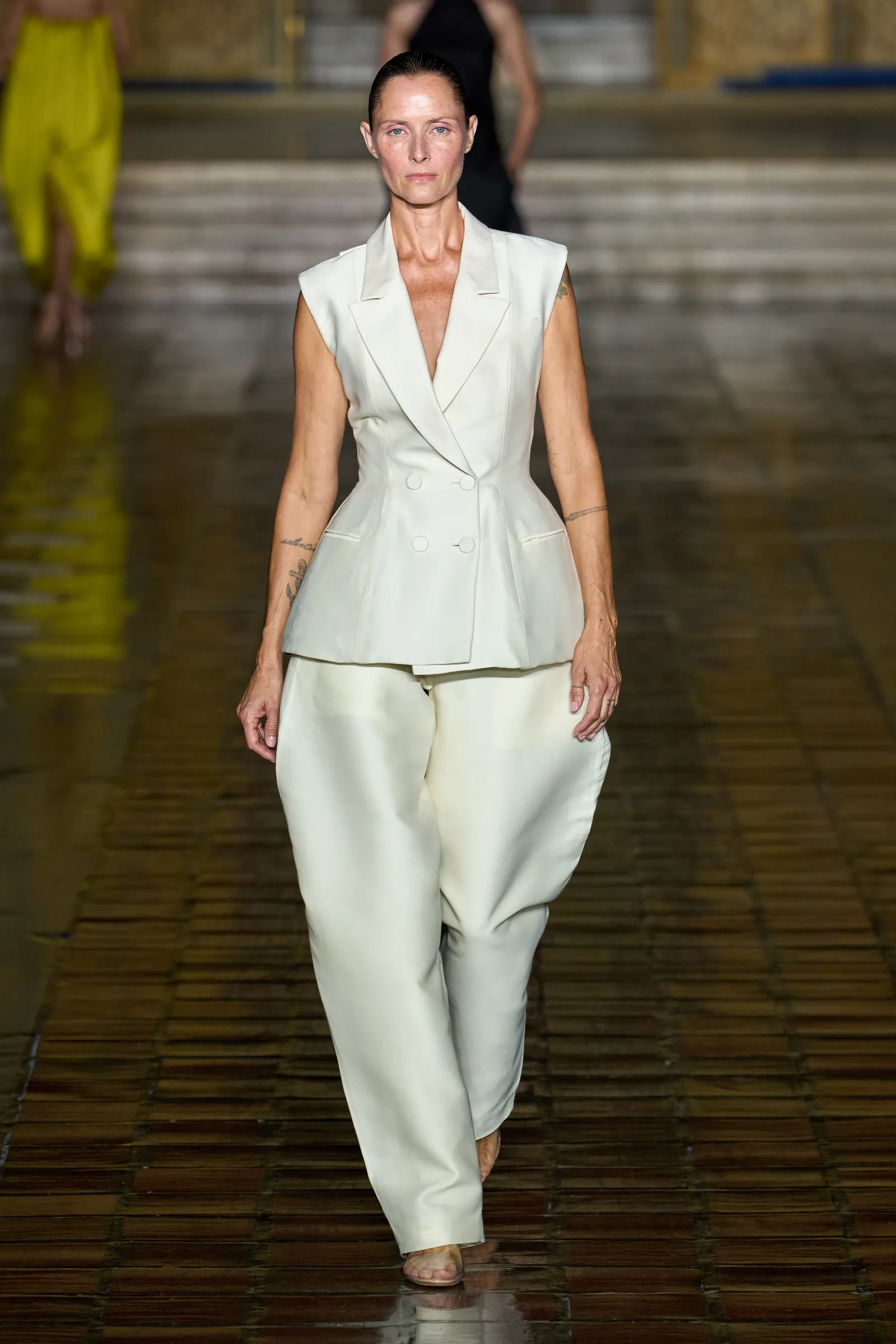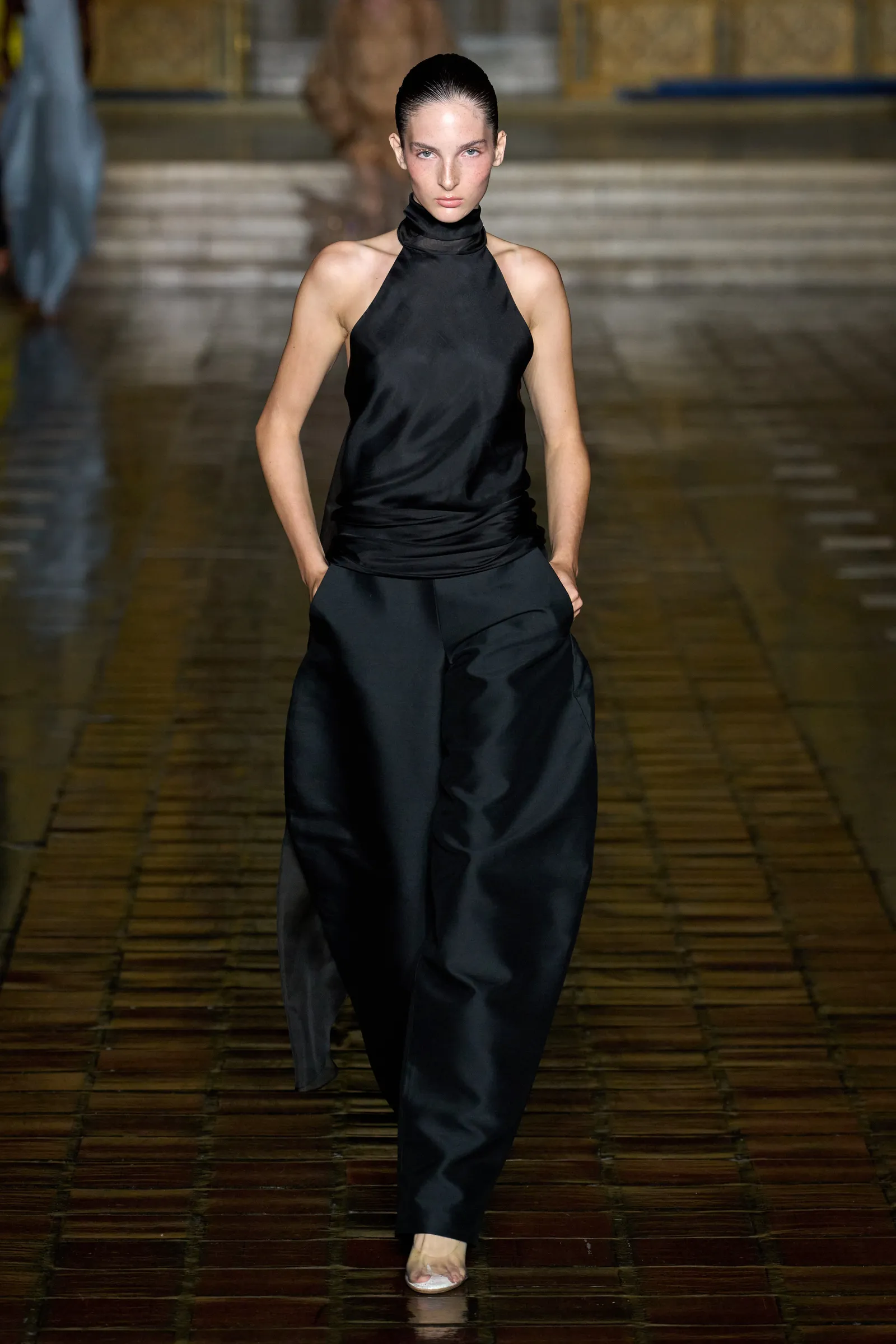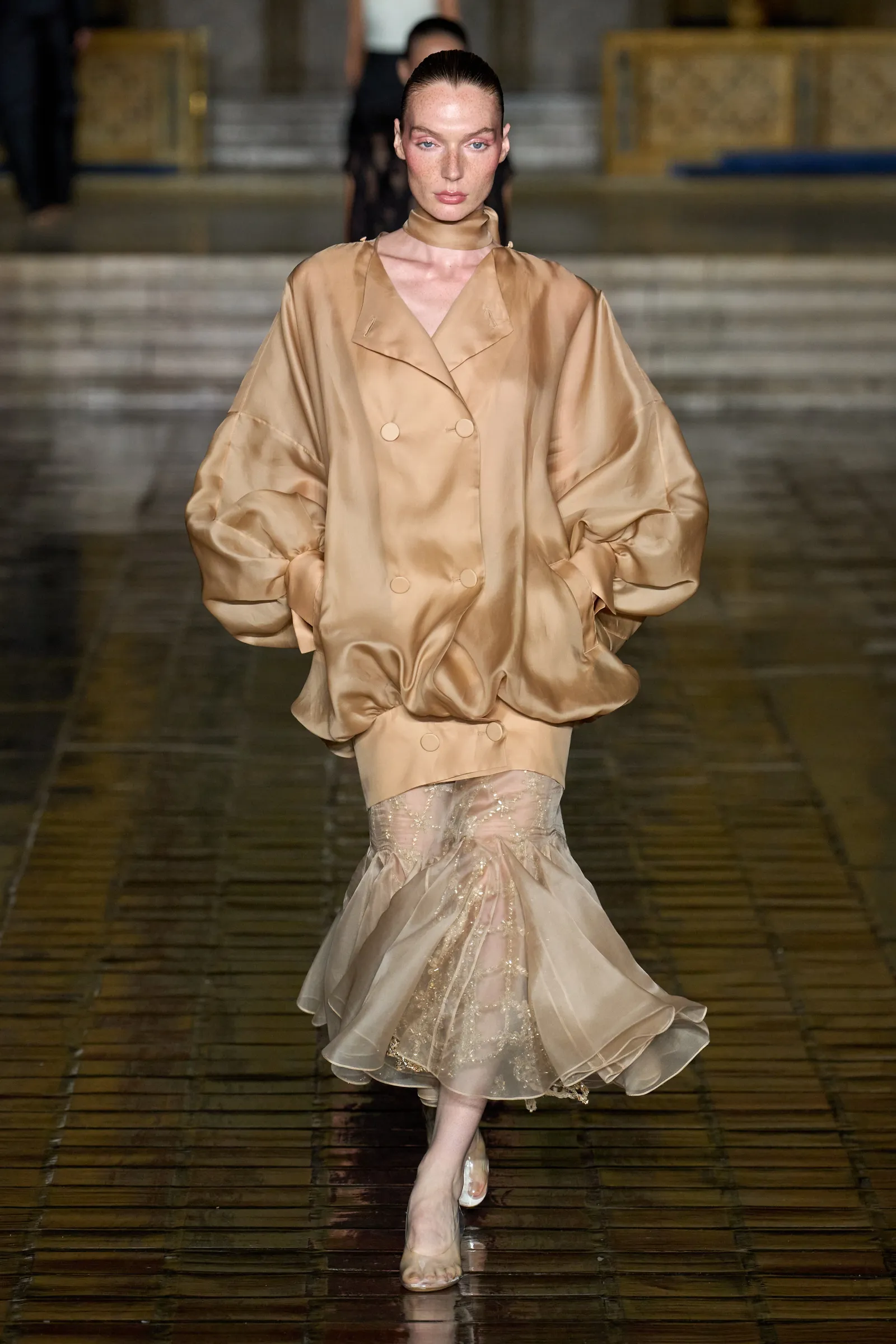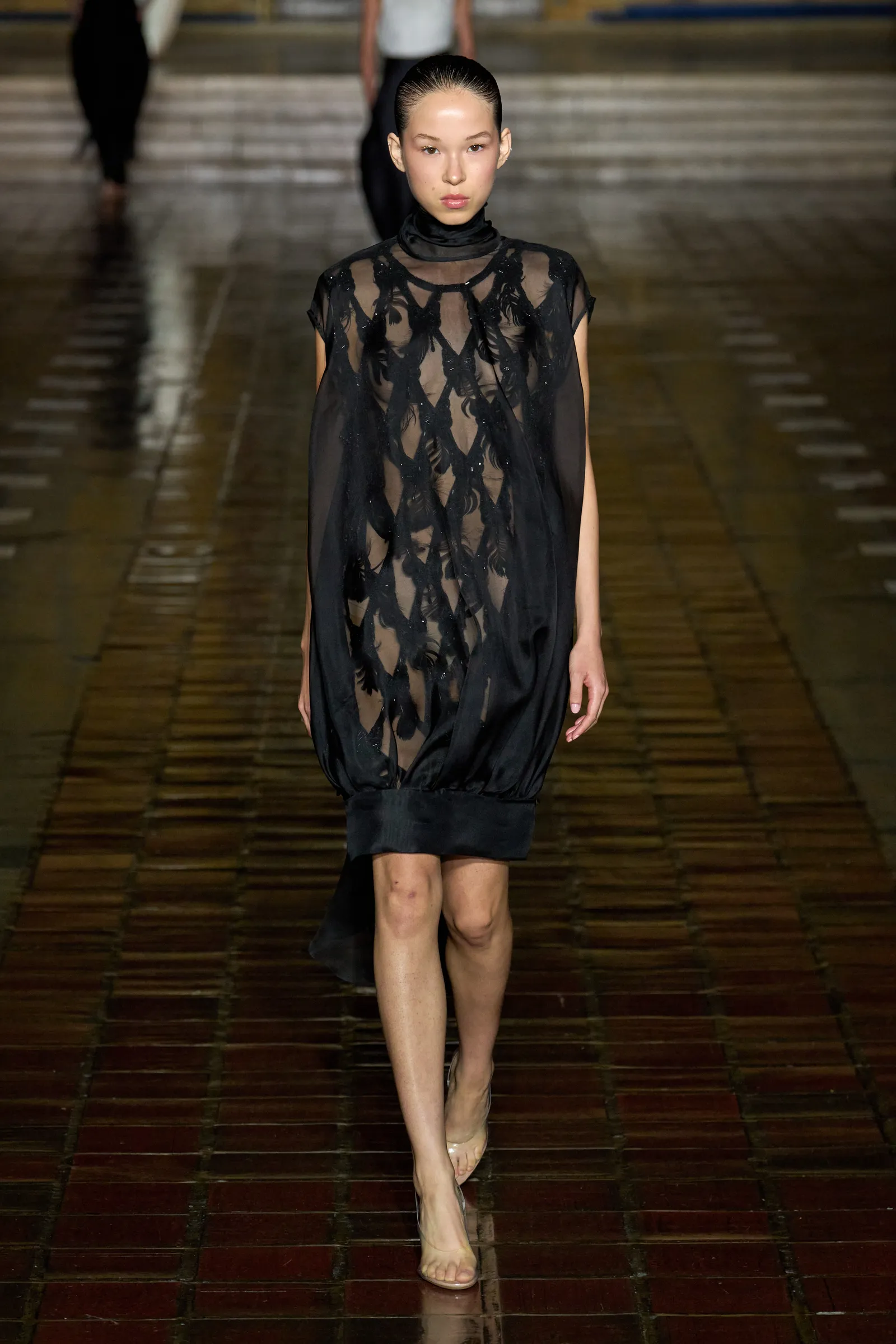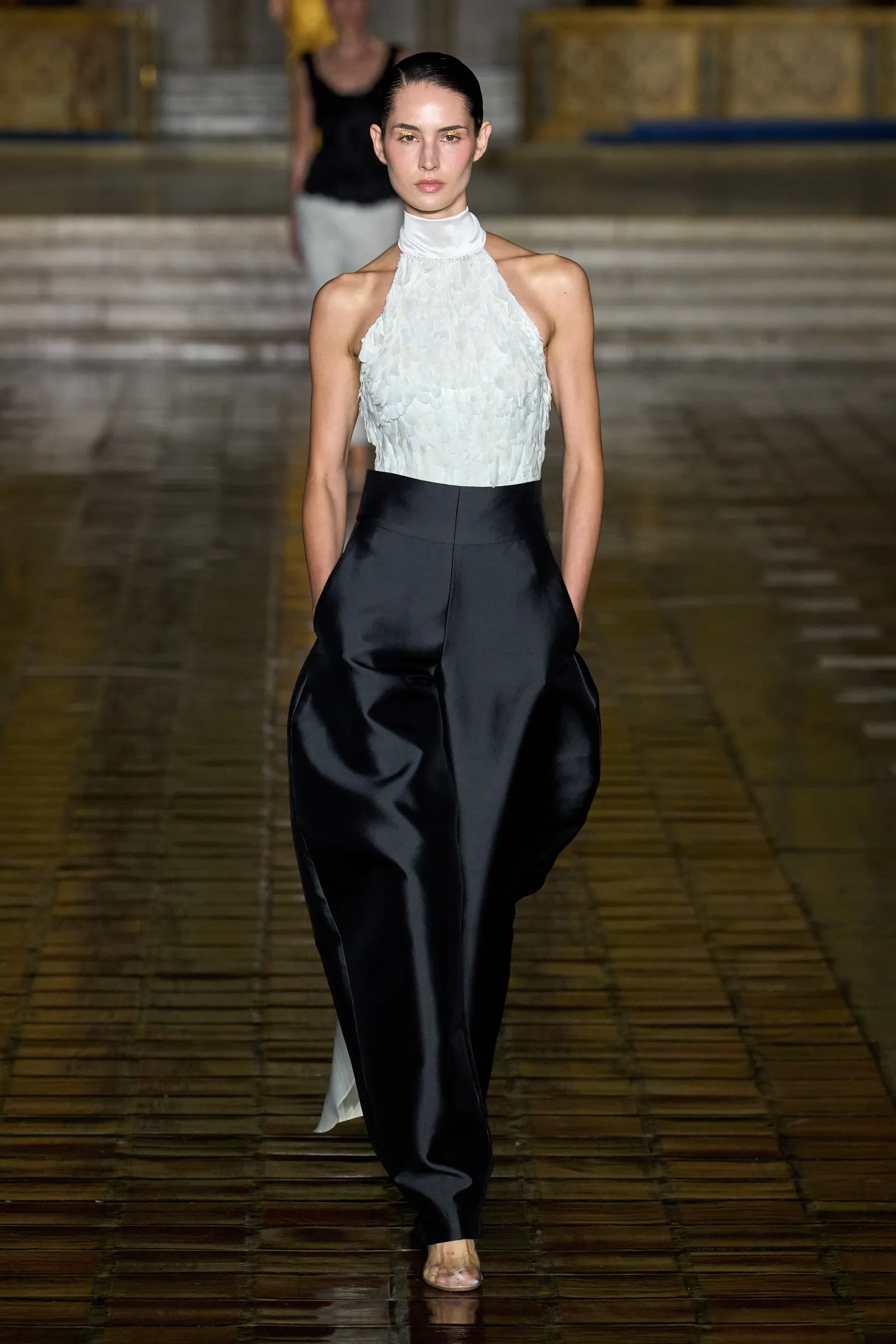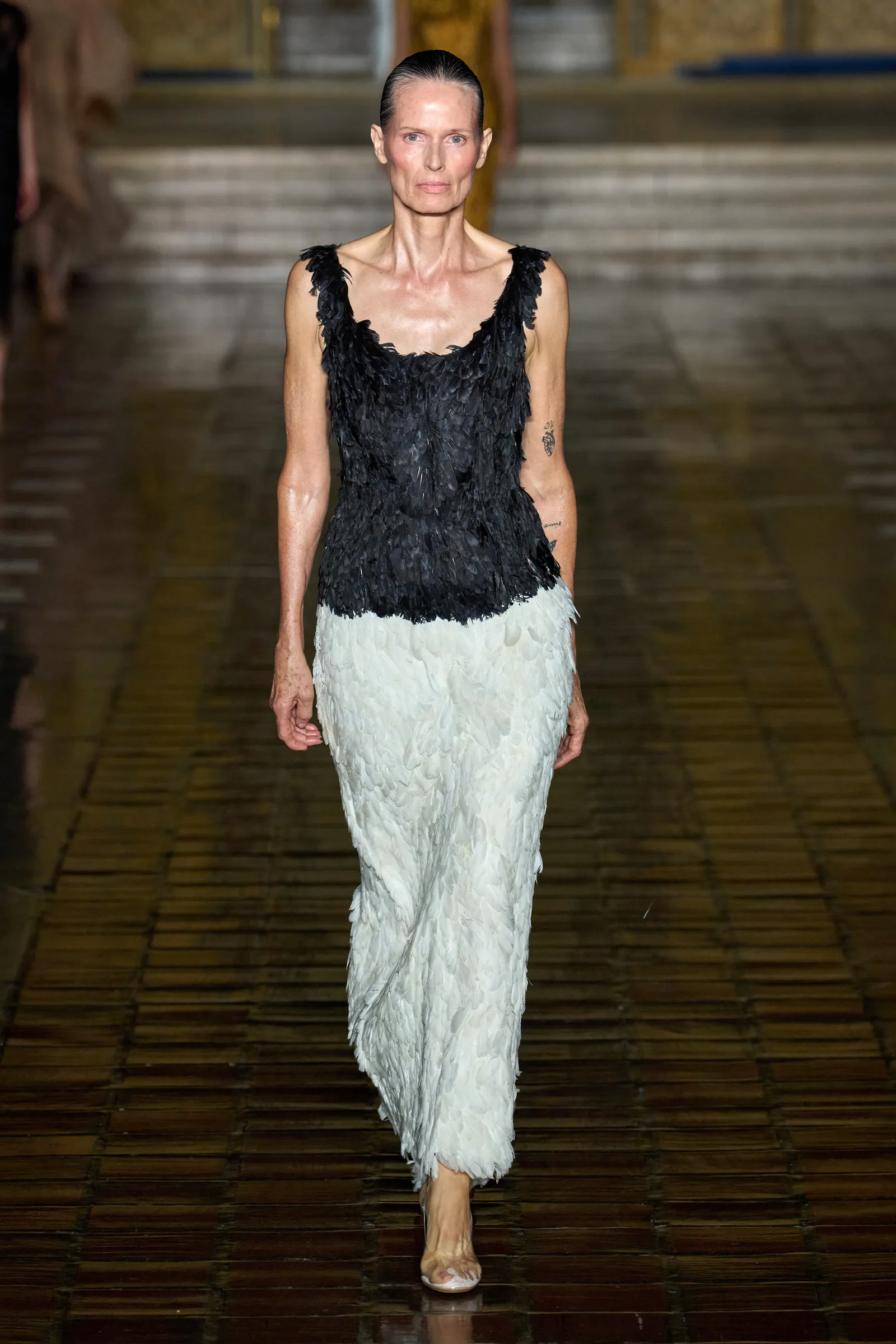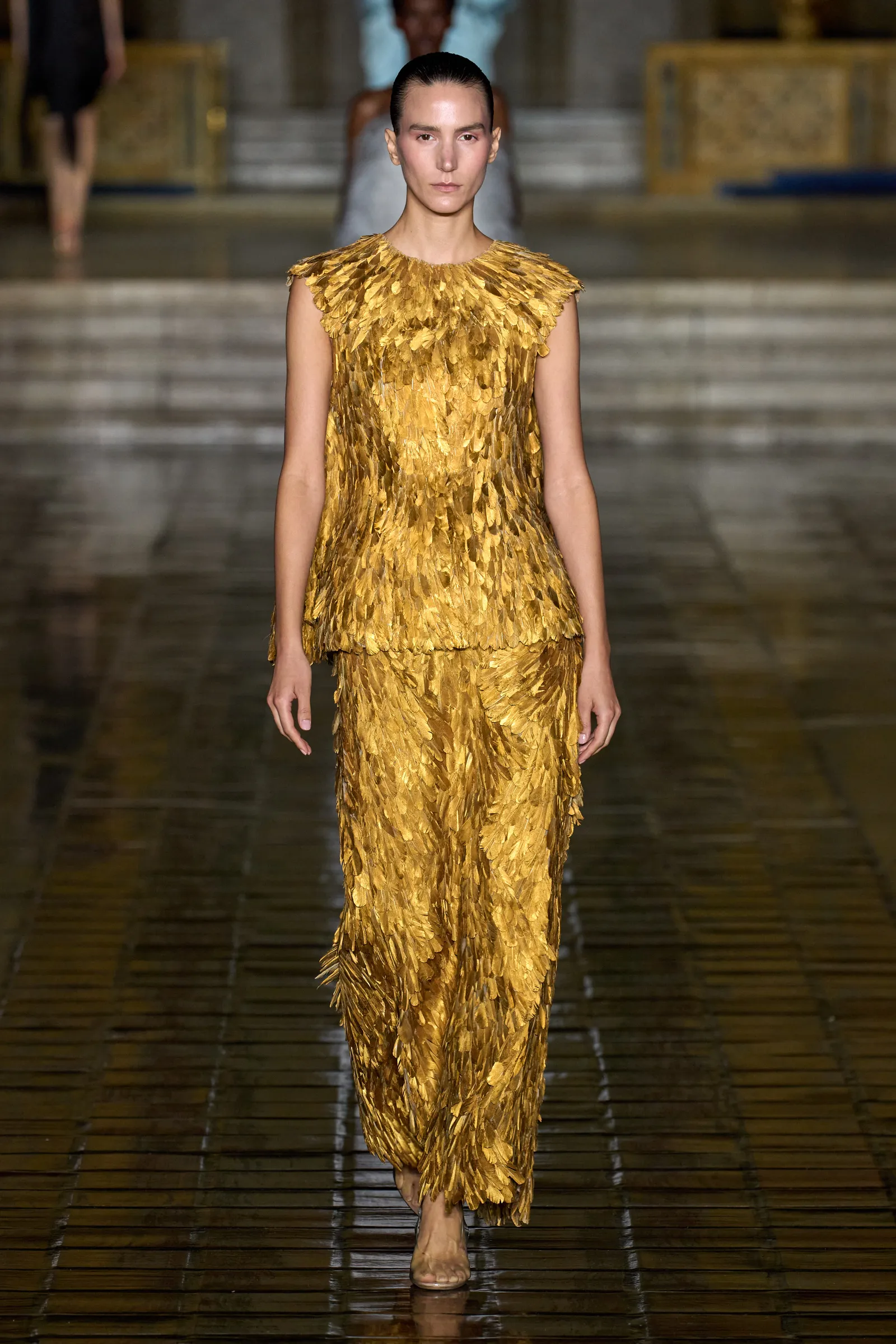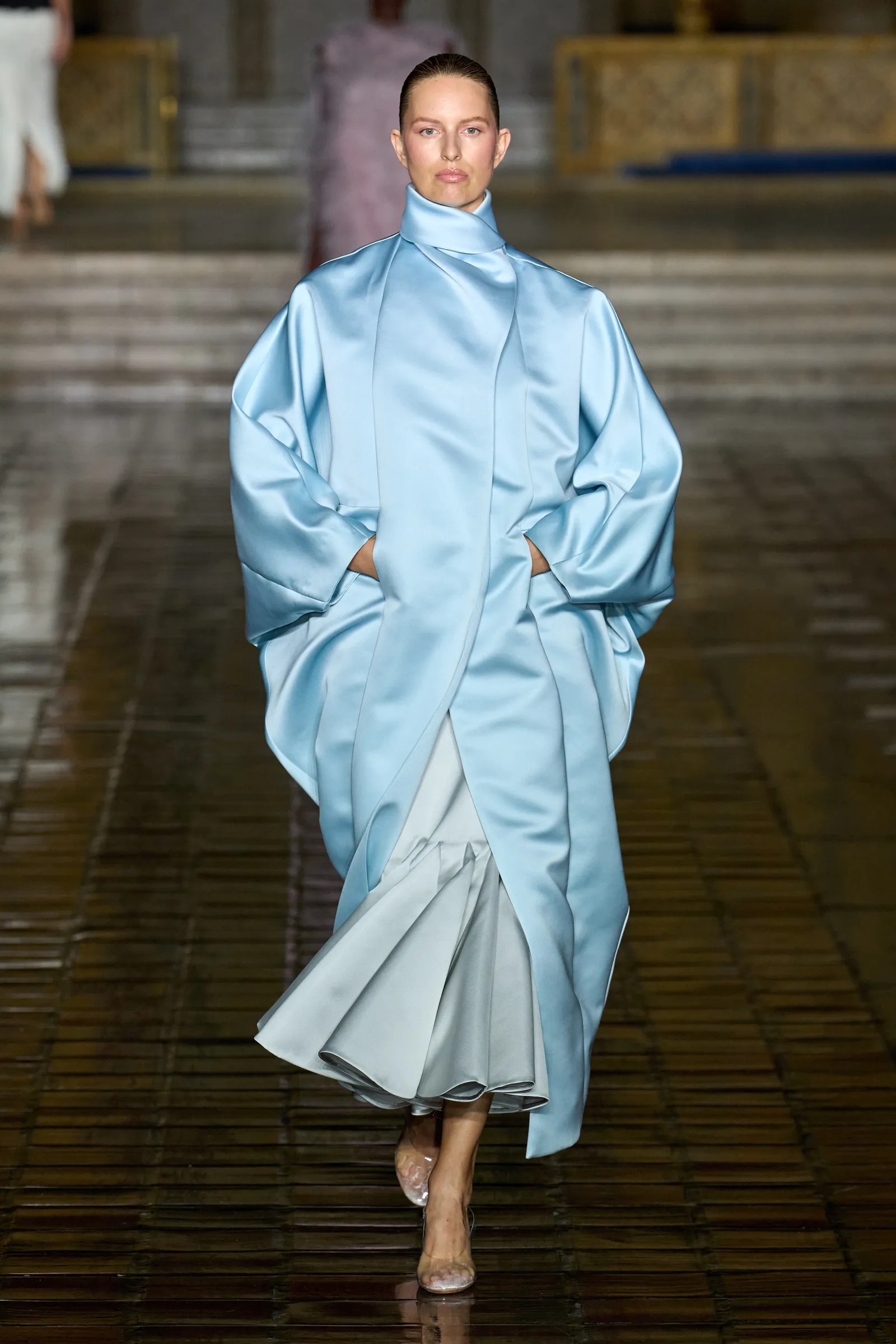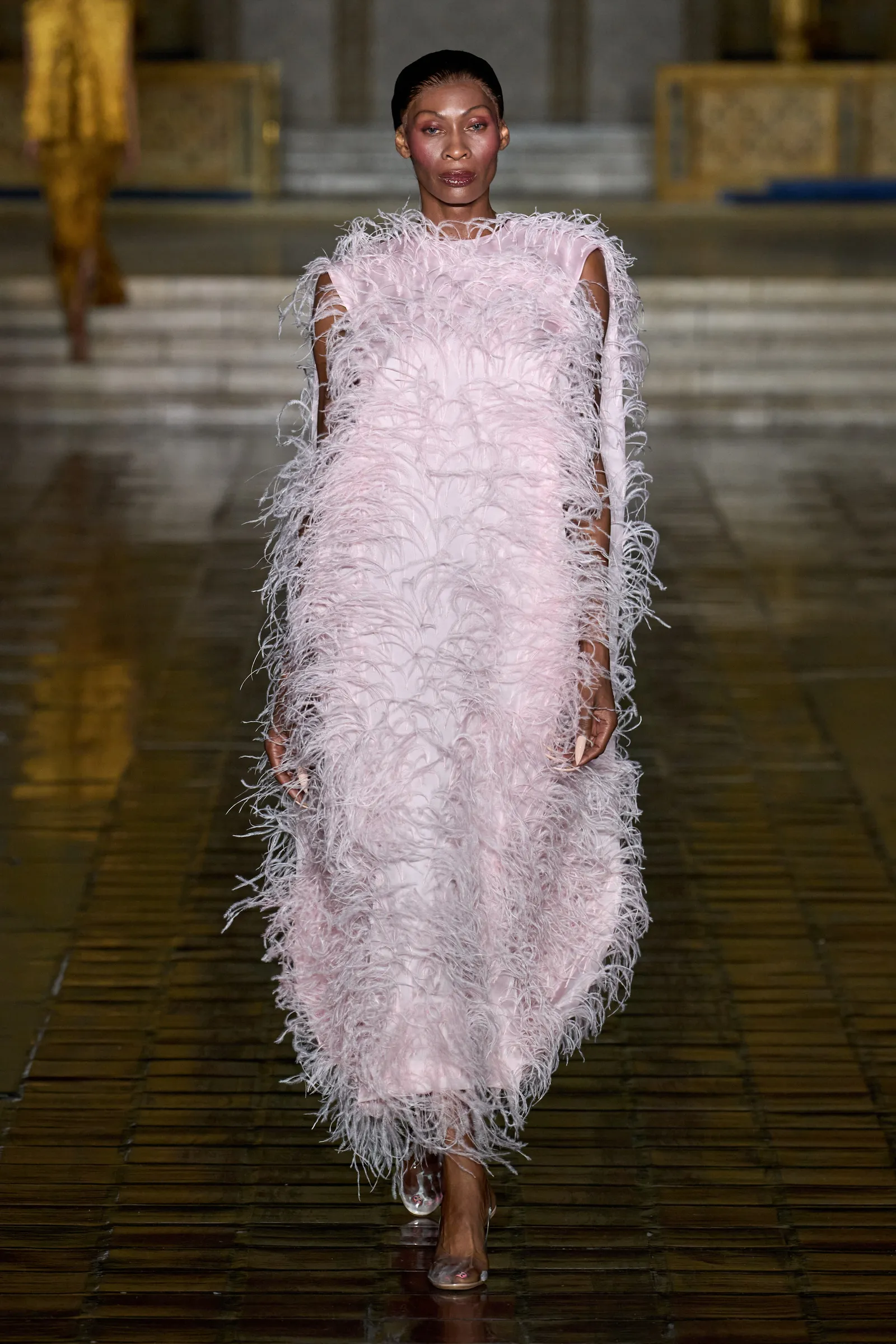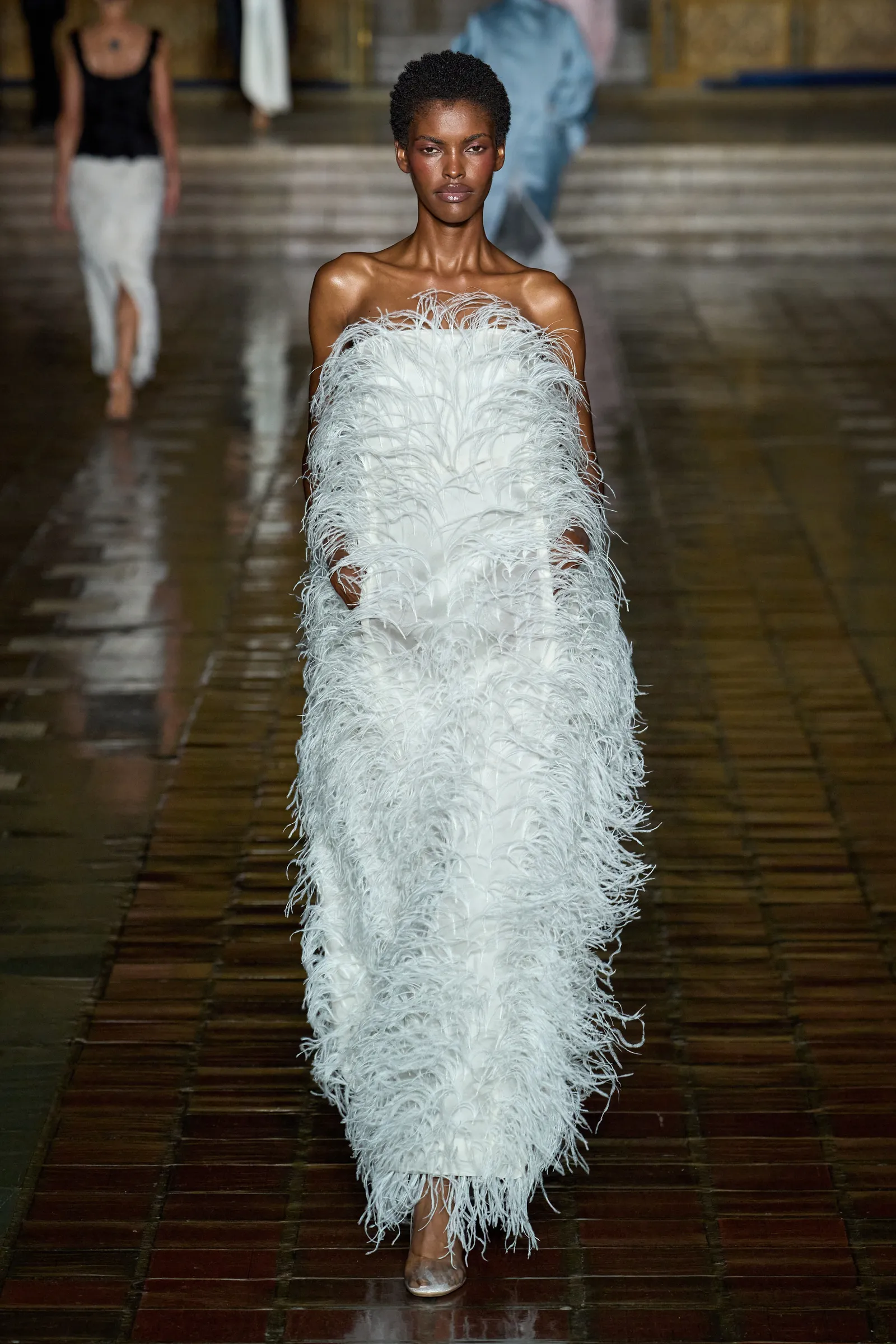
Inside the hallowed halls of St. Bartholomew’s Church on Park Avenue, Prabal Gurung offered a moment of lightness when the world feels heavy. His Spring 2026 collection, aptly titled “Angels in America,” felt like a salve—both to fashion and to the soul. The Nepalese-American designer described the collection as coming from “a place of deep reflection, not just about beauty, but the world we’re living in, this fractured world, where hope seems to be the most radical form of resistance.”
Gurung’s ability to find joy during turbulent times has long been a hallmark of his work. His memoir Walk Like a Girl, released earlier this year, provides a clue to his artistic resilience. In it, he recalls growing up an outsider in Nepal, navigating life far from home, and choosing optimism as a survival mechanism. That same spirit was sewn into every seam of this collection, which championed beauty as a form of defiance.
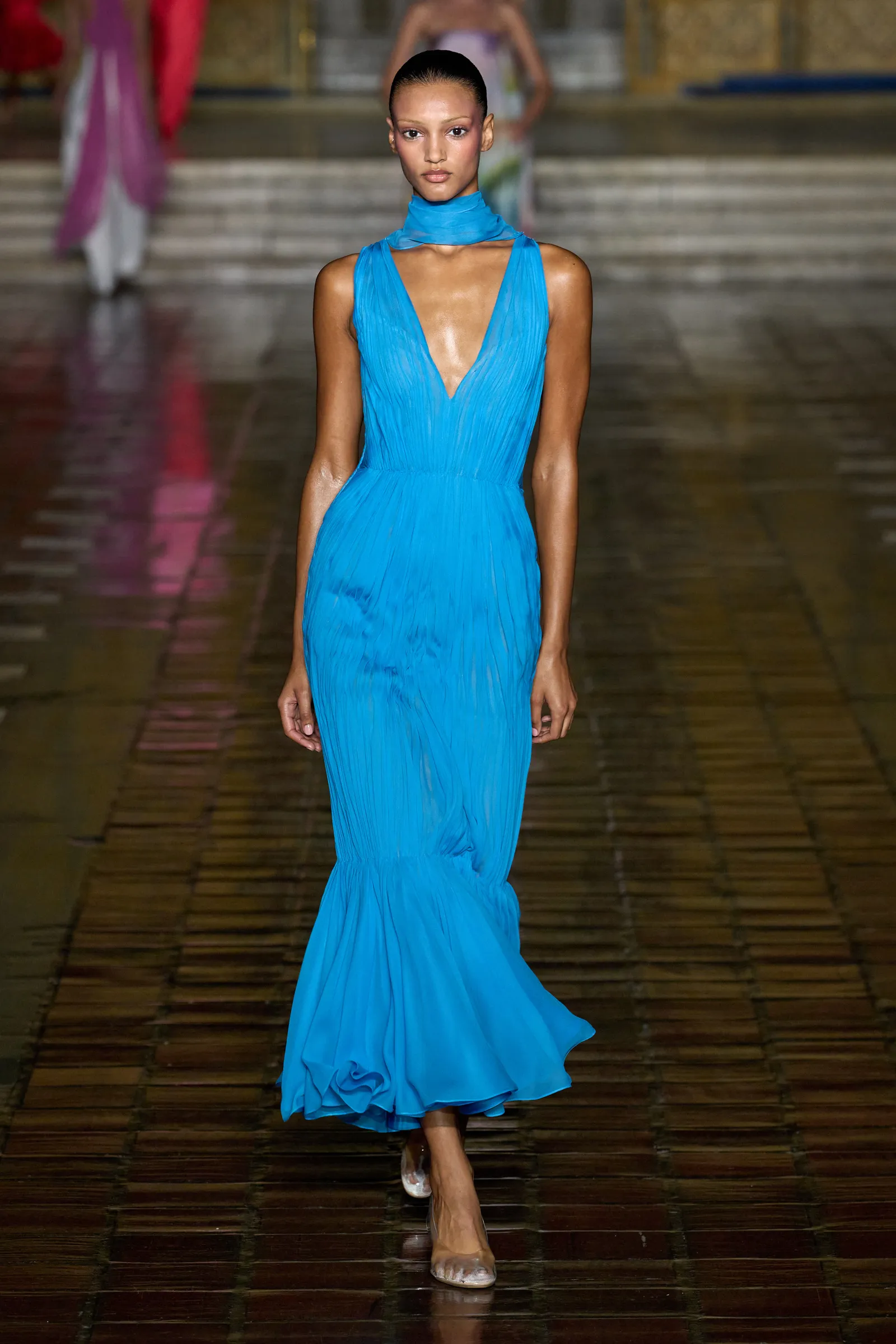
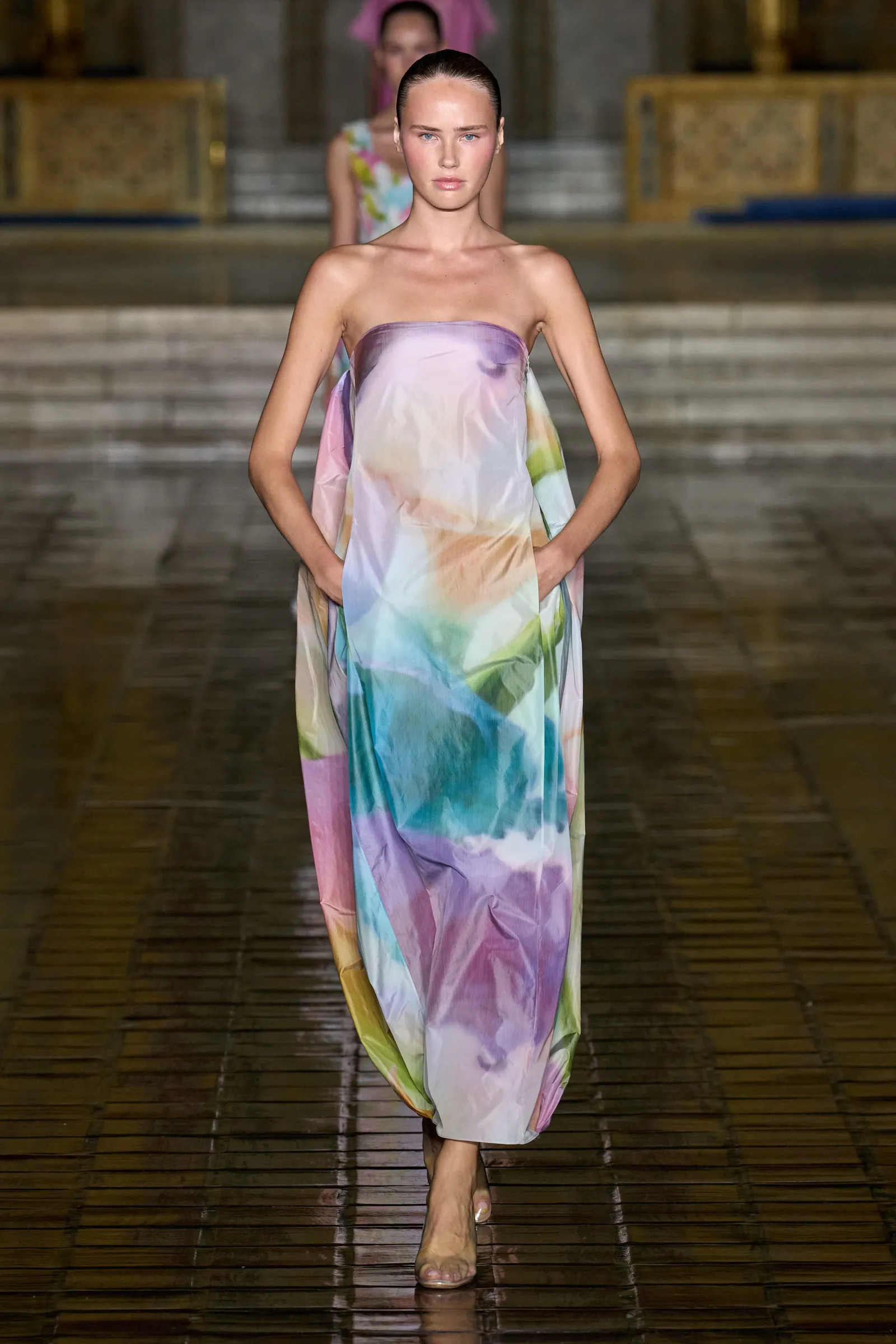
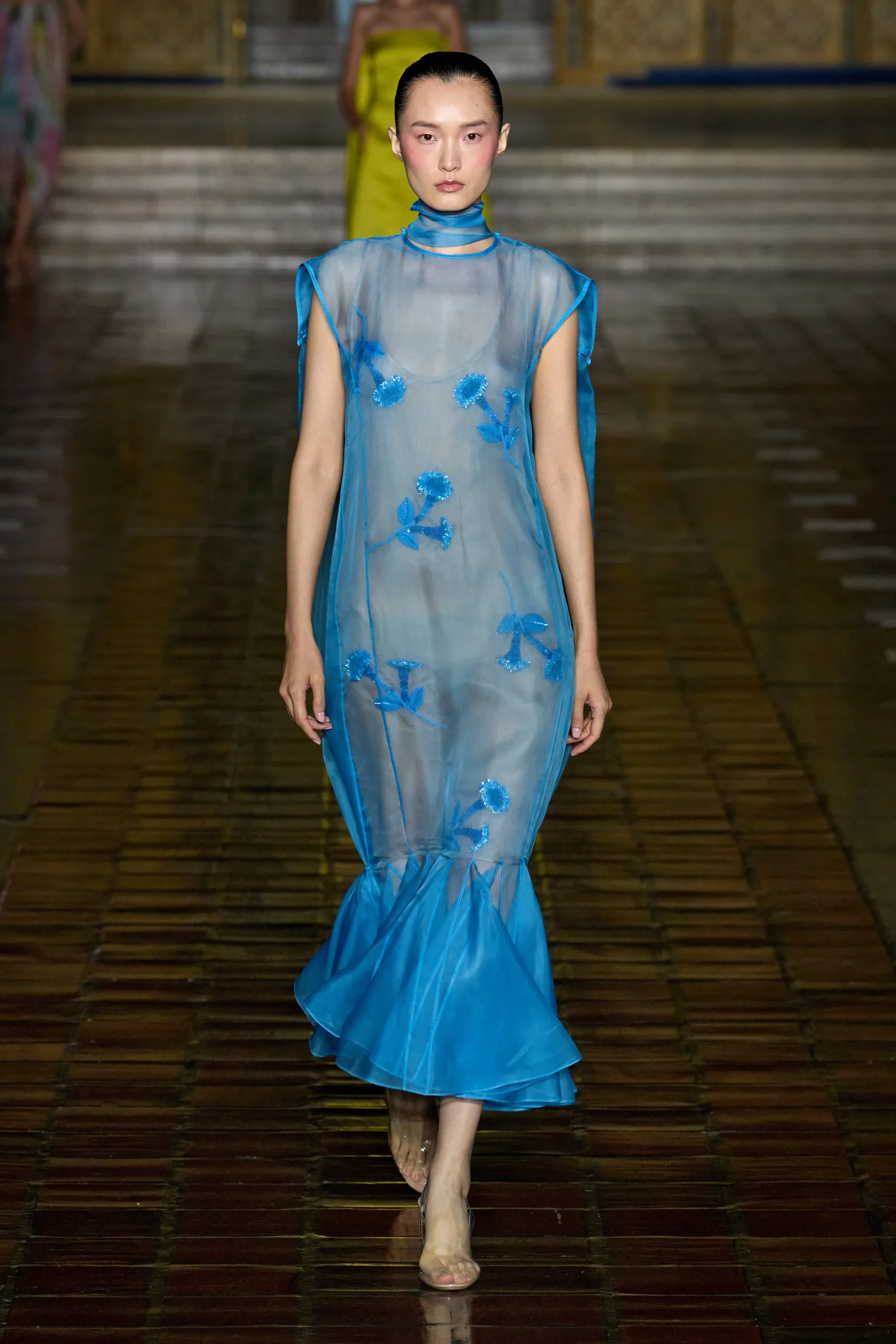
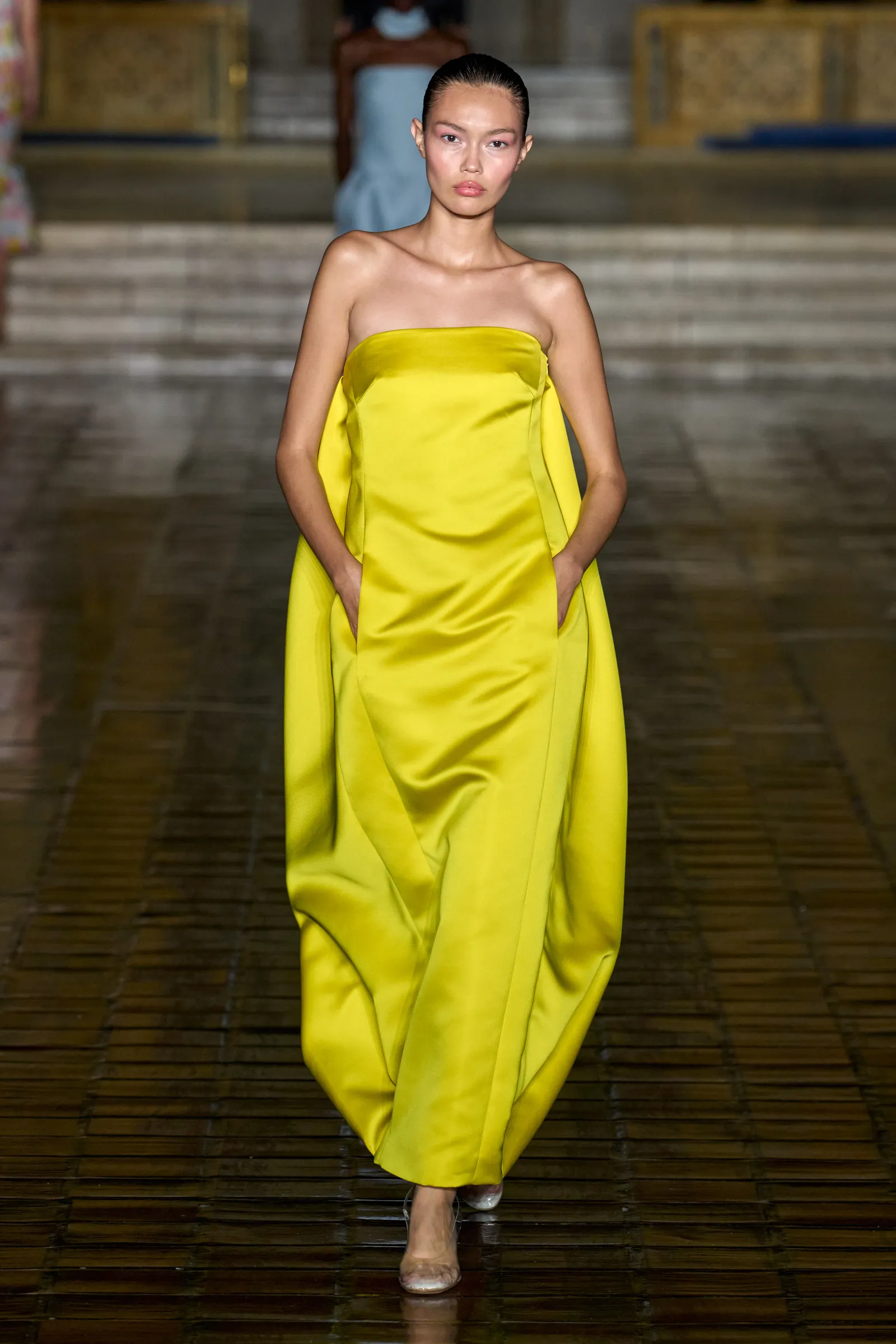
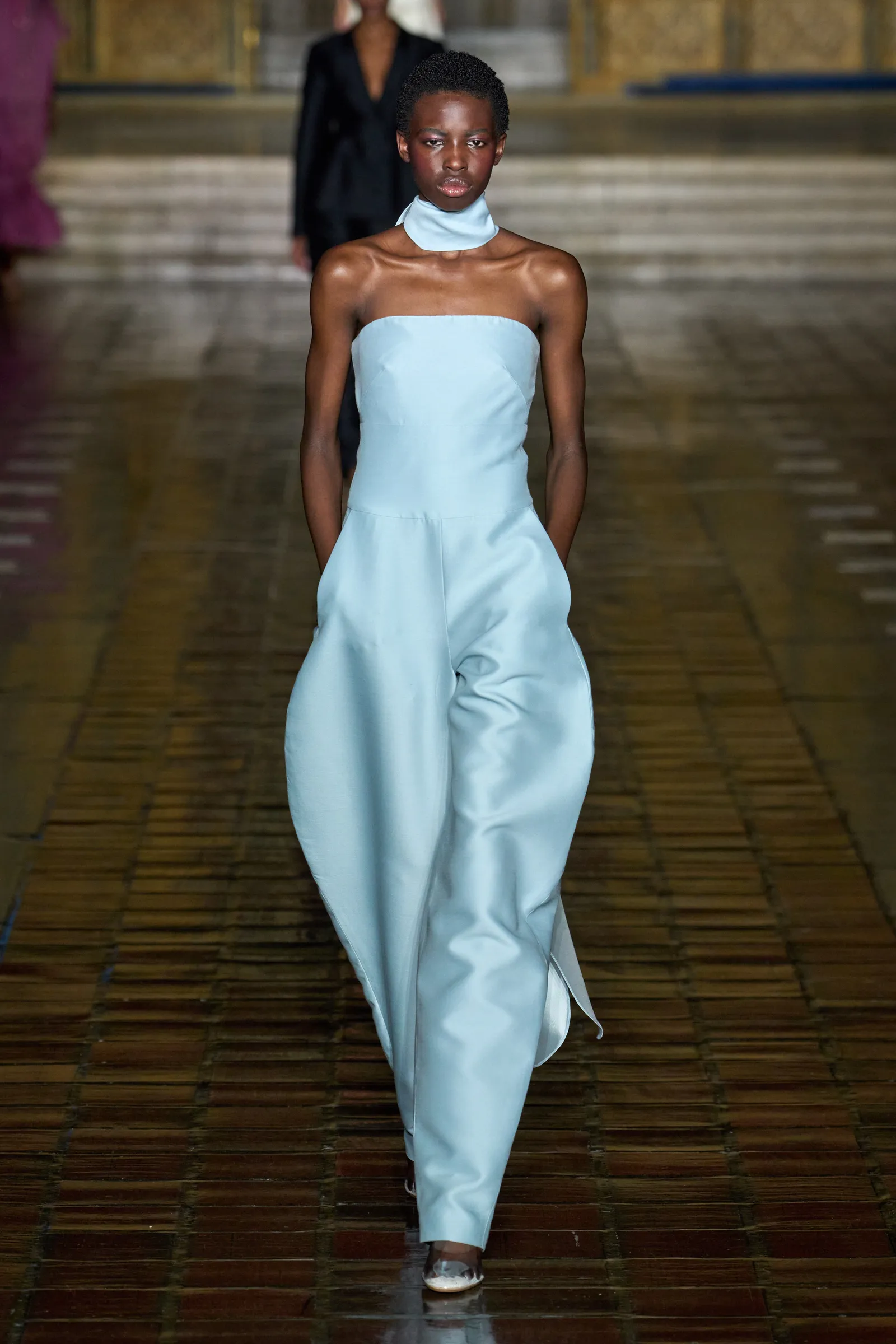
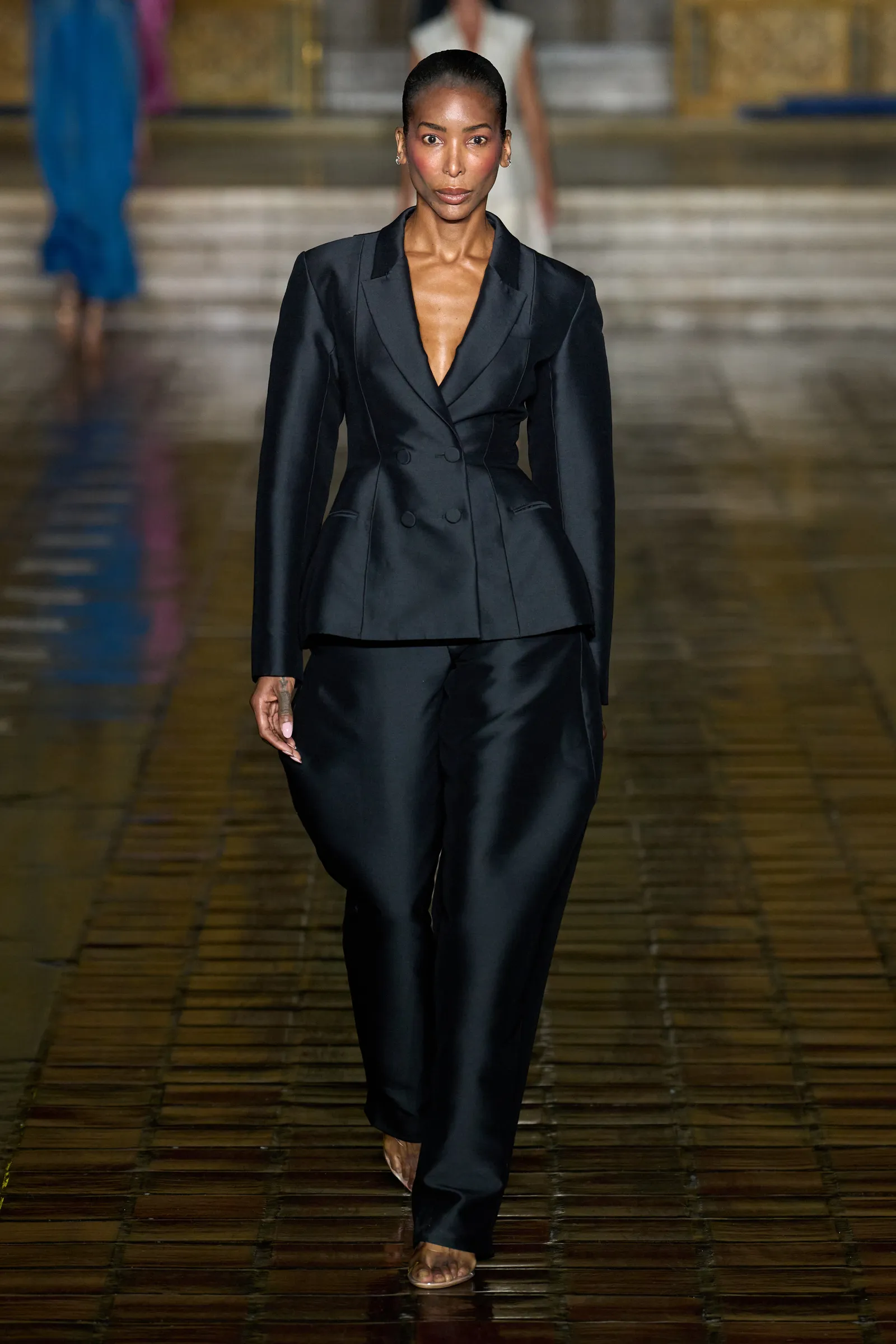
At first glance, “Angels in America” delivered what Gurung does best—romantic yet wearable clothes. Dresses flowed in languid, sleeveless shapes that tapered at the knees before blooming dramatically into full skirts. Airy knit sweaters, with their lace-like textures, sat atop relaxed, wide-leg trousers, offering easy sophistication. Eveningwear dazzled, with strapless gowns and dramatic swooping backs that felt almost operatic.
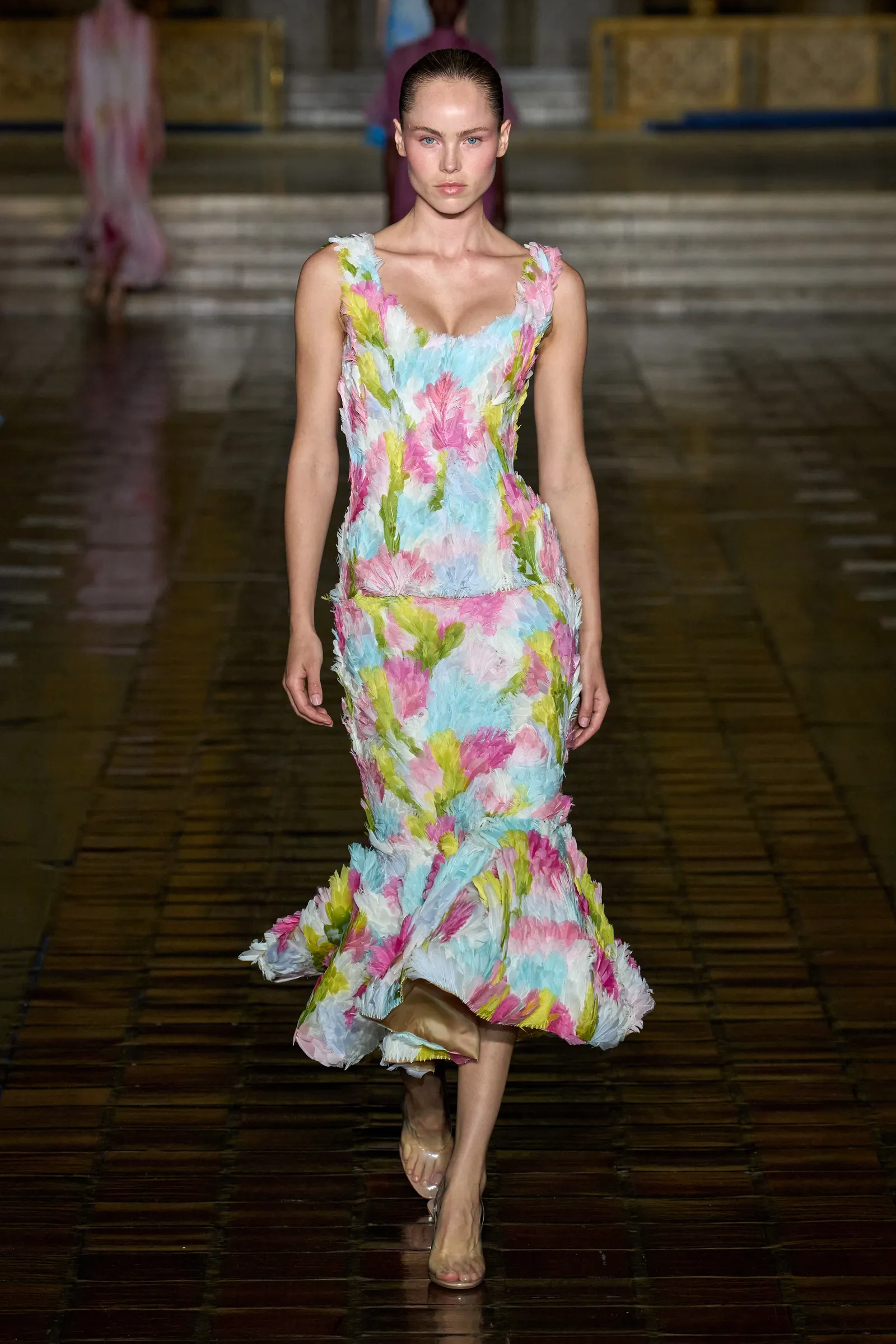
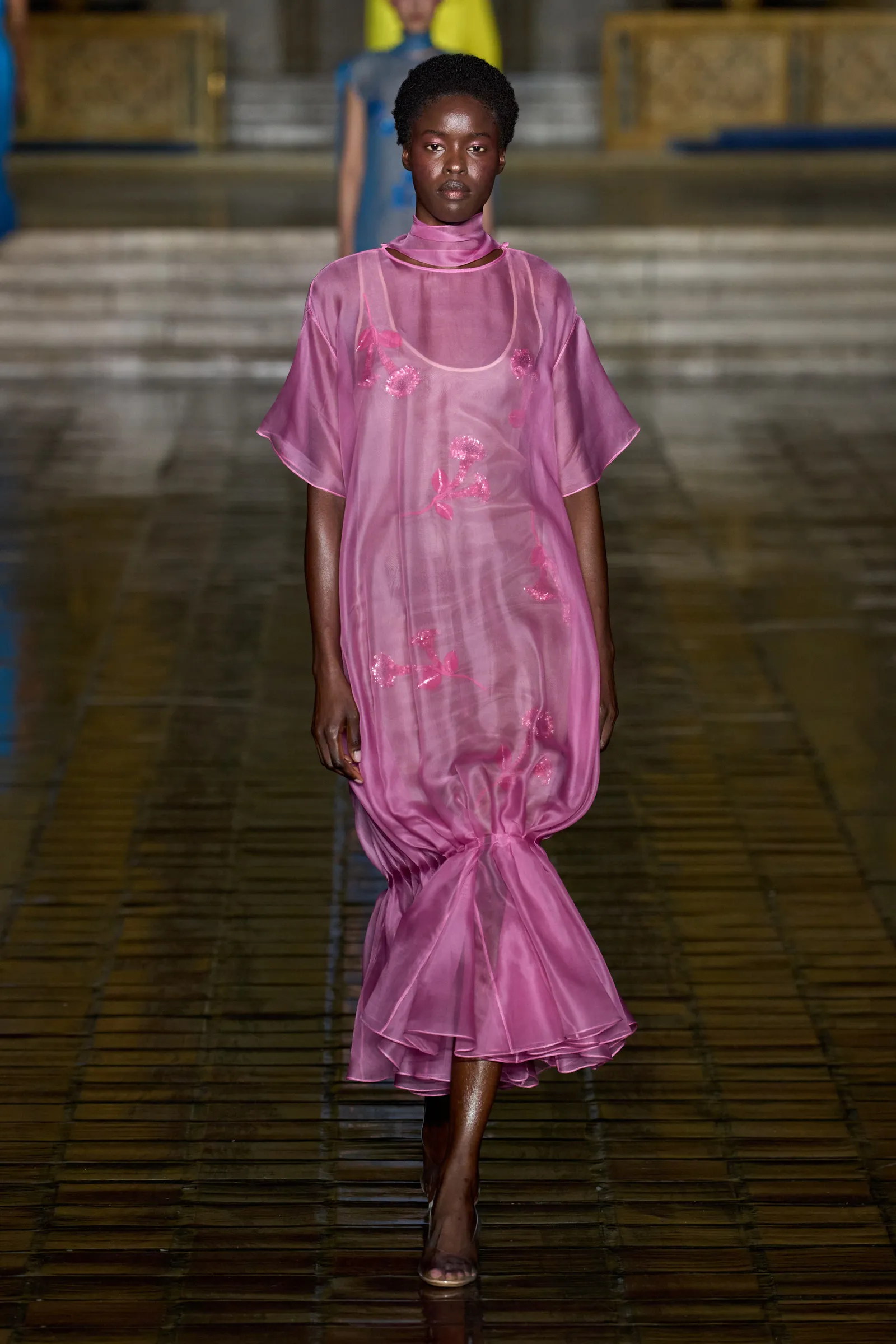
The color story was electric: hot pink, coral, lavender, and marigold were grounded by black, white, and muted golds. Rich fabrics—brocade, taffeta, embossed cloque—added a ceremonial quality. The handwork shone: one standout dress seemed to grow gilded feathers, while another bloomed with fluttering embroidered flowers, as if nature itself had joined the choir.
Gurung’s choice of venue was no accident. St. Bartholomew’s has long been considered a sanctuary, a place of solace, and that sense of refuge was amplified by a live choir performing Don McLean’s “Starry, Starry Night,” Leonard Cohen’s “Hallelujah,” and Kate Bush’s “Running Up That Hill.” The music underscored the spiritual undertones of the collection and invited the audience into a shared moment of reflection.
While the title nods to Tony Kushner’s seminal play about the AIDS crisis, Gurung’s interpretation was personal. “Where are our angels?” he asked at a preview. “The angels here aren’t celestial beings. They’re angels who walk among us.”
Digging deeper into the concept, Gurung revisited memories of Nepal and reflected on the hijra community—people who are non-binary and played a formative role in his youth. Their presence, he said, was a source of salvation. This season’s collection honored them, not through overt slogans, but through design: trumpet flower motifs—associated with angel worship in Nepal—were reimagined as sculptural details in the garments.
He also collaborated with the Gender Liberation Movement (GLM), a grassroots organization advocating for body autonomy and self-fulfillment. The partnership informed the tone of the collection, which celebrated marginalized communities through casting and subtle nods to the trans pride flag within the color palette. Model Colin Jones opened the show, and actress Dominique Jackson closed, both underscoring the collection’s commitment to inclusion.
Hair and makeup remained soft and natural, allowing the clothes’ craftsmanship to take center stage. Casting was a highlight—diverse, powerful, and intentional. The serene church setting and haunting live music created an atmosphere that was both intimate and transcendent, elevating the entire experience from runway show to communal ritual.
Prabal Gurung’s Spring 2026 collection wasn’t just about beautiful clothes; it was a meditation on resilience, representation, and radical hope. By weaving personal history, cultural symbols, and inclusive casting into the fabric of the show, he reminded the audience that fashion can be a vessel for collective healing. For a fleeting 12 minutes on Park Avenue, Gurung gave his audience exactly what they needed: a reason to believe in angels again.