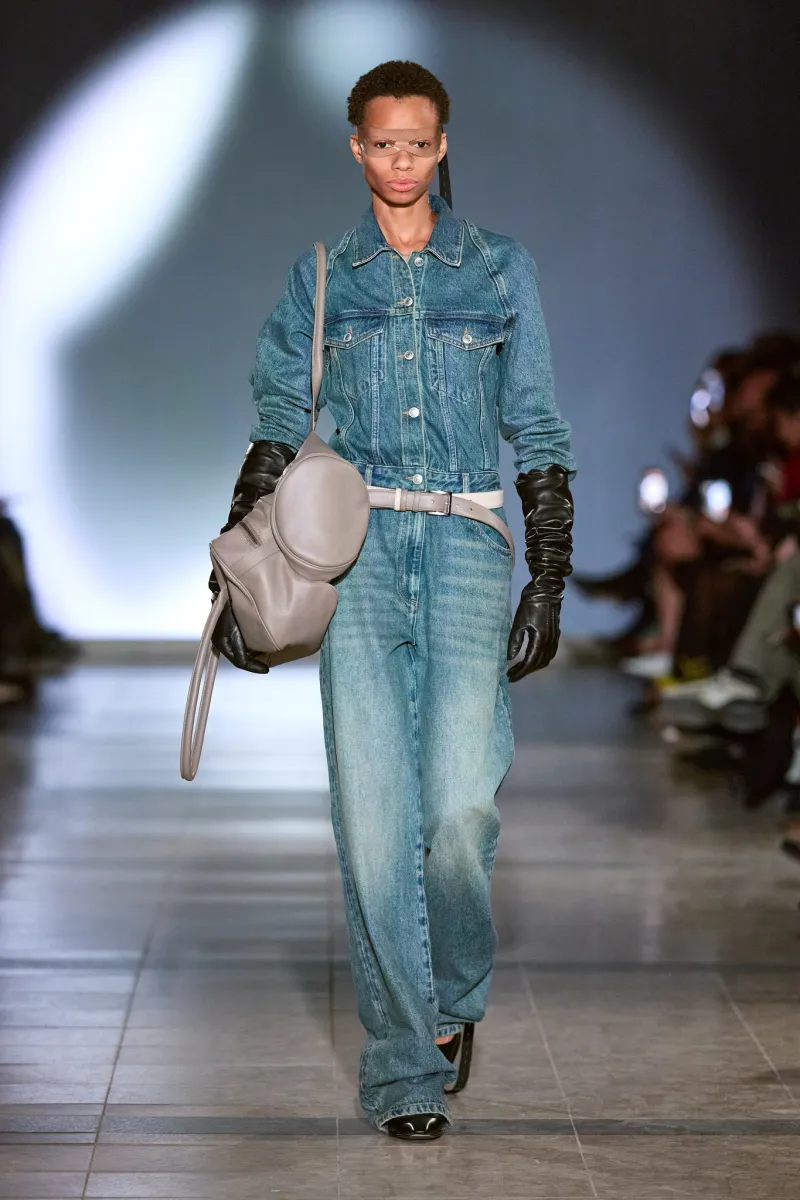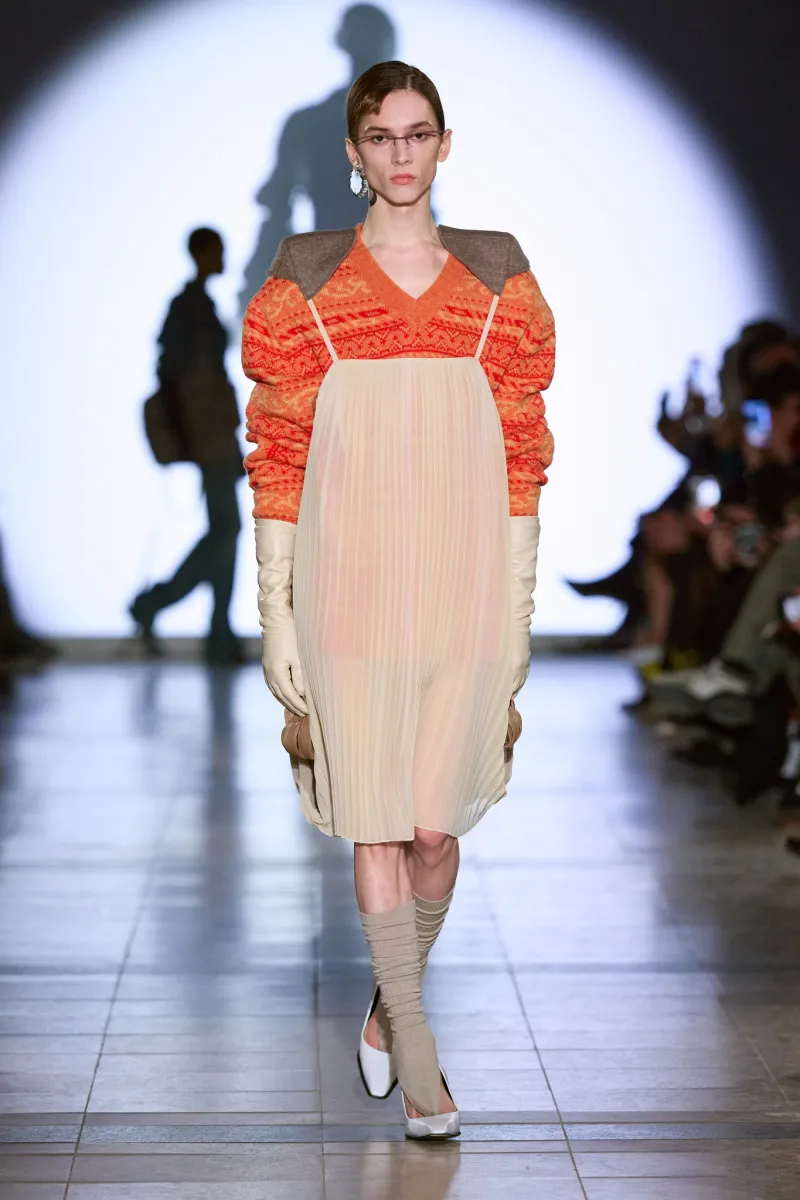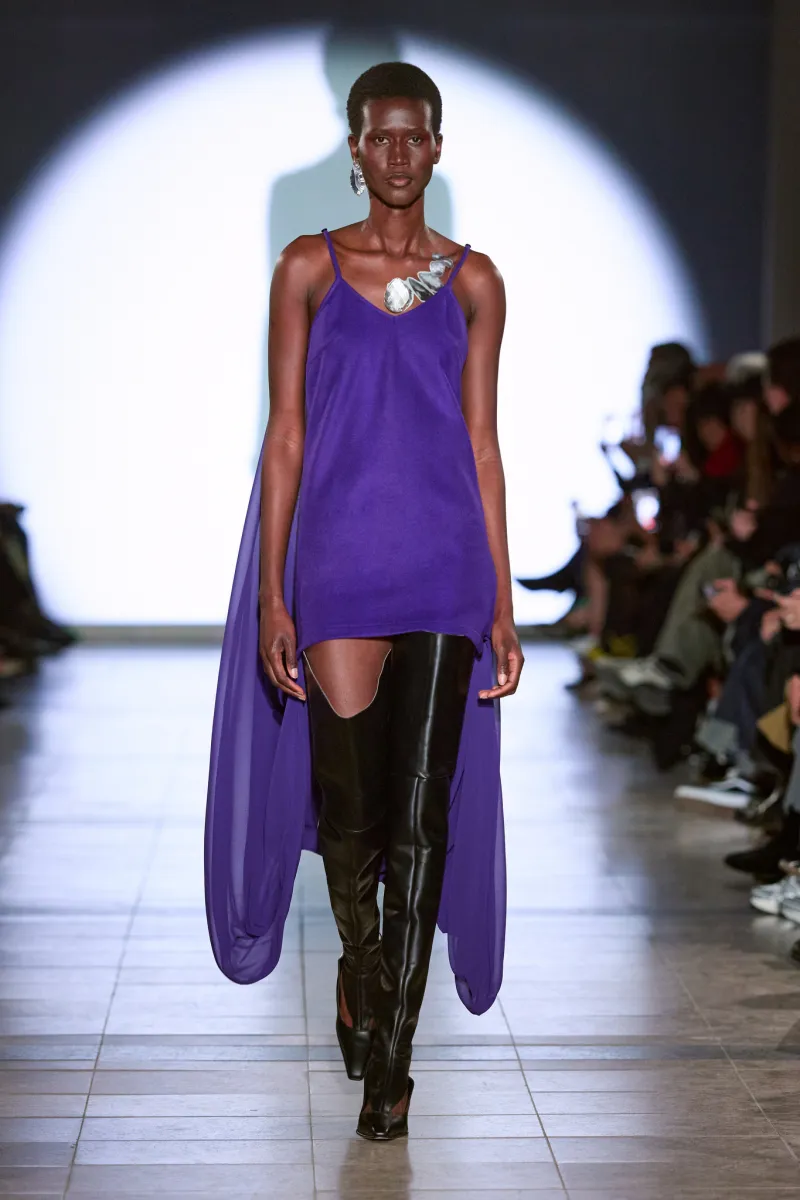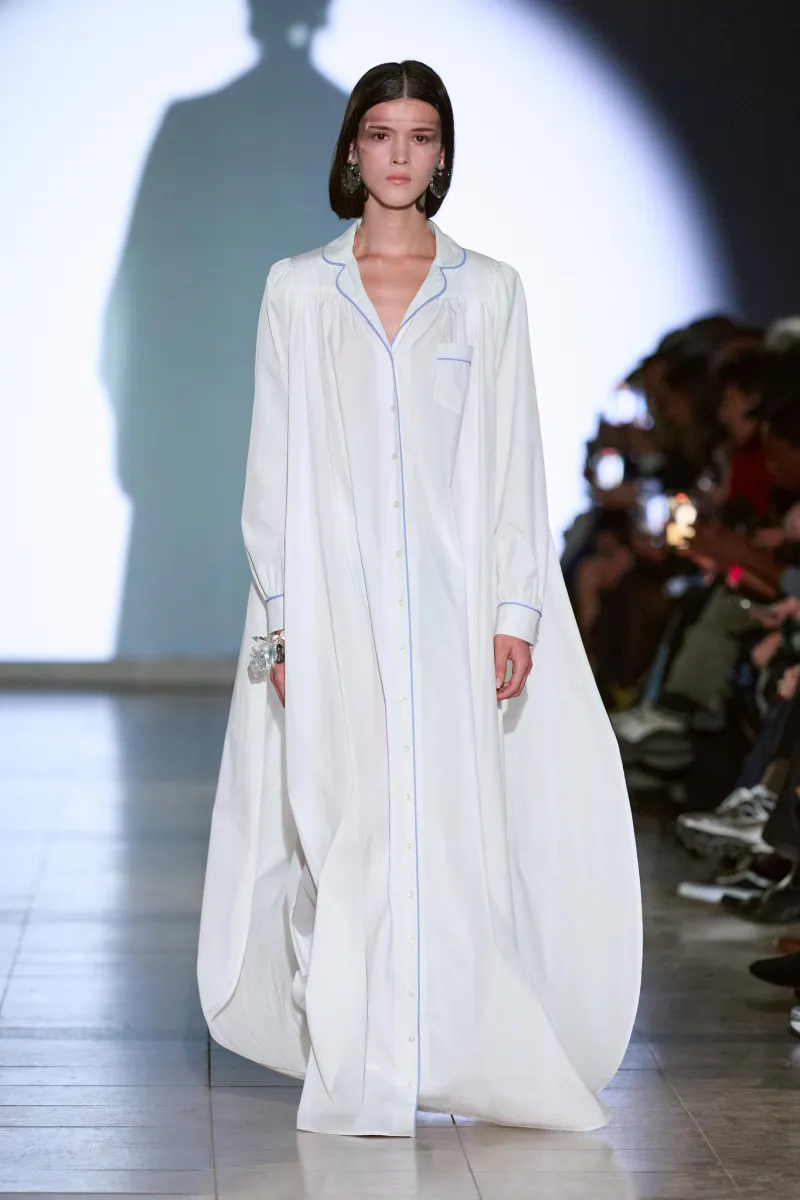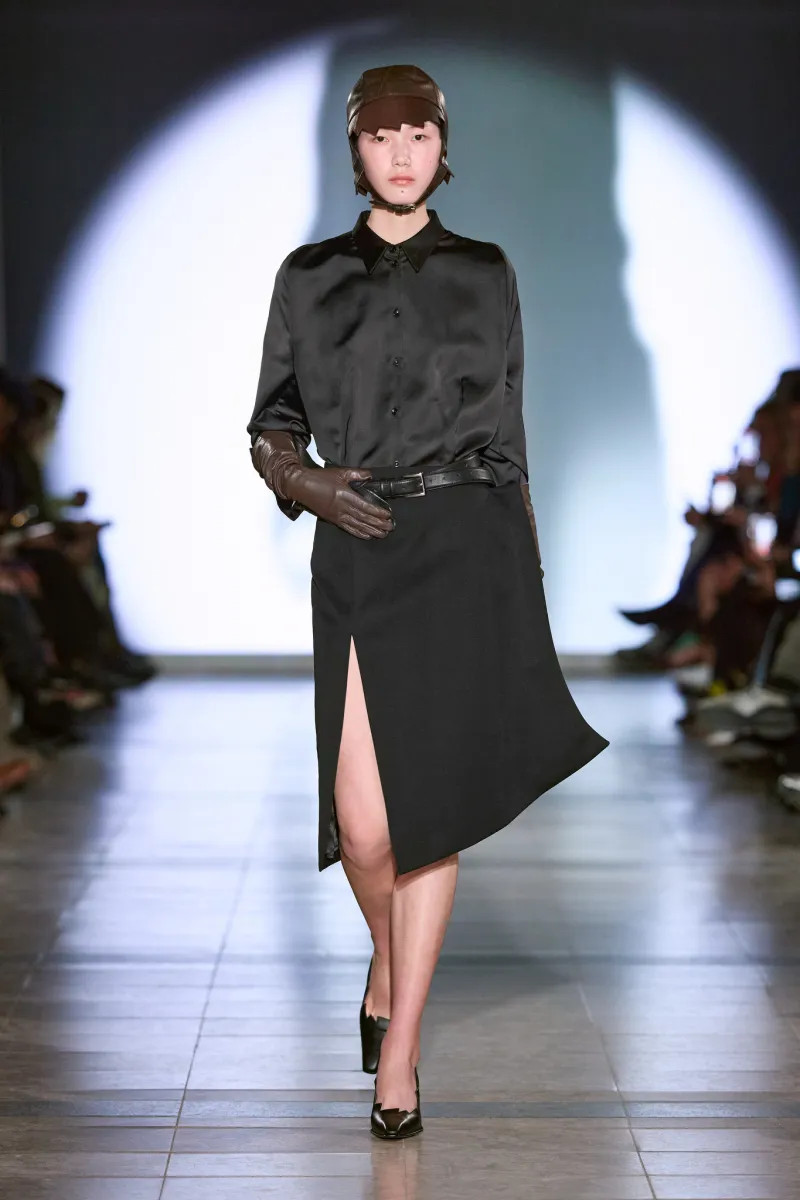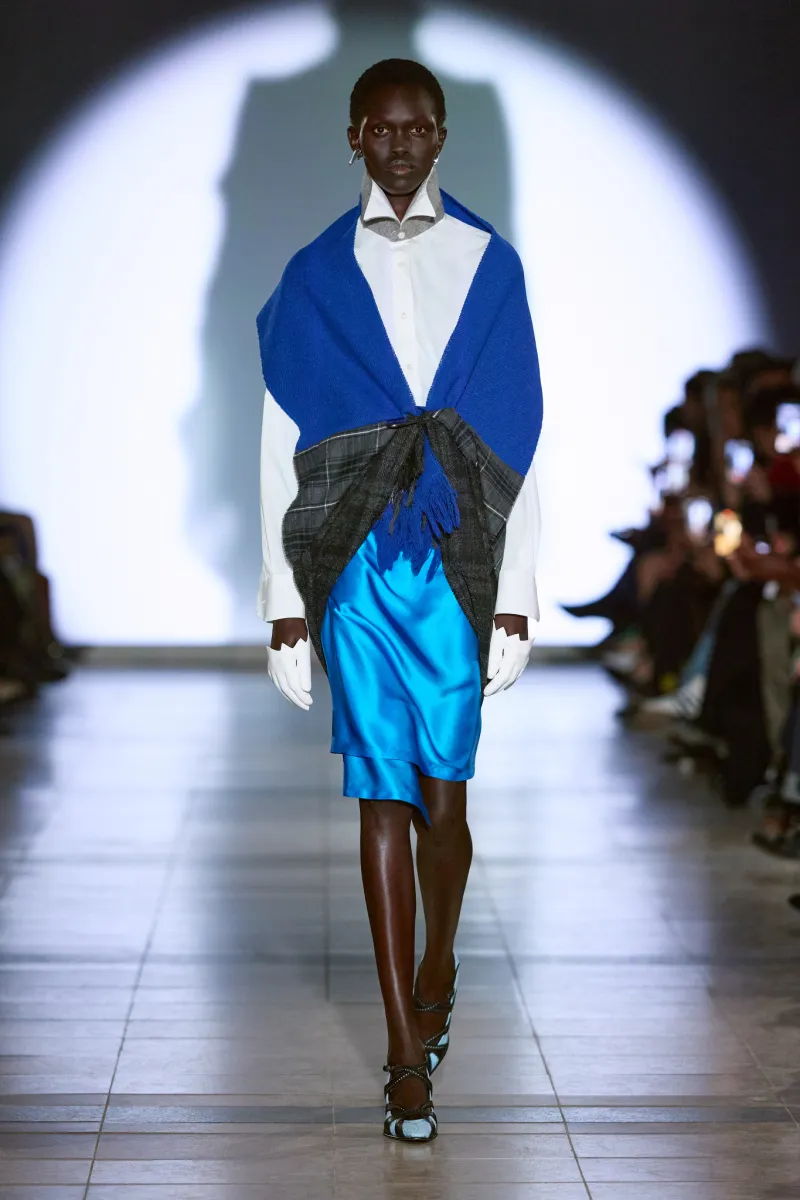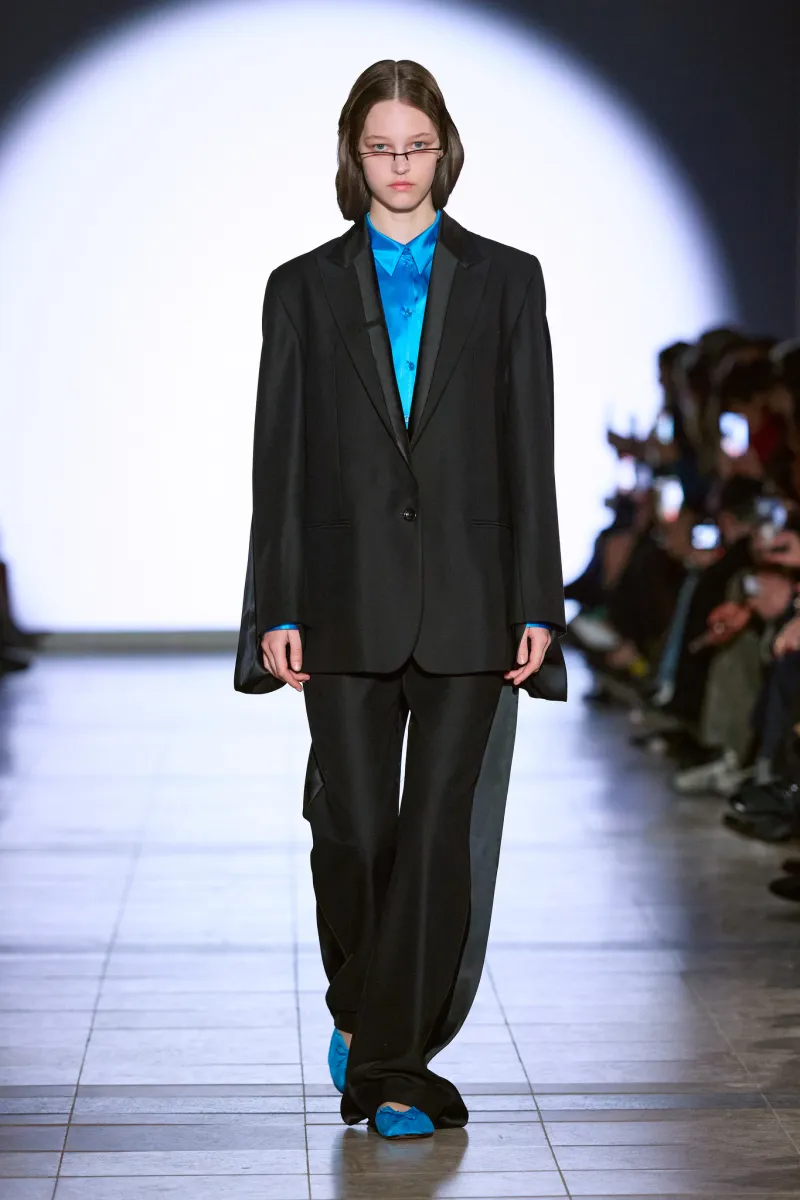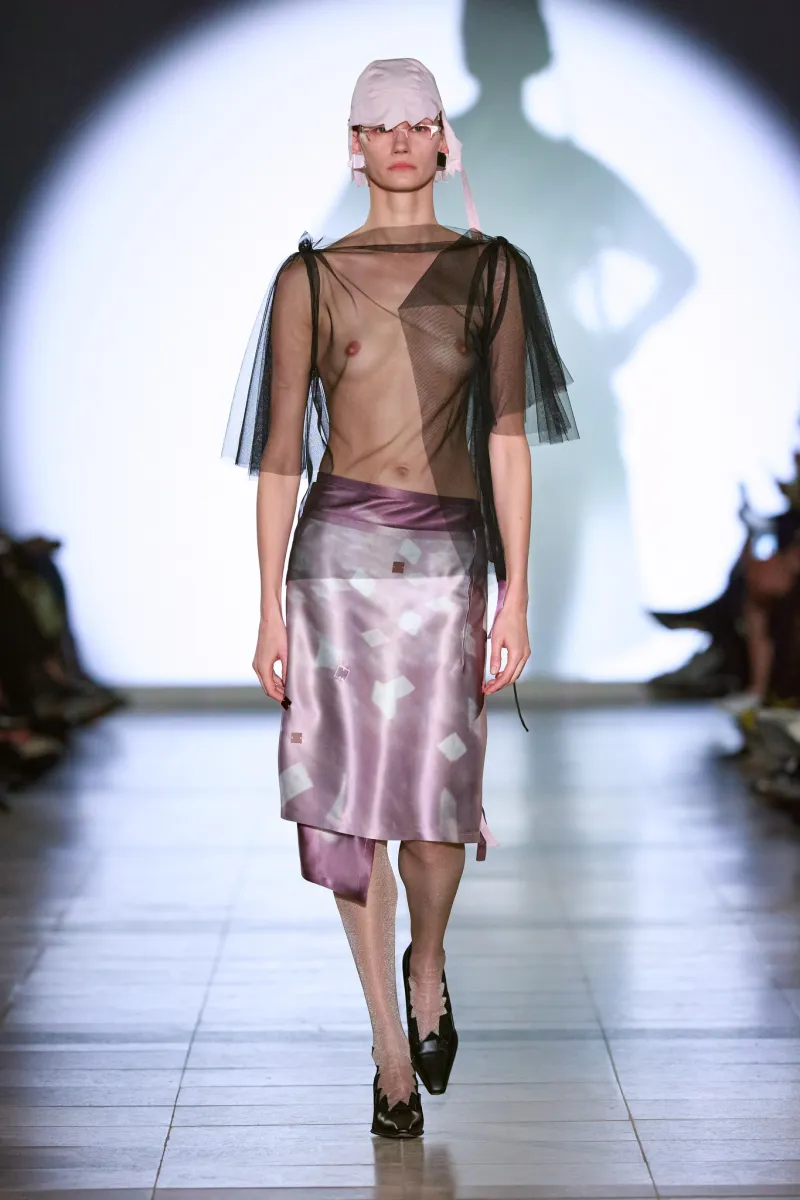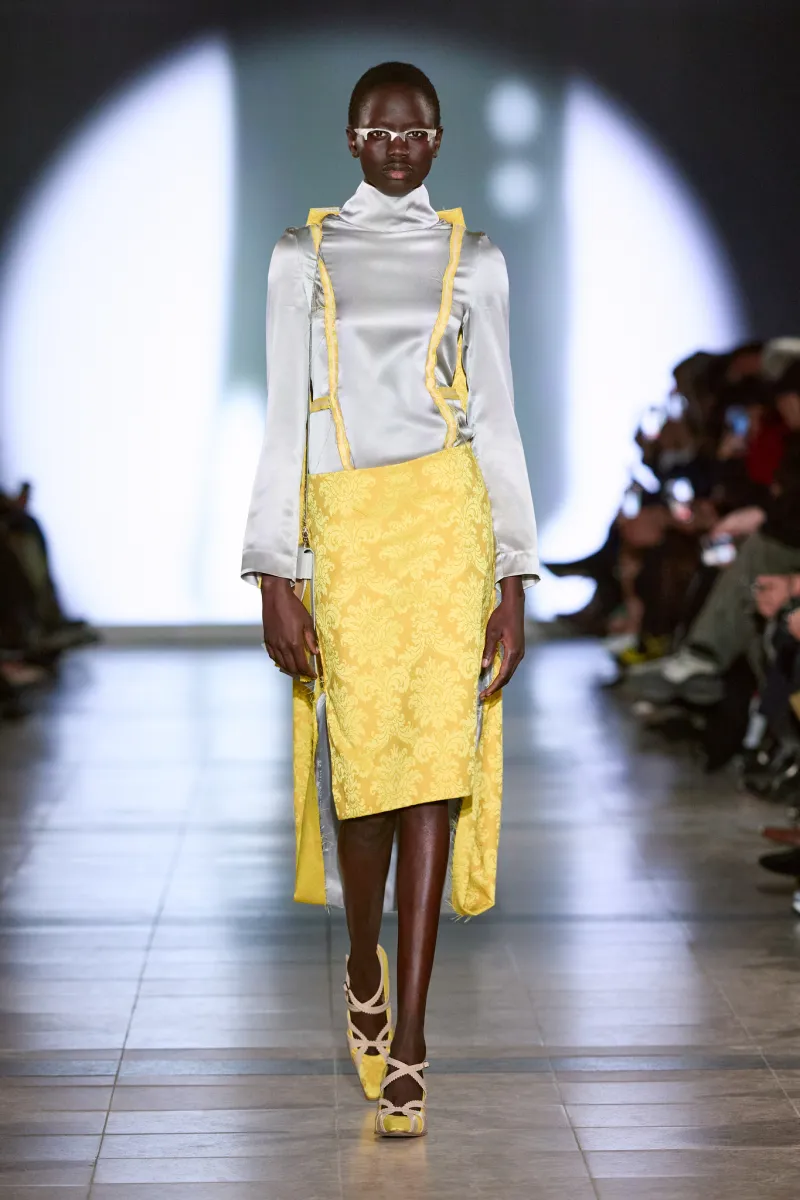
For Fall 2026, Julie Kegels turned her attention to the tension between appearance and authenticity in a world where every image is scrutinized, filtered, and endlessly reproduced. The Belgian designer presented a collection that resisted spectacle in favor of focus, asking viewers to slow down and look closely — not at virality, but at construction.
Set to an unsettling violin score, models moved with deliberate restraint, their pace drawing attention to the architecture of the garments rather than the theatrics of the runway. The collection, titled Face Value, unfolded as a quiet examination of how we shape, shield, and sometimes distort our own image.
Kegels’ conceptual framework drew from ideas of “aura,” popularized by Andy Warhol, as well as the long-exposure portraiture of Kyungwoo Chun — itself influenced by the philosophical reflections of Martin Heidegger. Rather than translating these references literally, Kegels embedded them into form, shadow, and proportion, creating clothes that felt cerebral yet distinctly wearable.
Silhouettes appeared familiar at first glance, then subtly unsettled. Capes extended from shoulders only to fasten discreetly at the ankles, creating floating, spectral lines. Jackets slipped from the body and re-emerged as dresses; pajama tops expanded into voluminous gowns. A classic white shirt transformed into a cape, while skirts seemed to unravel before resolving into dramatic drapes.
The designer developed many of these shapes by photographing garments in her Antwerp studio under shadow-heavy lighting, then using the distorted images as the basis for new patterns. The result was clothing that appeared caught between states — neither fully flat nor fully resolved.
Elsewhere, Kegels introduced what she described as “forced tailoring,” garments designed to subtly manipulate posture. Sleeves nudged arms forward with assertive precision, while compact knitwear split open at the back, allowing bursts of color to emerge like small wings. Exposed seams, unfinished hems, and deliberately raw edges reinforced the idea of contrast and imperfection.
Moments of softness and irony tempered the intellectual rigor. Jagged headpieces unexpectedly evoked cartoonish innocence, inspiring the addition of childlike elements such as quilted baby blankets repurposed as wrap skirts — a reminder that vulnerability and control often coexist.
Fall 2026 confirmed Julie Kegels’ growing strength as a designer who can translate complex ideas into tangible, thoughtful clothing. In an era obsessed with polished images, Face Value suggested that aura may be fragile — but with the right garment, it can still linger a little longer.