


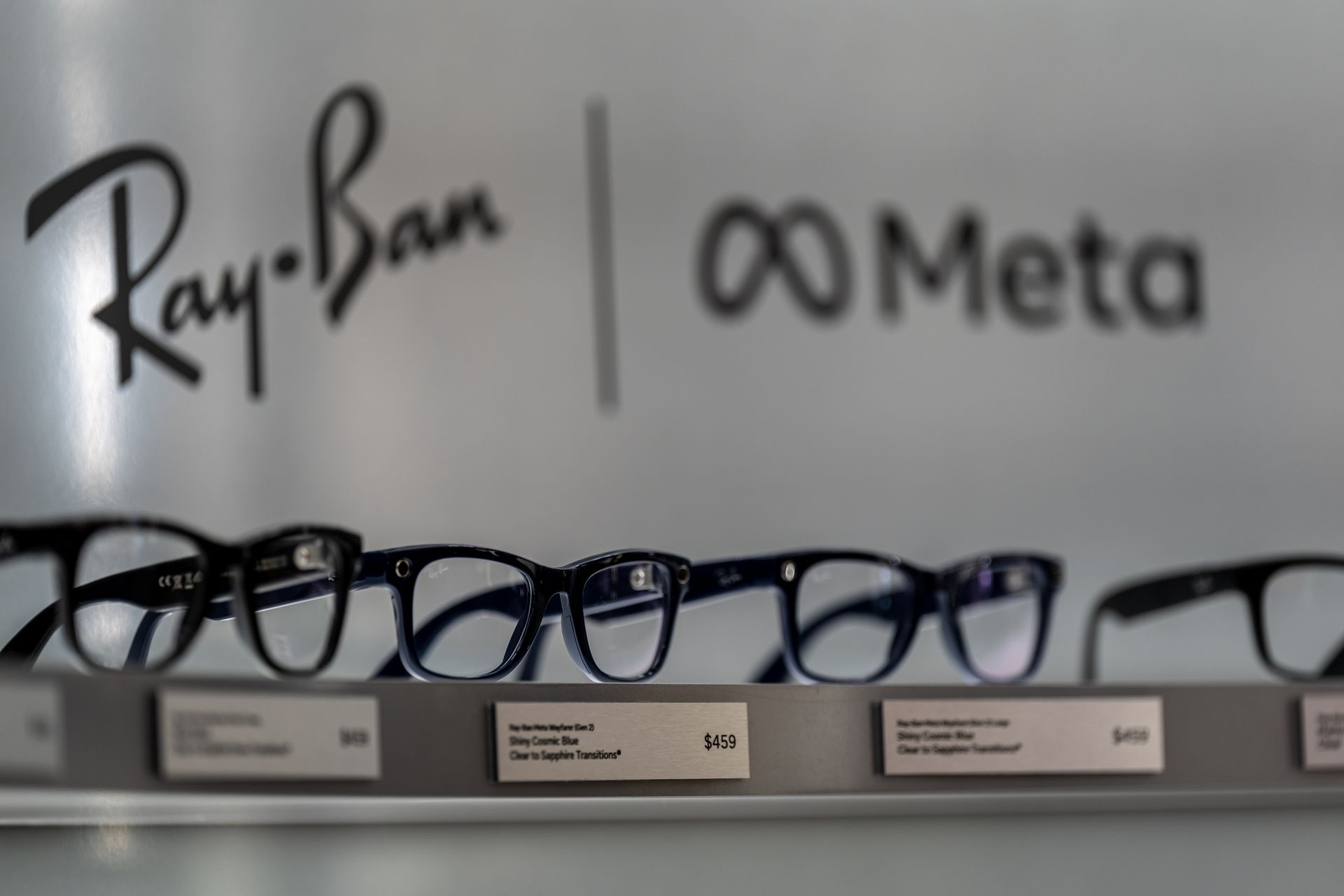
Dutch eyewear retailer Hans Anders has suspended sales of Meta’s Ray-Ban smart glasses in the Netherlands and Belgium, citing growing concerns over privacy and the potential use of the devices for covert recording.
The retailer stopped selling the camera-equipped glasses on October 2, removing them from both its stores and online platform. Hans Anders said the decision followed an ongoing public and political debate about smart glasses and questions surrounding how the technology can be used.
The company said it would reconsider whether and how to sell the glasses once there is greater clarity around the issue.
David Paul Morris/Bloomberg via Getty Images
The suspension comes as Meta and its smart-glasses partners face increasing scrutiny in the Netherlands.
The Dutch Data Protection Authority warned last month that recordings made with smart glasses showing identifiable people generally cannot be shared or published without their consent. The regulator noted that obtaining such consent can be difficult in public spaces.
Consumer organisation Consumentenbond has also threatened legal action against Meta, saying it could take the company to court if the glasses do not comply with privacy regulations. Meanwhile, the Dutch lower house of parliament has called for the devices to be banned.
On Friday, anti-online-abuse organisation Offlimits urged Meta and Ray-Ban owner EssilorLuxottica to voluntarily remove the glasses from the market until covert recording can be made technically impossible.
Hans Anders described sales of the glasses as limited, saying the product had not been widely purchased. Its parent company, Nexeye, operates around 776 locations across the Netherlands, Belgium, Germany, Austria and Sweden, although the Meta glasses were stocked only in the Netherlands.
Meta said it remains committed to developing the smart glasses and pointed to the LED indicator designed to signal when the camera is recording.
“Every pair with a camera has a bright light on the front that blinks when you take a photo or video — it can’t be turned off, and the camera is disabled if someone covers or tampers with it,” a company spokesperson said.
The effectiveness of that indicator has nevertheless become a point of controversy. Meta has permanently disabled cameras on thousands of pairs after detecting attempts by users to cover or damage the recording light. The company has also taken action against people offering services to modify the devices.
Privacy concerns surrounding the glasses are not limited to the Dutch market.
UK pub chain Wetherspoon has restricted their use over fears of covert recording. Meta and EssilorLuxottica are also facing a US lawsuit alleging that human reviewers viewed footage captured by the glasses without the knowledge of people appearing in the recordings.
Developed by Meta in partnership with EssilorLuxottica, the Ray-Ban smart glasses are designed to look similar to conventional eyewear while offering features including photography, video recording, phone calls and audio streaming.
Hans Anders had been selling the glasses in the Netherlands and Belgium from €419.
The suspension highlights a growing challenge for wearable technology: balancing the convenience of camera-enabled devices with concerns about consent, privacy and recording in public spaces.
