

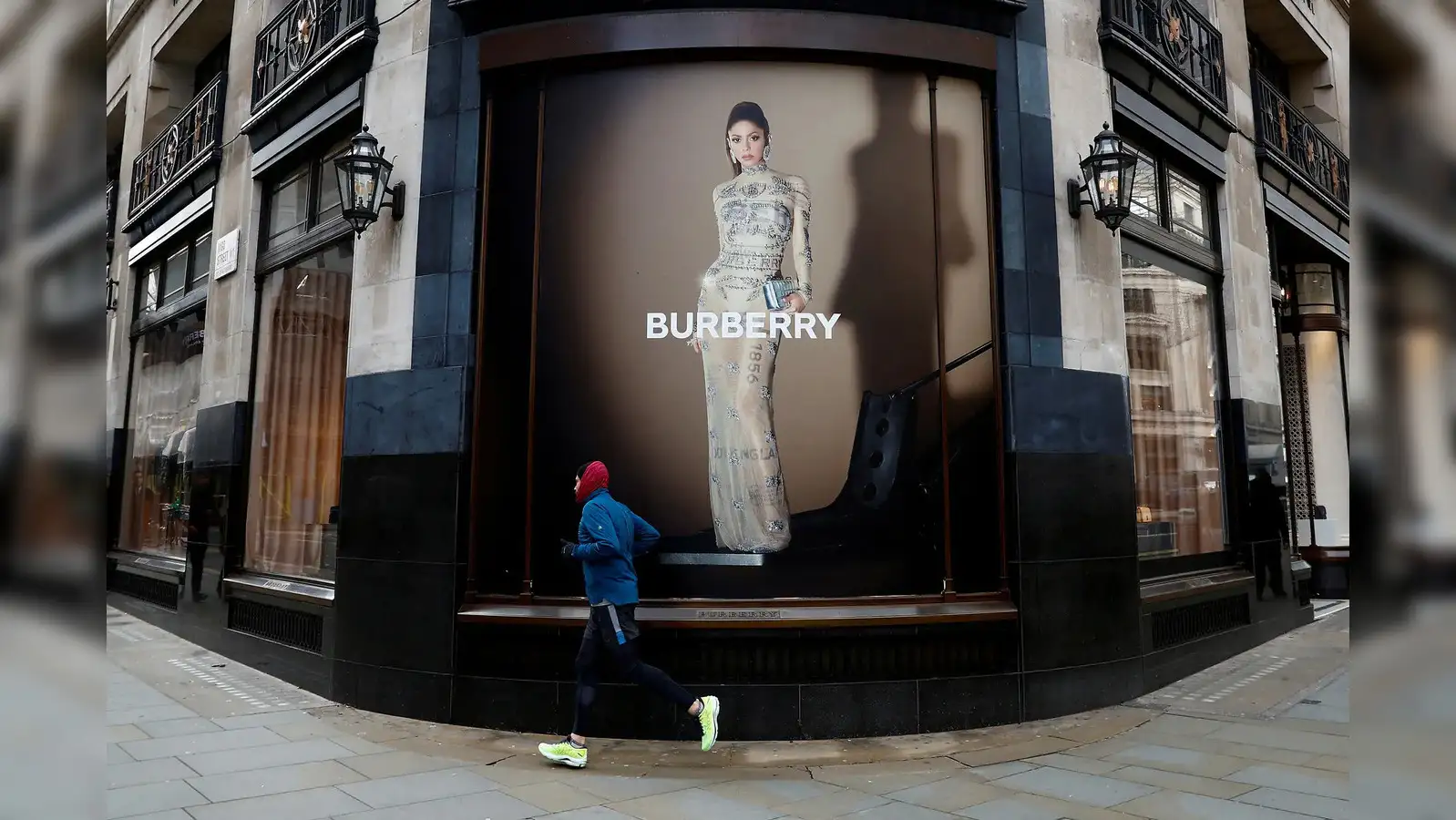
Burberry, the iconic British luxury fashion brand, released its half-year financial results on Thursday, marking one year since the launch of its Burberry Forward turnaround plan. Despite an ongoing decline in revenue, CEO Joshua Schulman struck an optimistic tone, expressing strong belief in the company’s renewed direction and long-term potential. Schulman described Burberry as an “extraordinary British luxury house,” emphasizing that the revival goes beyond the label’s signature coats and scarves, as growth momentum begins to spread into other product categories.
However, the big question remains: do the numbers back up Schulman’s optimism? The figures reveal a mixed but gradually improving picture. While total revenue for the six months ending in late September declined, losses have narrowed, and Burberry’s adjusted performance shows encouraging signs of recovery.
Financial performance: losses shrink, profitability returns on an adjusted basis
Burberry reported revenue of £1.032 billion, representing a 5% decline on a reported basis and a 3% fall at constant exchange rates (CER). Retail comparable store sales remained flat—an improvement compared to the sharp 20% drop recorded a year earlier.
Perhaps the most encouraging sign came from the company’s adjusted results. Burberry achieved an adjusted operating profit of £19 million, reversing an adjusted loss of £41 million during the same period last year. This turnaround pushed the adjusted operating margin to 1.9%, a notable improvement from the previous year’s negative 3.8%. The gross margin also improved significantly, rising to 67.9%, up 410 basis points at CER and 450 basis points at reported rates.
Despite these positive signs, Burberry still recorded an overall reported operating loss of £18 million, although that figure represents a significant recovery compared to the £53 million loss in the same period last year. The reported operating margin improved to negative 1.7%, from negative 4.9% a year earlier. The loss before tax stood at £48 million, compared to £80 million previously. Interestingly, the company also paid £15 million more in taxes, signaling improved operations and stronger cash flow management.

Olivia Colman for Burberry
Regional sales show steady recovery.
A closer look at Burberry’s regional performance reveals a gradual but encouraging rebound, particularly in markets that had been under pressure. Comparable store sales grew 1% in the EMEIA region (Europe, the Middle East, India, and Africa) and 3% in the Americas. Meanwhile, sales in Greater China declined by 1%, and the broader Asia-Pacific region slipped 2%.
However, breaking these results down by quarter highlights meaningful progress. Group sales were down 1% in Q1 but rose 2% in Q2, indicating growing momentum. In EMEIA, sales remained up 1% in both quarters, while the Americas posted growth of 4% in Q1 and 3% in Q2. Greater China saw a 5% decline in Q1 but rebounded with a 3% increase in Q2, and the wider Asia-Pacific region improved from a 4% drop in Q1 to flat performance in Q2.
This sequential improvement underscores Schulman’s assertion that the turnaround strategy is beginning to take hold, especially as consumer sentiment in key Asian markets stabilizes.
Channel performance: retail leads as wholesale contracts
In terms of sales channels, retail revenue declined 3% on a reported basis to £854 million and 1% at CER. The wholesale business fell more sharply—12% reported and 11% CER—to £148 million, slightly better than expected given earlier guidance for a mid-teens decline. The company said this reflected both phasing and some uplift in in-season orders following stronger sell-through rates for its Autumn 2025 collection.
Burberry reiterated its goal of maintaining a “smaller, higher-quality wholesale business” moving forward. Meanwhile, licensing revenue declined 5% reported and 8% CER to £30 million, though the brand continues to perform well in fragrance and beauty, particularly through the success of its Goddess and Her product lines. These gains were partly offset by planned reductions in older fragrance stock.
Product categories: outerwear leads the way
Burberry’s Outerwear segment—central to the company’s heritage—was a standout performer, recording growth in every region during the first half and second quarter. The Softs category, which includes knitwear and casual apparel, also delivered strong double-digit growth across both periods. Leather goods, a strategic focus area for the brand, improved sequentially between the two quarters but remained challenging overall, highlighting the competitive nature of that segment within the global luxury market.
Outlook: early signs of progress, but challenges remain
While Burberry continues to face economic headwinds and a cautious luxury retail environment, Schulman remains confident in the company’s turnaround trajectory. The Burberry Forward program is progressing according to plan, with a target of £80 million in annualized cost savings by the end of the 2026 fiscal year.
In a statement accompanying the results, the company said, “We are still in the early stages of our turnaround, and the macroeconomic environment remains uncertain. Our focus this year is to build on the early progress we have made in reigniting brand desire, which is essential to driving top-line growth.”
Burberry emphasized its priorities for the rest of the fiscal year: simplifying operations, improving productivity, and strengthening cash flow. The company remains optimistic that these efforts will position it for a return to sustainable, profitable growth in the years ahead.
Although the recovery is far from complete, the data shows that Burberry’s strategic plan is beginning to take effect. Schulman’s confidence in the brand appears justified, as the company stabilizes financially, re-energizes its product categories, and gradually rebuilds momentum in key markets worldwide.