


For a luxury house long identified with Italian craftsmanship, Gucci is facing fresh scrutiny over a surprising detail on one of its newest products: a “Made in China” label.
The sneakers, designed by Gucci creative director Demna and priced at more than €800, have sparked debate over how the Kering-owned brand is balancing manufacturing expertise, costs and innovation while attempting to rebuild its appeal among luxury shoppers.
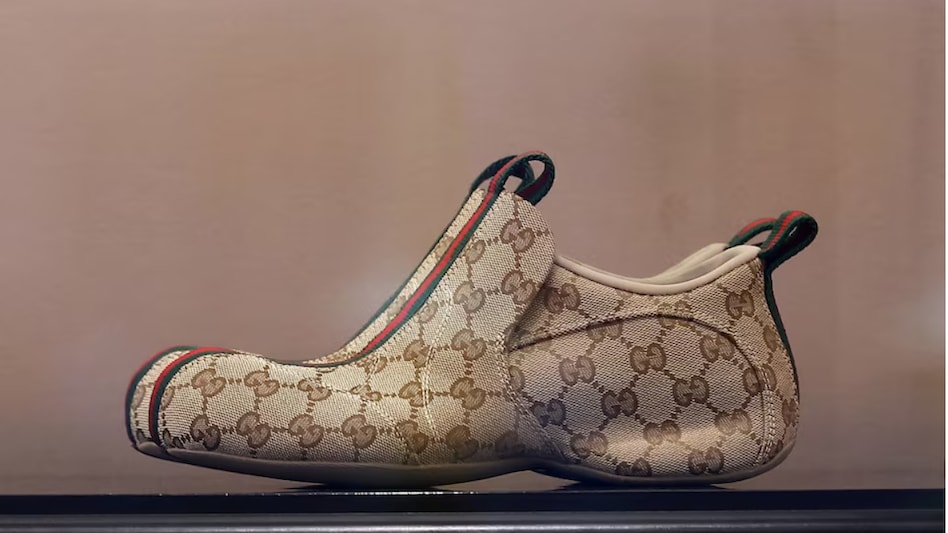
The issue centers on the futuristic Drip sneaker, which Gucci describes as Demna’s first sneaker for the house. Launched as part of the brand’s Primavera collection, the shoe features a laceless, sock-like construction and a deliberately oversized silhouette reminiscent of the designer’s earlier work at Balenciaga.
The Drip is available in nylon, canvas and suede and sells for about €800 in Europe and $1,000 in the U.S. A second leather slip-on sneaker from the same collection is also manufactured in China.
For some industry observers, however, the country-of-origin label raises questions about Gucci’s luxury positioning.
“We think this creates a potential tension between provenance and the luxury positioning Gucci is seeking to reclaim,” Berenberg analysts said in a note.
Simon Whitehouse, a Milan-based luxury business consultant, was more blunt, saying, “Made in China is not a good look.”
China is a major manufacturing center for sneakers, supplying both mass-market and premium footwear brands. But Gucci has historically placed Italian production and craftsmanship at the center of its identity, making the decision particularly notable as the brand works to reconnect with consumers.
Gucci Defends Its Manufacturing Choice
Gucci
Gucci said Italy would “always be at the heart of Gucci’s manufacturing model and identity,” while explaining that the Chinese supplier was selected for its technical expertise.
“The partner selected offered the technological know-how and capabilities most appropriate for achieving the performance and quality standards we were seeking,” the company said.
The brand also pointed to its existing relationships with suppliers in countries including Switzerland and Japan for categories such as watches and eyewear. Gucci said there are no broader plans to move production outside Italy.
According to Gucci, the other shoes listed on its website with a country-of-origin designation are made in Italy.
The manufacturing debate arrives at a crucial moment for Demna, who is preparing to present his latest Gucci collection in Milan.
His first Gucci sneaker represents a departure from the house’s more familiar Ace styles, introducing a more technical and futuristic direction while remaining below the price of some of Gucci’s other footwear.
That commercial positioning matters as Gucci attempts to recover from a sharp sales decline. The brand’s sales have fallen by roughly half over the past three years, contributing to pressure on margins and the closure of dozens of stores.
Kering CEO Luca de Meo, who took over last year to lead the group’s turnaround efforts, has also faced renewed pressure after an initial recovery in the company’s share price lost momentum this year.
The China-made sneakers are also arriving as Gucci reportedly lowers prices on selected products, including in China, in an effort to regain market share.
Two Kering sources told Reuters about the reductions, while Barclays analyst Carole Madjo said the move had surprised some investors concerned about its potential impact on Gucci’s image.
“Some people are wondering: should we keep buying Gucci if the price is coming down?” Madjo said. She added that Chinese-made products could intensify questions around the relationship between Gucci’s pricing and perceived value.
For Gucci, the challenge extends beyond the manufacturing origin of a pair of sneakers. Demna’s new designs, selective price adjustments and efforts to control production costs must ultimately work together without eroding the craftsmanship, exclusivity and brand value that underpin the house’s luxury positioning.

Daniel’s expertise in beauty and his sharp eye for runway details create an unmatched combination for readers seeking the latest makeup and style inspirations.